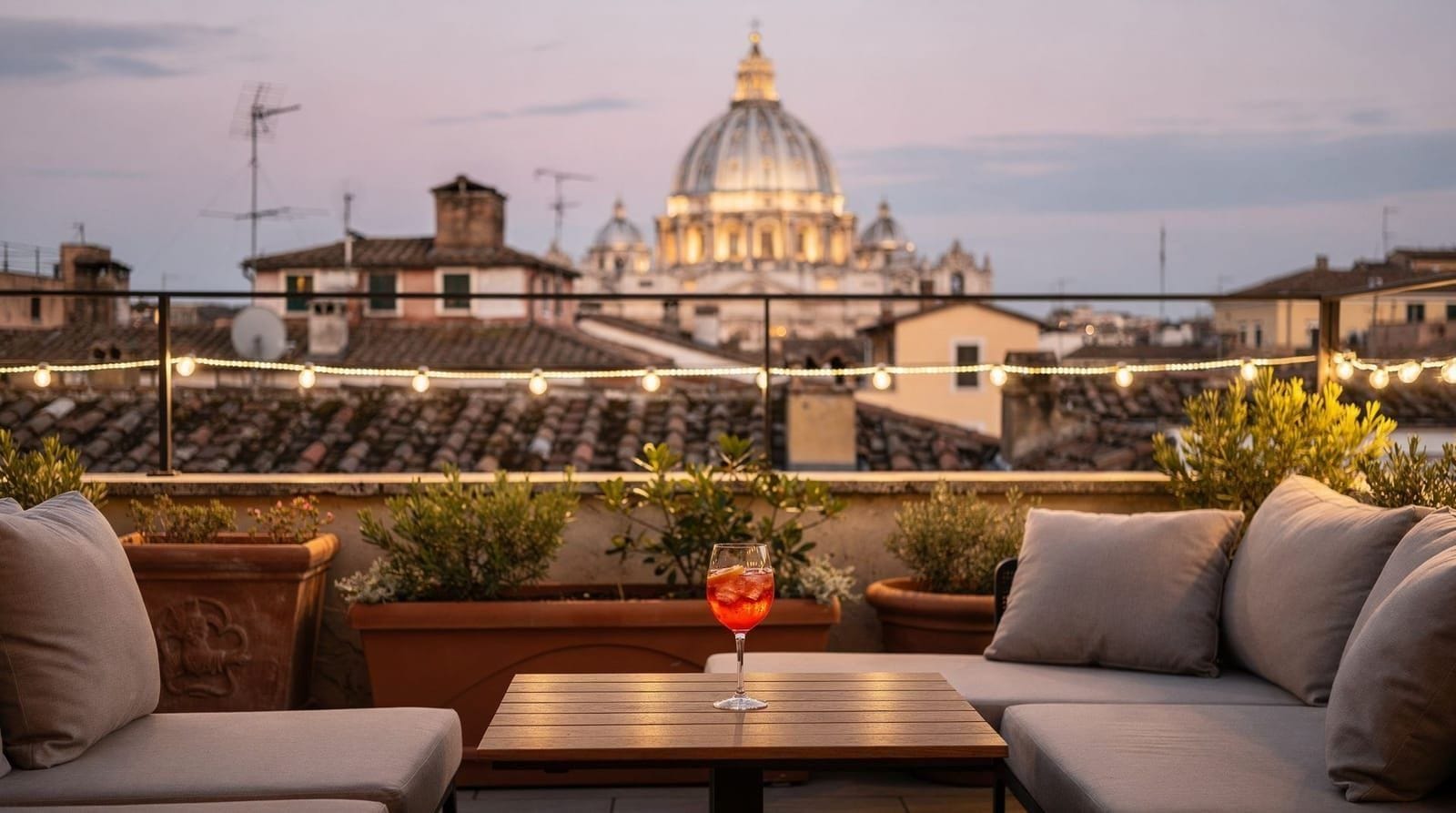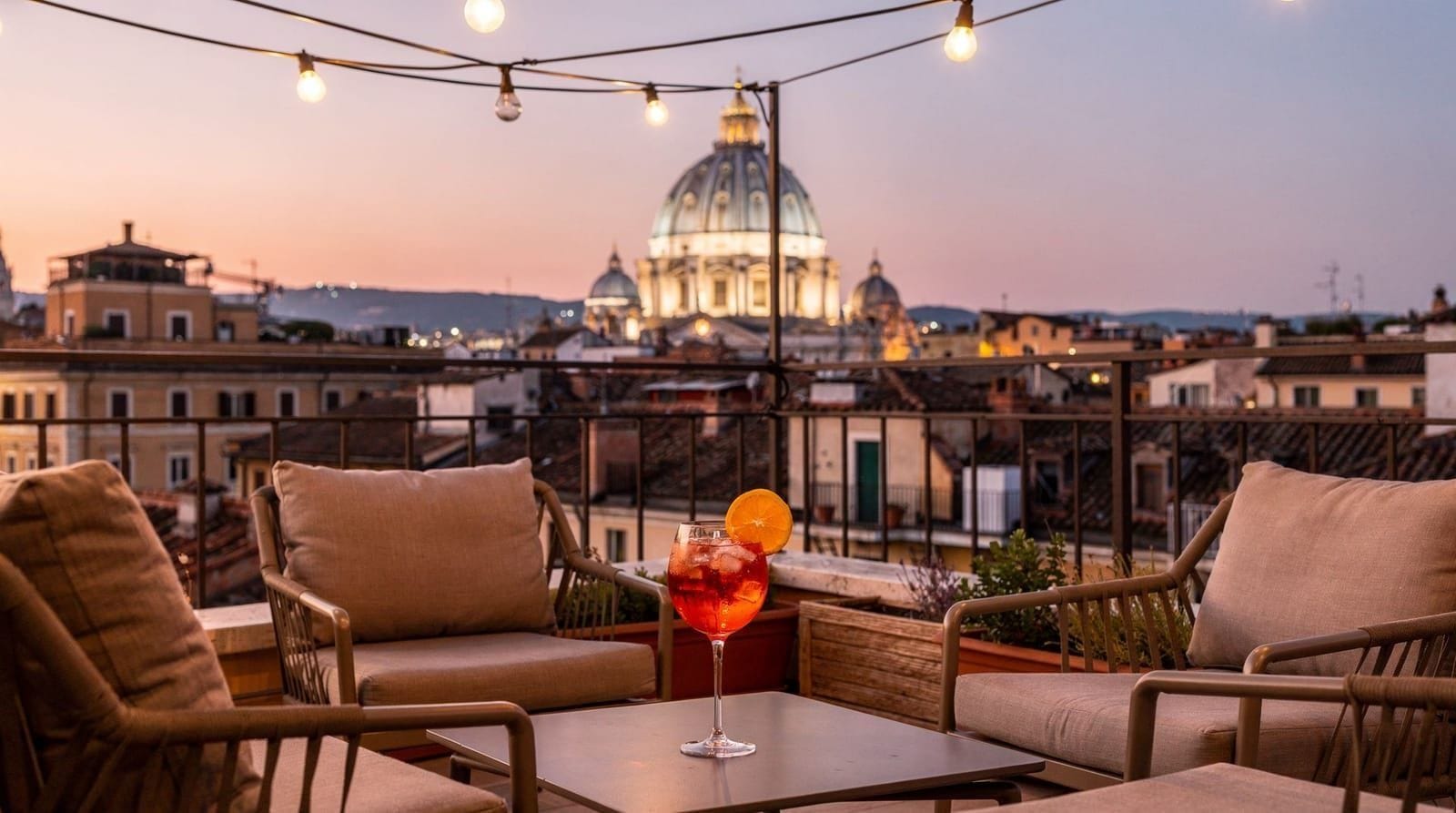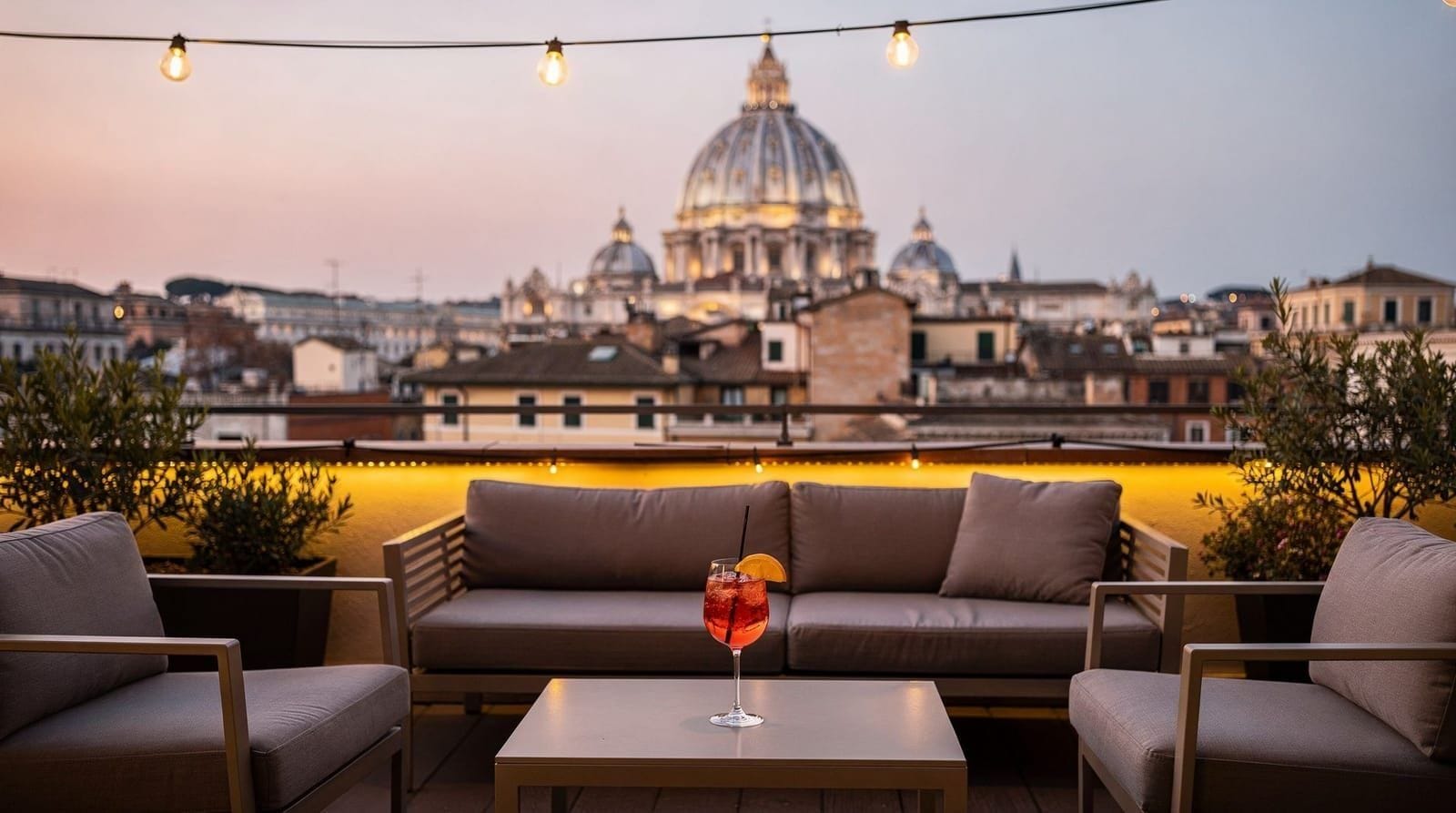
Rome's best bar areas: Trastevere, Monti, Pigneto, Testaccio
Rome: Spanish Steps, Trevi, Navona and Pantheon Sunset Tour
Duration: 2 hours
Which is the best bar area in Rome?
Monti is the most balanced: walkable, good bars, less tourist-heavy than Trastevere, and with Piazza della Madonna dei Monti for outdoor drinking in summer. Trastevere is livelier but more crowded. Pigneto is the most authentically local but requires a short journey from the center. Testaccio is best for food-focused evenings.
Four bar areas, four different evenings
Rome’s evening scene is neighborhood-defined rather than club-district defined. There is no Roman equivalent of London’s Soho or Berlin’s Mitte — instead, several distinct neighborhoods each have their own character, price range, crowd and rhythm. Knowing the difference determines whether your evening feels like a genuine Roman experience or a tourist version of one.
This guide covers the four main options in honest detail: Trastevere, Monti, Pigneto and Testaccio. Each section includes the best streets, the best bars to actually visit, what you pay, how to get there, and who it suits.
| Area | Character | Price | Getting there |
|---|---|---|---|
| Trastevere | Lively, touristy but genuine | €8–18 | Tram 8, bus 23/780 |
| Monti | Balanced, walkable, curated | €8–16 | Metro B to Cavour |
| Pigneto | Authentic, local, DIY | €10–13 | Tram 5/19 from Piazza Vittorio |
| Testaccio | Food-first, bars secondary | €4–10 | Metro B to Piramide |
Trastevere: the classic choice
What it is
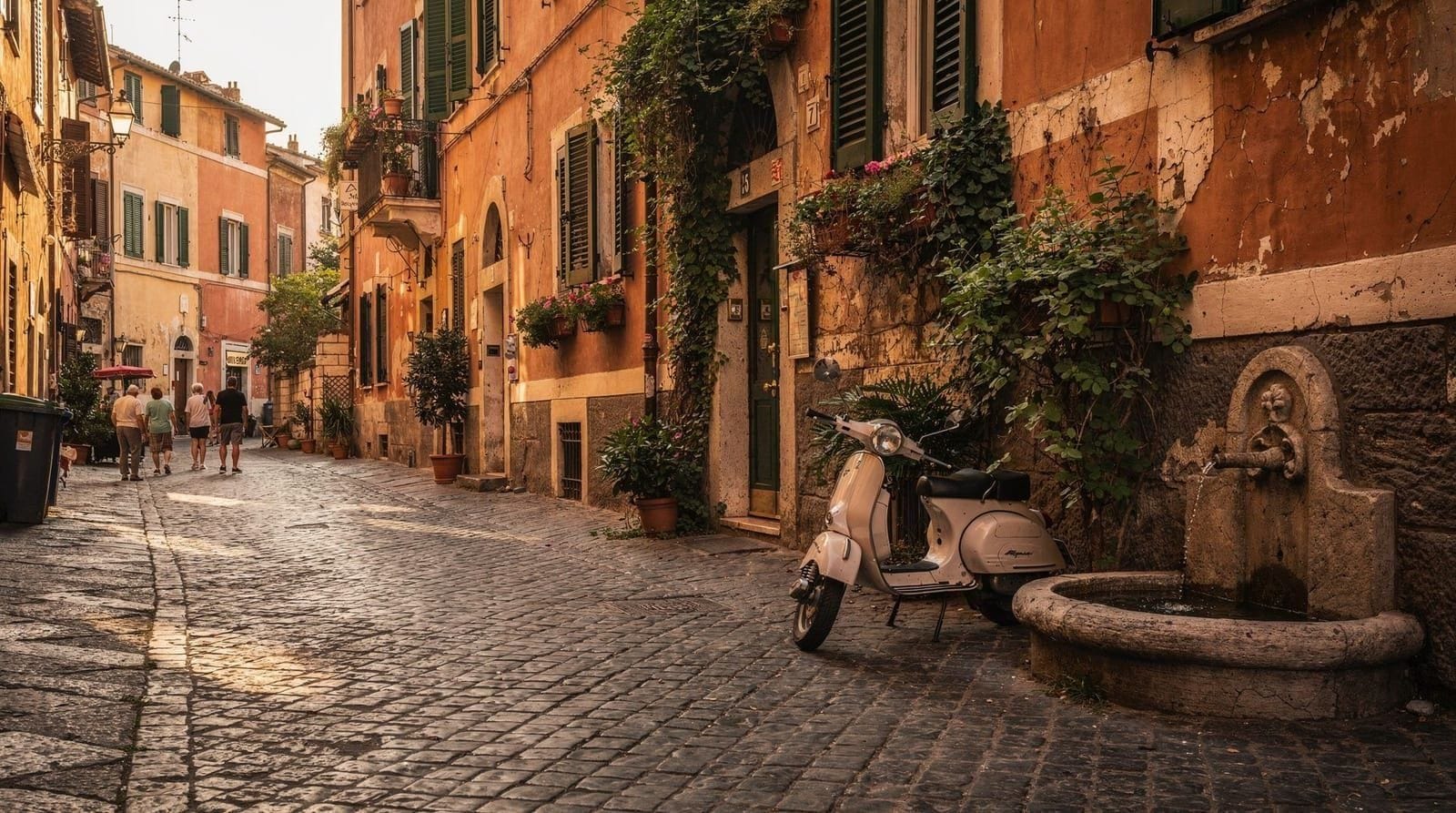
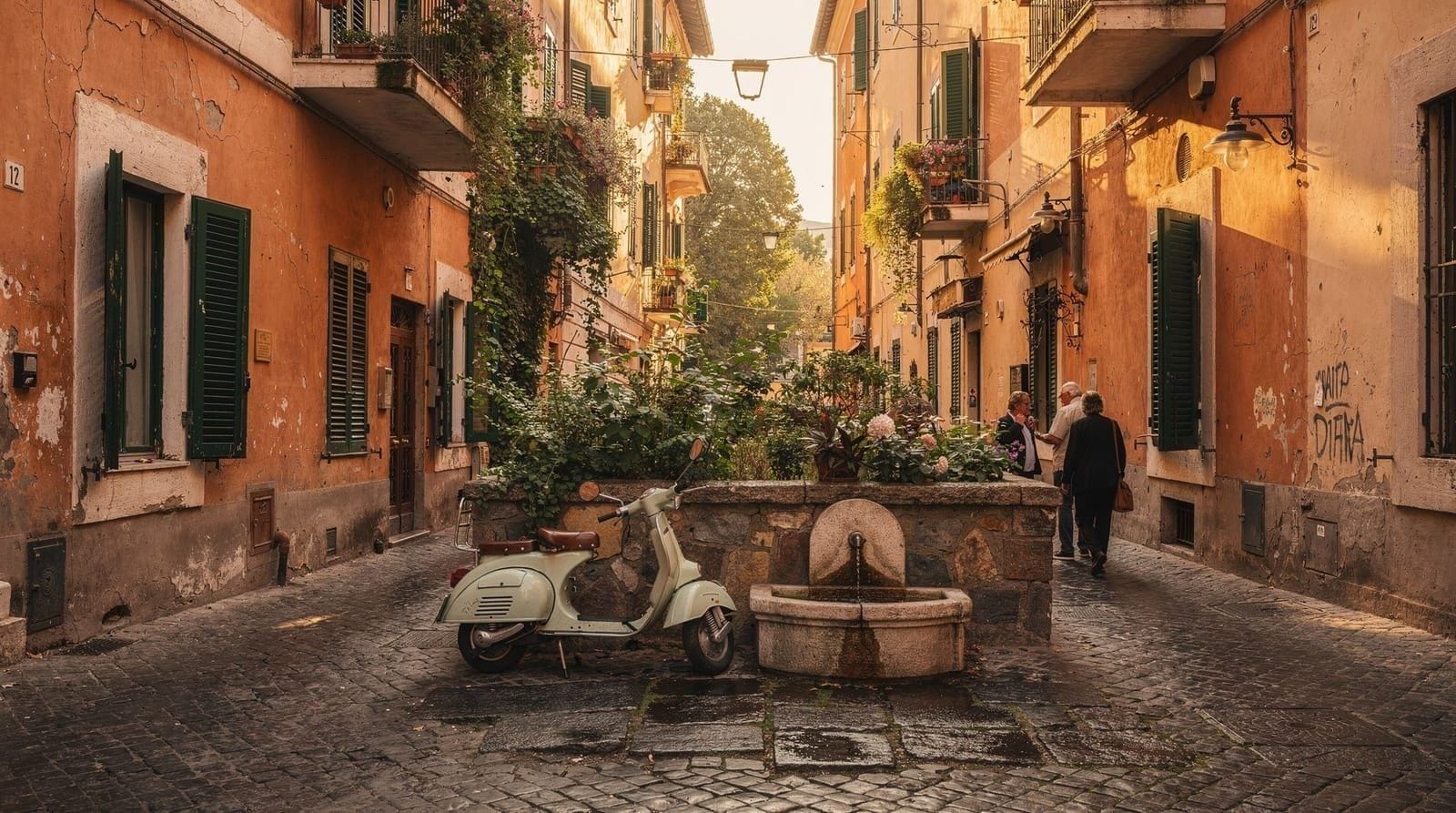
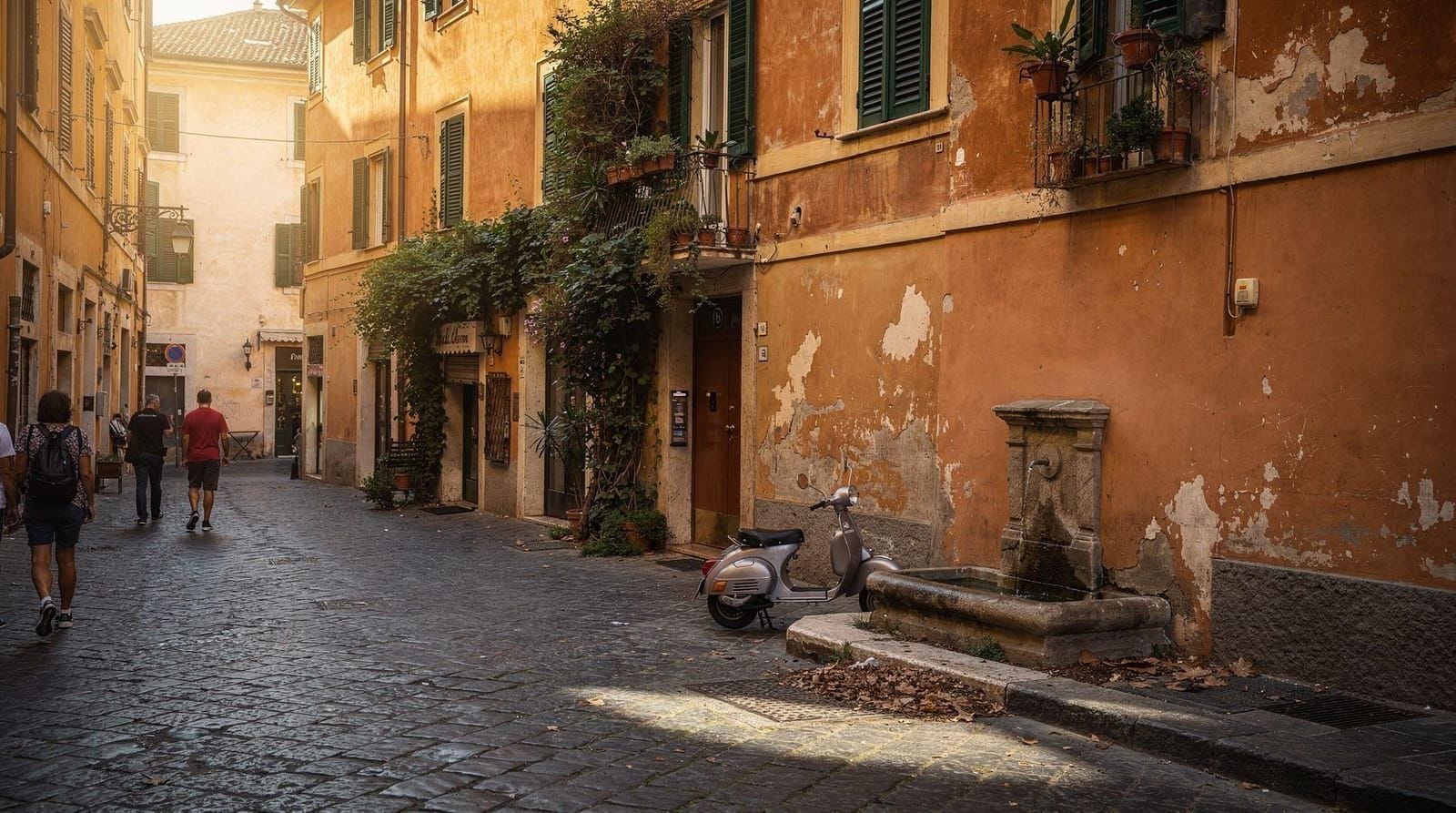
Trastevere is the neighborhood that most first-time visitors to Rome associate with “authentic Rome” — and the reality is complicated. It was genuinely working-class and local until the 1990s, when restaurants and bars began colonizing the cobbled streets. Today it is Rome’s most popular neighborhood for a reason: the setting is beautiful (medieval alleys, ivy on stone, the glow of old lamps), the bar density is high, and the atmosphere has genuine energy even on a Tuesday.
The tourist intensity varies by street. The areas around Piazza di Santa Maria in Trastevere and Piazza Trilussa are the most visited and the least local. A ten-minute walk from either piazza — Via dei Vascellari, Via della Scala, Via San Francesco a Ripa — feels significantly different.
Best bars
Bar San Calisto (Piazza di San Calisto 3): The most local major bar in the neighborhood. Cash only, plastic chairs, Campari Soda at €3–4. The piazza fills with Romans of various ages from 18:00 onward. Not glamorous; exactly that.
Freni e Frizioni (Via del Politeama 4): The aperitivo bar that kicked off the serious aperitivo scene in Trastevere. A generous buffet with the drink price (€13–15), outdoor terrace in a former workshop courtyard. Expect a queue after 19:30 in season; arrive early.
Ma Che Siete Venuti a Fà (Via Benedetta 25): Tiny craft beer bar, taken seriously by craft beer drinkers in Rome. Standing room only, excellent rotating taps, no food beyond bar snacks.
Litro (Via Fratelli Bonnet 5, just outside Trastevere in Monteverde): Worth the slightly longer walk — a wine bar with an excellent aperitivo spread and strong natural wine selection from Lazio producers.
Practical notes
Getting there: Tram 8 from Largo Argentina or bus 23/780. Trastevere train station (not the tram stop — the railway station) is on the western edge. Walk from Campo de’ Fiori: 15 minutes.
Price range: €4–8 for a beer, €8–12 for a spritz/cocktail at most bars, €13–18 for aperitivo with food spread. The main piazza restaurant terraces charge more; avoid sitting down for drinks there.
Best evenings: Thursday through Saturday; quieter but pleasant Sunday–Tuesday.
See the Trastevere neighborhood guide for the full context.
Monti: the local favorite
What it is
Monti is the neighborhood between the Colosseum and Termini, in the shadow of the Esquiline. It was working-class into the 1970s, became Rome’s bohemian district in the 1990s, and has spent the last decade gentrifying while largely retaining character. The streets are compact, the bars are interesting, and Piazza della Madonna dei Monti is one of the best outdoor drinking venues in the city when the weather cooperates.
It is also genuinely walkable from major sights: 10 minutes from the Colosseum, 15 minutes from the Trevi Fountain. This makes it a natural base for evenings that start with a late-afternoon attraction visit.
Best bars and streets
Via dei Serpenti: The backbone of Monti’s bar scene. Several bars with outdoor tables running the length of a photogenic sloping street. Il Tasso, Mimi e Coco (excellent cocktails), and a cluster of wine bars with street seating.
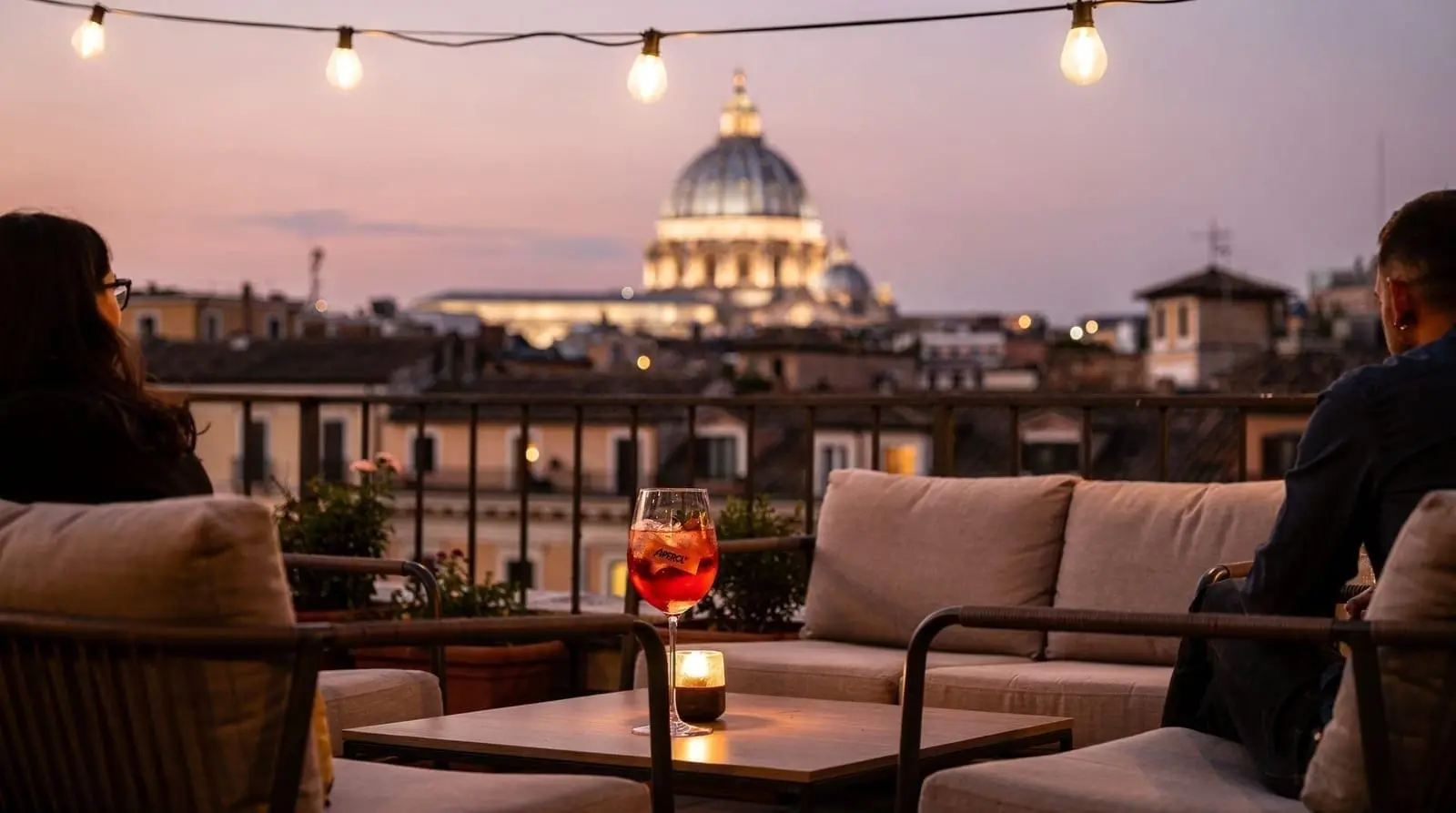
Piazza della Madonna dei Monti: In summer, this piazza between 19:00 and 22:00 is one of the most attractive outdoor drinking spots in Rome. Buy your drink from the bar at the edge (Il Palazzo del Freddo di Giovanni Fassi for gelato nearby) and stand with everyone else. Bring a bottle of wine and two glasses for the cheapest version of this experience.
Via del Boschetto: Slightly quieter than Via dei Serpenti, with a mix of restaurants and bars. Good for an early evening walk and a drink before dinner.
Palatium Enoteca (Via Frattina, technically near the Spanish Steps but worth noting): The Lazio regional wine showcase — all Lazio DOC and DOCG wines, professional service, and a well-thought-through aperitivo spread. Slightly outside Monti but essential for wine-focused evenings.
Practical notes
Getting there: Metro B to Cavour, 5 minutes’ walk. Metro A to Termini, 10 minutes’ walk. Highly walkable from most Central Rome hotel locations.
Price range: €8–14 for a cocktail/spritz, €12–16 for aperitivo. Slightly cheaper than Trastevere’s tourist-facing bars.
Best for: Couples, solo travelers, groups who want atmosphere without fighting through crowds. The piazza in summer is exceptional.
See the Monti neighborhood guide for the full neighborhood picture.
An evening walking tour through Rome’s Centro Storico — Spanish Steps, Trevi Fountain, Piazza Navona, Pantheon — that connects the major nighttime landmarks before you choose a bar area to settle into.Pigneto: the most local experience
What it is
Pigneto is where Romans go when they want aperitivo without performing it for tourists. The neighborhood — southeast of the center, about 3km from Termini — was a working-class railway district in the 20th century, was made famous internationally by Pier Paolo Pasolini’s films shot there in the 1960s, and has since developed a creative and somewhat DIY bar culture.
The aperitivo here is the most generous in Rome: several bars still run all-you-can-eat buffets with the drink price (€10–13), which represents extraordinary value by Rome standards. The crowd is mostly Italian, mostly under 40, and the bars have none of the self-consciousness that affects Trastevere’s scene.
The trade-off: it requires a 20-minute tram journey each way, and returning after midnight on public transport is unreliable (take a taxi or Uber home).
Best bars
Necci dal 1924 (Via Fanfulla da Lodi 68): The neighborhood anchor. A former bar-grocery that opened in 1924 and still operates as a bar, restaurant and cultural venue. Serves from 08:00 to 01:00. The aperitivo (from 18:30) includes a substantial spread with the drink price (€12–13). The terrace is excellent in summer.
Retrogusto (Via Fanfulla da Lodi 6): One of the newer Pigneto openings that gets the aperitivo model right — generous, honest, local crowd. Natural wines and craft beer, strong food options.
Il Sorpasso (Via Properzio, Prati): Not Pigneto — the Prati version, near the Vatican — but worth including as the polished version of the Pigneto aperitivo model. Excellent wine selection, aperitivo spread from 18:30.
Practical notes
Getting there: Tram 5 or 19 from Piazza Vittorio (Metro A). Tram 14 from Termini (check the current route — lines are frequently modified for works). Journey time: 15–20 minutes.
Price range: €10–13 for aperitivo with buffet — the cheapest serious aperitivo in Rome.
Best for: Travelers who want to see where Romans actually drink, not where they perform Rome for visitors.
Testaccio: food first, bars second
What it is
Testaccio is Rome’s food neighborhood — it contains the best trattorie in the city, the covered market (Mercato di Testaccio), and an old slaughterhouse complex (Mattatoio/Ex Mattatoio) that now hosts artists, restaurants and events. The bar scene is secondary to the food scene but not negligible.
Evenings in Testaccio work on a different rhythm: aperitivo from 19:00 (modest, bar-snack level), dinner proper from 20:30 at one of the serious restaurants, then a walk to the bars around Piazza Testaccio for post-dinner drinks. The neighborhood draws Romans from across the city who come specifically to eat, which means the atmosphere is food-serious rather than bar-focused.
Best bars and context
Roscioli Wine Bar (Via dei Chiavari, technically near Campo de’ Fiori but Testaccio-adjacent in spirit): The best wine bar in central Rome, run by the same family behind Antico Forno Roscioli and Ristorante Roscioli. Serious natural wine focus, excellent bar food (charcuterie, cheese, small plates). Essential.
Osteria della Birra (Piazza Testaccio 41): A Testaccio institution for craft beer. Outdoor piazza seating, good for post-dinner drinks.
Ex Mattatoio area: The old slaughterhouse complex hosts a rotating set of bars and event venues, most active on summer weekends. Check current programming — it changes year to year.
See the Testaccio neighborhood guide and Testaccio food guide for the full picture.
A Vespa sidecar tour of Rome at night — covering the illuminated monuments, bridges and piazzas in a way that connects the bar areas of the historic city with a cinematic introduction.How to plan an evening across multiple areas
One approach that works well: start aperitivo in Monti (18:30–20:00), walk to the Colosseum area briefly for the illuminated atmosphere (20:00–20:30), take a taxi to Trastevere for dinner (20:30–22:30), and continue in Trastevere bars until midnight.
Alternatively: arrive in Pigneto for 18:30 aperitivo, eat there (the neighborhood has good, cheap trattorie), and take a late taxi to Trastevere or Monti for 21:30 onward.
The aperitivo and nightlife guide gives the overall framework; this guide gives the street-level detail for each area.
For evening touring that combines these areas with guided context, the evening tours guide covers what guided tours add and when independent exploration is better.
If you are thinking about this in terms of what is romantic rather than just atmospheric, the romantic Rome guide has the evening planning section specifically for couples.
Craft beer in Rome: a brief guide
Rome’s craft beer scene has expanded from nothing in the early 2000s to a serious market with local breweries, dedicated tap rooms and bottle shops. For visitors who prefer beer to wine or spritz, the main bars to know:
Ma Che Siete Venuti a Fà (Via Benedetta 25, Trastevere): The original serious craft beer bar in Rome and still among the best. Tiny, standing room only, rotating taps from Italian and international breweries. The name translates loosely as “What did you come here for?” — a rhetorical question that doubles as a mission statement. No food beyond bar snacks.
Open Baladin (Via degli Specchi 6, near Largo Argentina): A bar from the Baladin brewery network with 40 taps (Italian focus), bottle selection, and actual food. More comfortable for longer evenings than Ma Che; less local atmosphere, better for groups.
Birra del Borgo taproom (various pop-ups and the Via Pigneto location): One of Italy’s most respected craft breweries, originally from Borgorose in the Rieti area. Their beers appear across Pigneto bars; occasional taproom events.
For Roman craft beer overall, Pigneto is the highest density of serious craft bars. The Trastevere options are better known but more limited in selection.
Natural wine: Rome’s emerging scene
Alongside craft beer, Rome has developed a strong natural wine culture — unfiltered, low-intervention wines from small Italian producers, increasingly from Lazio itself. The bars driving this are primarily in Pigneto, Testaccio and Monteverde, with a few in Monti.
The distinction matters practically: natural wine bars tend to have more knowledgeable staff, better food pairings, and a crowd that is interested in what they are drinking rather than just what they are seen drinking. They are also occasionally more expensive per glass (€10–16) but the quality justifies it.
Litro (Via Fratelli Bonnet 5, Monteverde): The best natural wine bar in the western part of Rome. Selection is deep, aperitivo spread is excellent, and the atmosphere is calm and neighborhood-focused.
Vini e Olii (Via del Moro 28, Trastevere): A small wine bar in a old grocery shop setting in Trastevere. Natural wine, snacks, tight seating. One of the most atmospheric small bars in the neighborhood.
Roscioli Wine Bar (Via dei Chiavari 34): Less natural wine-focused than the others but the most serious wine list in central Rome. Lazio wines are well-represented alongside national and international selections.
Prati: the fifth option, near the Vatican
Prati does not usually make the headline list of Rome bar districts, but it deserves a mention for one specific reason: it is the only genuinely good bar area within easy walking distance of the Vatican. Wide, tree-lined boulevards and Art Nouveau apartment blocks give the neighbourhood an unhurried, residential character that Trastevere and Monti cannot match.
Il Sorpasso (Via Properzio 31) is the anchor — excellent cocktails, a generous aperitivo spread from 18:30, and a wine list with genuine Lazio depth. Sciascia Caffè on Via Fabio Massimo works well earlier in the day for coffee and a granita. The area around Via Cola di Rienzo has several honest neighbourhood wine bars with none of the tourist premium found closer to St. Peter’s Square itself.
Best for: Visitors staying near the Vatican who want an evening without crossing the river, or anyone finishing a long Vatican Museums day who wants a low-key aperitivo within a 10-minute walk of their hotel.
See the Vatican and Prati destination guide for the wider neighbourhood context.
Centro Storico bars: what is worth it
The Centro Storico is not primarily a bar destination — it is a monument destination, and most bars near the main tourist sights price accordingly. That said, a few are worth knowing:
Caffè Sant’Eustachio (Piazza Sant’Eustachio 82): Famous for coffee, but the outdoor piazza seating serves as an excellent aperitivo position. One of the best piazzas in Rome, somehow still discovered rather than saturated. Coffee rather than cocktails is the primary offer, but a glass of wine works.
Bar del Fico (Piazza del Fico 26, near Piazza Navona): A reliable aperitivo bar that retains some local character despite the location. The piazza has a fig tree (hence the name) and outdoor seating that fills pleasantly at aperitivo hour.
Il Sorpasso (Via Properzio 31, Prati): Technically Prati rather than Centro Storico, but well-placed for a post-Vatican aperitivo. One of the most well-executed aperitivo bars in the city: good cocktails, generous spread, wine list with Lazio focus.
A note on bar etiquette in Rome
A few practical points that distinguish bar behavior in Rome from northern European norms:
Counter service is standard: In most Italian bars, you order and pay at the cassa (cashier) first, receive a receipt, and exchange it at the bar. In the evening, many aperitivo bars skip this and allow table/counter ordering with a bill at the end — but the cashier system still applies in traditional bars.
Sitting versus standing: Sitting at a table is typically more expensive than standing at the bar counter — the service charge (coperto) applies, and the same drink may cost 20–50% more at the table. For quick coffees and spritzes, standing at the bar is the local approach and significantly cheaper.
Tipping: Not obligatory. Rounding up or leaving €1–2 for good service is appreciated but not expected. The aperitivo price structure already builds in the service element.
Language: English is widely understood in the main tourist bar areas. In Pigneto and more local neighborhoods, basic Italian phrases (un aperitivo, per favore; il conto, per favore; grazie) are useful and appreciated.
A full evening itinerary using this guide
One practical approach for an evening in Rome that uses the different areas well:
17:30–18:00: Walk to the Pincio terrace in Villa Borghese for the free sunset view over Piazza del Popolo. No cost.
18:30–20:00: Descend to Monti (20 minutes’ walk from Pincio, or short taxi) for aperitivo at Piazza della Madonna dei Monti or a bar on Via dei Serpenti.
20:30: Dinner reservation in Monti or a taxi to Trastevere for dinner.
22:00 onward: Trastevere bars — Freni e Frizioni for the crowd atmosphere, Ma Che Siete Venuti a Fà for craft beer, or continue to the quieter bars on Via dei Vascellari for a more local ending.
Alternative for the Pigneto version: aperitivo in Pigneto from 18:30, dinner in the neighborhood (La Bettola di Pigneto or a neighborhood trattoria), taxi back to Trastevere or Monti by 22:30.
For the full picture of Rome’s bar and aperitivo culture, including season-by-season variations and a primer on what to drink, the aperitivo and nightlife flagship guide is the comprehensive companion to this neighborhood-focused breakdown.
Frequently asked questions about Rome's best bar areas: Trastevere, Monti, Pigneto, Testaccio
Is Trastevere good for nightlife or just tourists?
How do I get to Pigneto from the center?
What are the best streets for bar-hopping in Monti?
Is Testaccio a good area for a night out?
Are there bars in Rome's Centro Storico for locals rather than tourists?
What time do bars close in Rome?
Top experiences
Bookable activities with verified prices and instant confirmation on GetYourGuide.