Castel Gandolfo & Lake Albano
Castel Gandolfo: papal summer palace, Lake Albano, and Castelli Romani hilltop views. Train logistics, Vatican Museums inside the palace, and honest tips.
Castelli Romani: 8-Hour Guided Tour of the Roman Castles
Duration: 8 hours
Quick facts
- Train from Rome
- Roma Termini → Albano Laziale (35–45 min, €3.50); then bus or 2km walk to Castel Gandolfo
- Papal Palace Museums
- €17–22 depending on tour; Vatican Museums-managed; book in advance
- Lake Albano
- Volcanic crater lake, 150m deep; beach clubs on eastern shore; free public beach
- Papal residence status
- Pope Francis rarely uses the palace; it has been open for public museum visits since 2016
- Views
- Panoramic terrace over Lake Albano — one of the finest landscape views in Lazio
- Altitude
- 425 metres; noticeably cooler than Rome in summer
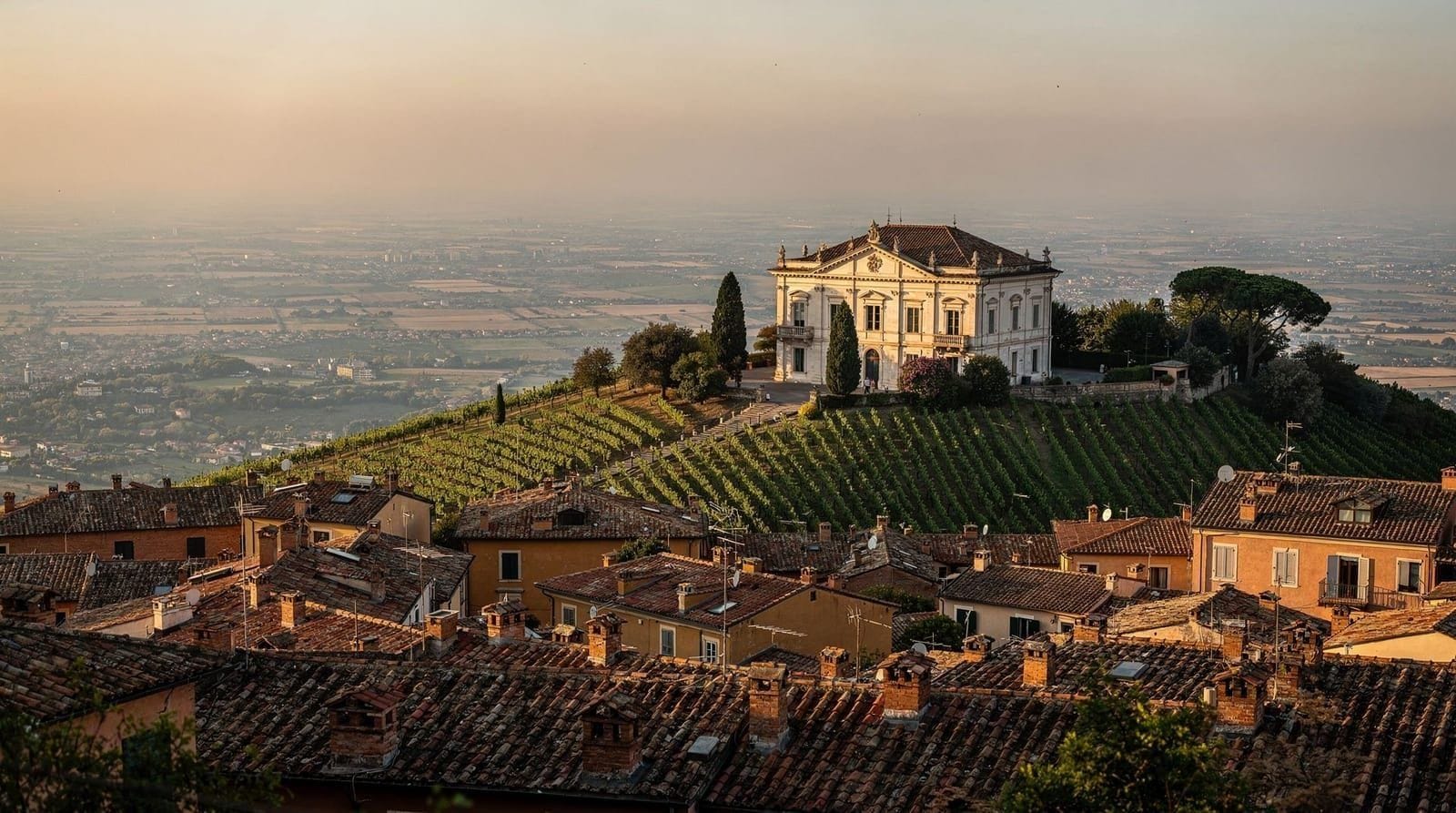
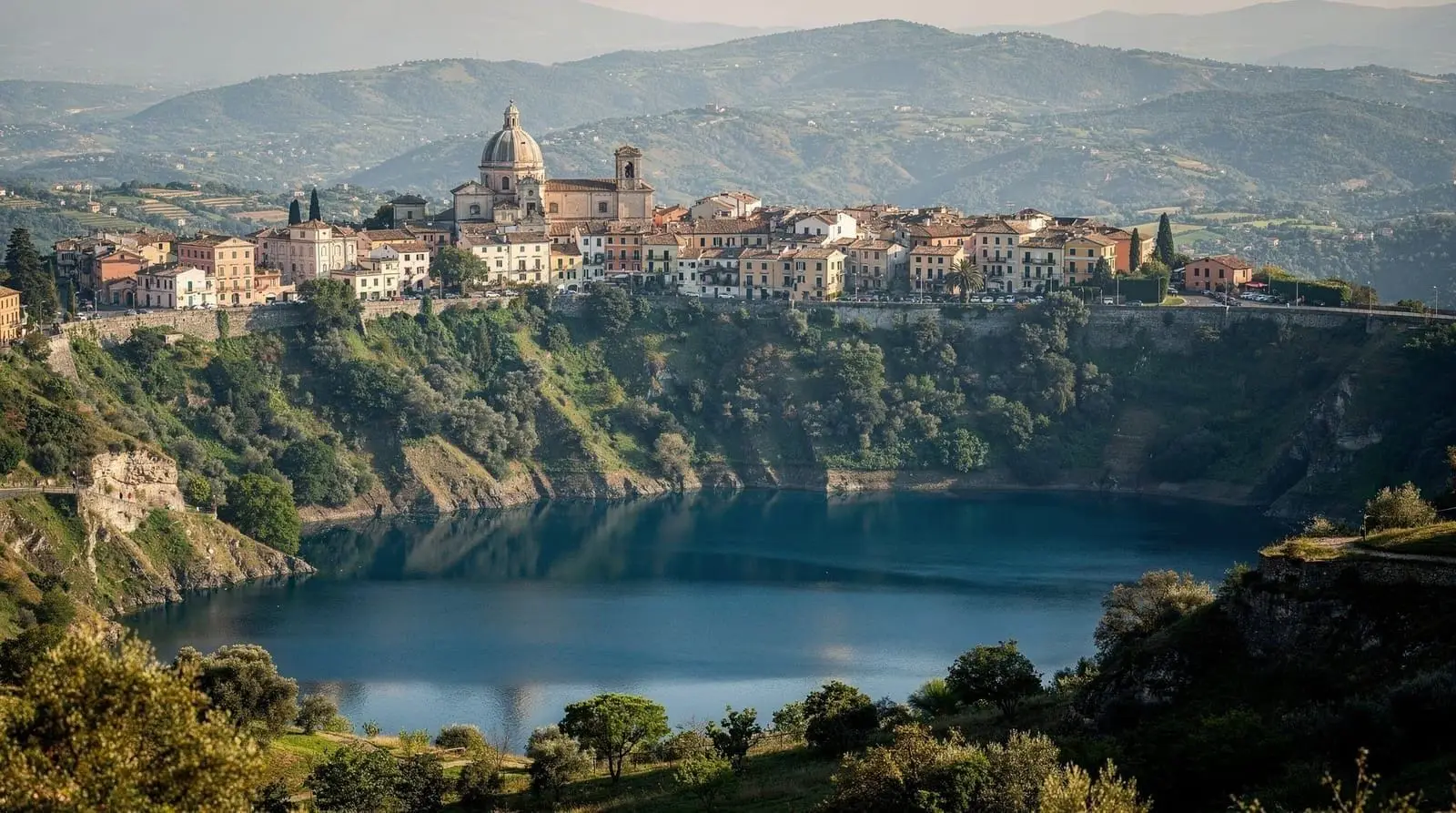
Castel Gandolfo sits on a narrow ridge between two volcanic crater lakes — Lake Albano to the west, the Alban Hills extending to the east — at 425 metres above sea level. For 400 years it served as the papal summer residence, with popes escaping Rome’s summer heat for the cooler air and remarkable views of the Lazio plain. Pope Francis, who has never particularly cared for the privileges of the position, chose not to use the palace and opened it to the public in 2016. The Papal Palace, its apartments, the Vatican Astronomical Observatory, and the extraordinary gardens on the crater rim are now managed by the Vatican Museums and accessible to visitors. Castel Gandolfo is smaller, quieter, and less famous than its neighbour Frascati — and for most visitors, that is entirely the point.
The Papal Palace and Vatican Museums branch
The Palazzo Apostolico di Castel Gandolfo was built by Pope Urban VIII in 1626 on a site used as a summer retreat since classical antiquity (a Roman villa of uncertain attribution occupied the same crater-rim position). It is a substantial complex: the main palace building, a 17th-century Baroque interior, the Cortile d’Onore (Honour Courtyard), and the Casina di Pio IV-style summer apartments. Connected to it are the Vatican Gardens at Castel Gandolfo — 55 hectares of formal gardens, kitchen gardens, and woodland on the crater rim, with views over Lake Albano below.
Since 2016, managed by the Vatican Museums, visitors can book guided tours of:
- The main palace apartments (papal living and audience rooms, Baroque interiors, papal furnishings)
- The Gardens (guided walking tour, approximately 2 hours)
- The Kitchen Garden (orto organico — the papal vegetable garden, genuinely interesting for the scale and the produce)
- The Vatican Astronomical Observatory (Specola Vaticana), relocated here from Vatican City in 1935; occasionally open for visits by appointment
Tickets range from approximately €17 (basic palace tour) to €22 (extended gardens tour). Book in advance through the Vatican Museums website — the same booking system used for the Sistine Chapel. These tours sell out. Pope Francis was not using the palace when these tours were established, but the complex is still a Vatican property and the interiors reflect centuries of papal occupation.
Honest note: The palace interior is not on the scale of the Vatican Museums proper — it is a series of furnished rooms rather than a great art museum. The gardens are the main attraction. If your primary interest is art and architecture at Vatican-level intensity, the Vatican Museums in Rome itself are more rewarding. If your interest is in the landscape, the history of the papacy outside Rome, and a quiet tour through genuine papal gardens, Castel Gandolfo delivers something genuinely different.
Castelli Romani 8-hour guided tour — Castel Gandolfo, lake, wine, and FrascatiLake Albano: the crater lake
Lake Albano (Lago Albano) is a volcanic crater lake 3.5 km long and up to 170 metres deep — formed by the collapse of a volcanic caldera roughly 30,000 years ago. The town of Castel Gandolfo sits on the northern crater rim, 270 metres above the lake surface. The views down to the water — deep blue-green, perfectly circular, forested slopes dropping to the shoreline — are among the most beautiful landscapes in Lazio.
Swimming: The eastern shore has both private beach clubs (stabilimenti balneari) with sun-loungers, bars, and facilities (€10–15/day), and a small free public beach (spiaggia libera) near the town of Albano Laziale. The water is clean and calm (no waves — it is a crater lake). Summer swimming is popular with Romans; weekends in July and August bring large crowds to the beach area.
Rowing and canoeing: The lake was used for the 1960 Rome Olympics rowing events. Local rental operators offer rowing boats and pedal boats on the lake. The Circolo Canottieri Lazio and other clubs on the lake shore offer rentals.
Walking around the lake: A path circuits part of the lake shore; the full perimeter is approximately 10 km. The northern section under the Castel Gandolfo ridge is shaded and scenic. Parts of the southern shore path require navigating around private lakeshore properties.
From the town: Getting from the Castel Gandolfo ridge to the lake shore requires descending approximately 270 metres. There is a road (Via del Lago) and a footpath through the woods. The ascent back up is a workout in summer heat — factor this in.
Getting to Castel Gandolfo from Rome
By train and bus: Take a Trenitalia regional train from Roma Termini on the Rome-Velletri line, direction Velletri or Nettuno. The stop is Castel Gandolfo station (not Albano Laziale — check timetables, as not all trains stop at Castel Gandolfo). Journey approximately 35–45 minutes, fare approximately €3.50. From the station, the town centre is about a 20-minute uphill walk or a short bus/taxi ride.
Alternative via Albano Laziale: More trains serve Albano Laziale station (one stop further south). From Albano, local COTRAL buses or a taxi (€8–10) cover the 5 km to Castel Gandolfo.
By car: Via Appia (SS7) runs through the Castelli zone; from Rome, approximately 30–40 minutes without traffic. Castel Gandolfo is well signposted. Parking in the town is limited — use the parking areas at the edge of town and walk in.
Bus from Rome: COTRAL bus from Anagnina metro station (Line A) to Castel Gandolfo. Journey ~40 minutes. Less practical than the train for most visitors.
The town of Castel Gandolfo
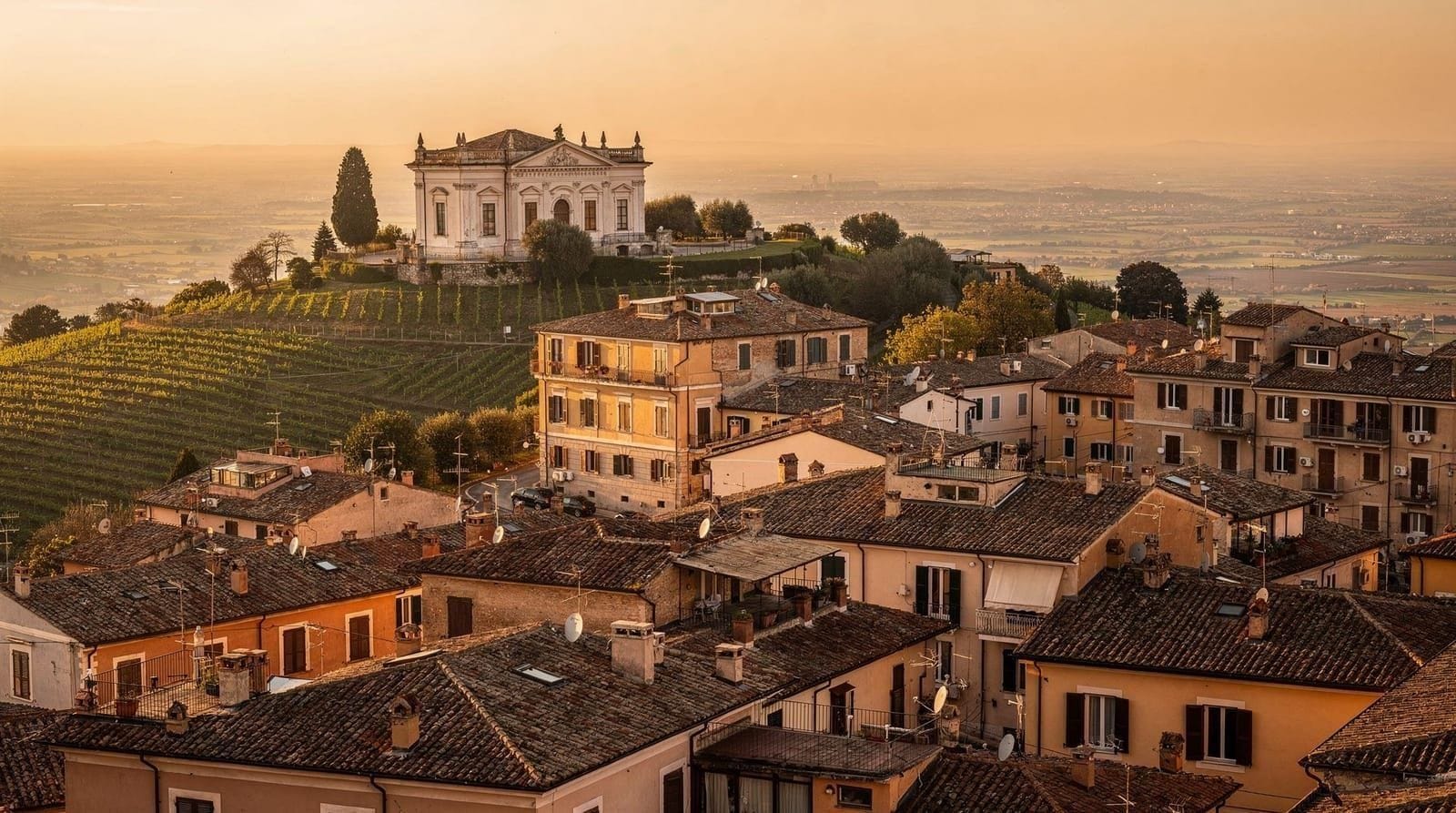
The main piazza (Piazza della Libertà) is dominated by the palace façade and a Bernini fountain (Fontana del Mascherone, 1659). The town is small — a tight cluster of streets on the ridge. The terrace (belvedere) at the piazza’s edge looks straight down over the lake in one direction and over the Roman plain in the other. On clear days you can see Rome’s outline.
The street from the piazza to the belvedere (Corso della Repubblica) has a handful of restaurants, bars, and shops selling local wine and olive oil. This is genuinely the whole town for visitors — it is very small. Allow 90 minutes for the town itself; the palace tour (1.5–2 hours) is the main time commitment.
Where to eat in Castel Gandolfo
Ristorante Antico Borgo (Corso della Repubblica 7): The most consistently recommended trattoria in town. Roman menu with local Castelli touches — abbacchio (roast lamb), cacio e pepe, grilled fish from the lake (trout and perch are farmed in Lake Nemi; rarely in Albano). €18–24 for a full meal. Book for weekend lunch.
Ristorante Pagnanelli (Via Gramsci 4): A family-run institution with lake-view dining. Specialises in lake fish and local Castelli wines. Slightly more formal than average for the area; good for a wine-focused lunch. €20–28 per main.
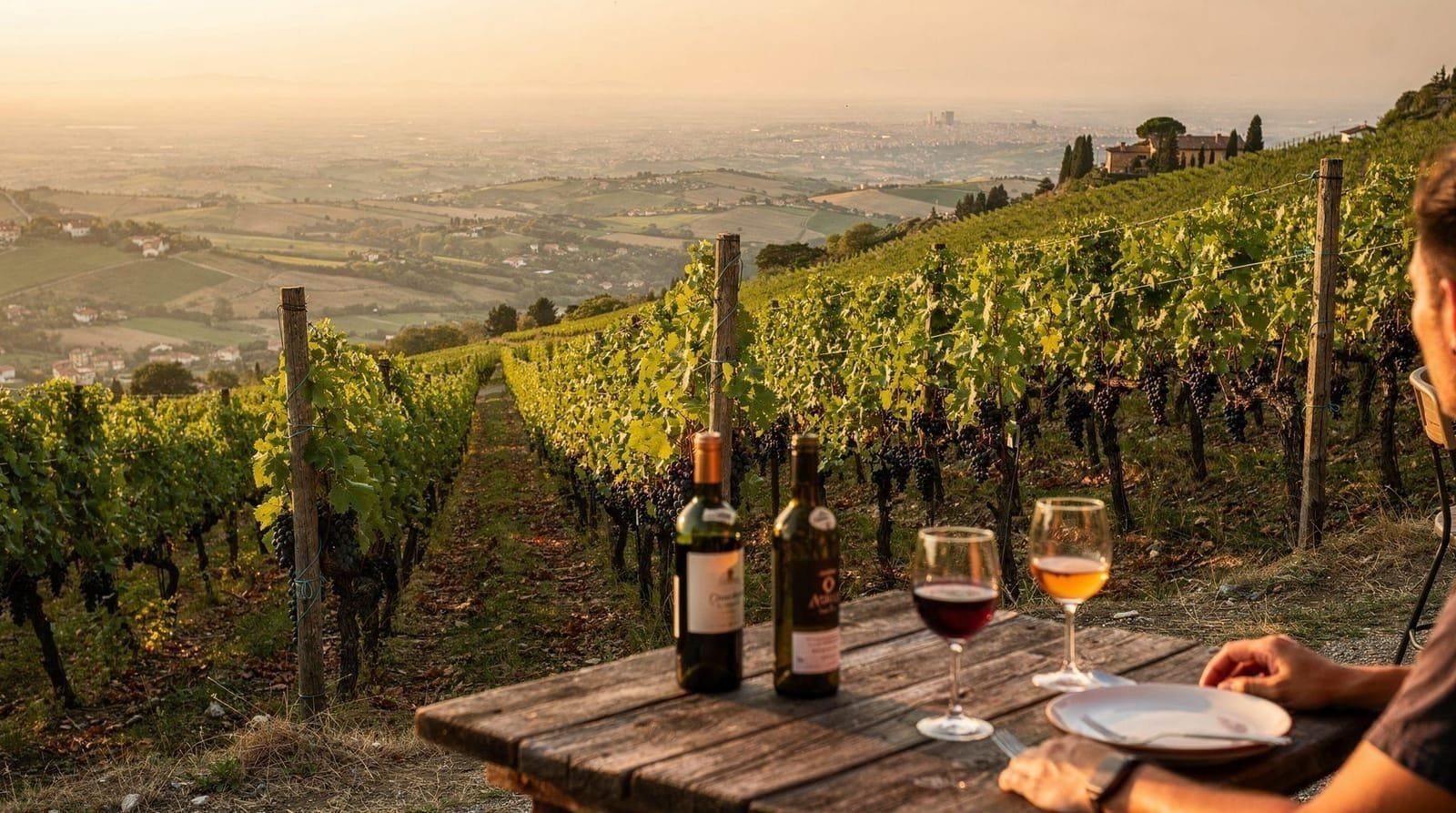
Wine and snacks at local enotecas: Several small wine shops on Corso della Repubblica sell Frascati DOC and other Castelli wines by the glass alongside cheese and salumi. Cheaper and more casual than the restaurants.
Combining Castel Gandolfo with other Castelli towns
Castel Gandolfo is most naturally combined with Castelli Romani & Frascati as part of a full Castelli day. The two towns are 8 km apart, connected by local bus (COTRAL) or taxi. A sequence that works:
- Morning: Castel Gandolfo palace tour + belvedere views (arrive 9:30 for the first tour)
- Early afternoon: Bus or taxi to Frascati for lunch at a fraschetta
- Afternoon: Frascati town, wine cantina visit, train back to Rome from Frascati station
This is a genuinely satisfying full day and avoids the need for a car.
Castelli Romani food and wine full-day tour — Castel Gandolfo + Frascati + cantina visitsThe papal connection: 400 years of summer residence
The relationship between the papacy and Castel Gandolfo goes back to 1596, when Pope Clement VIII acquired the estate. The castle at the site — built in the 13th century by the Gandolfi family (who gave the town its name) — had been used intermittently by various popes before Clement formalised the acquisition. Pope Urban VIII commissioned Carlo Maderno and then Gian Lorenzo Bernini to design the Papal Palace complex, completed between 1626 and 1660.
For the next three centuries, popes retreated to Castel Gandolfo from approximately June or July through September — the period when Rome’s summer heat and malaria risk made the city unpleasant and sometimes dangerous. The 270-metre elevation and the lake’s cooling effect reduced temperatures by 4–8°C compared to Rome. Before modern air conditioning, this was a genuine health consideration.
The Lateran Treaties (1929) formally incorporated Castel Gandolfo (along with the Vatican) into the extraterritorial properties of the Holy See under Italian law. The palace, gardens, and farm are legally Vatican territory.
Papal audiences at Castel Gandolfo: For most of the 20th century, popes held weekly general audiences from the palace loggia during their summer stays — the tradition of a crowd gathering in the piazza below to receive a blessing became a fixed feature of Italian summer culture. Pope John Paul II used Castel Gandolfo extensively; Pope Benedict XVI also spent summers here. Pope Francis broke the tradition. Having grown up in Argentina, he expressed discomfort with the scale and formality of the palace, and has chosen to remain at Casa Santa Marta (his modest Vatican accommodation) year-round.
The farm (Pontificia Azienda Agricola Castelli Romani): The papal estate includes 55 hectares of gardens and a working farm (Villa Barberini) producing organic vegetables, olive oil, honey, and wine. The farm supplies the Vatican’s kitchen. Visitors on the extended garden tour see the kitchen gardens, greenhouses, and farm buildings. Some products are sold at the Vatican’s gift shops.
Lake Albano in the Roman era
The lake’s history extends well beyond the papal era. Lake Albano (Lago Albano) was known to the Romans as Lacus Albanus. Alba Longa, Rome’s mythological predecessor city, stood on the lake’s rim. The lake was sacred in the Roman religious calendar: the Feriae Latinae (Latin Festival), a major annual celebration of the Latin League, was held on the Mons Albanus (Monte Cavo, above Castel Gandolfo) and included collective Latin sacrifice to Jupiter Latiaris.
The emissary tunnel: In 397 BCE, during Rome’s long siege of the Etruscan city of Veii, an oracle reportedly warned that Veii could not be taken while Lake Albano remained above a certain level. The Romans responded by building a 1.4 km drainage tunnel through the volcanic rock — the Emissario del Lago Albano — to reduce the lake’s level. The tunnel is one of the oldest major hydraulic engineering works in the Mediterranean world and still functions today, draining the lake at a controlled rate. It is visible at the lake shore near Albano Laziale.
The Galley of Caligula: Emperor Caligula (37–41 CE) moored two enormous pleasure barges on Lake Nemi (the adjacent smaller crater lake), equipped with gardens, temples, mosaic floors, and heating systems. The ships sank in antiquity. They were raised in 1929–1932 during a massive drainage operation under Mussolini, and a museum was built to display them at the lake shore. In 1944, German forces set fire to the museum; the ships were destroyed. The Museo delle Navi Romane at Nemi today shows scale models and surviving artefacts.
The Vatican Observatory: the Specola Vaticana
The Specola Vaticana (Vatican Observatory) has operated continuously since 1582 in various institutional forms — making it one of the oldest continuously operating astronomical institutions in the world. Galileo’s condemnation and the Church’s subsequent complex relationship with science make the Vatican’s serious scientific observatory easy to dismiss as cosmetic. The actual record is more nuanced: Jesuit astronomers made significant contributions to stellar spectroscopy (especially in the early 20th century), variable star classification, and meteorite studies.
The observatory relocated to Castel Gandolfo in 1935 when Rome’s light pollution made Vatican City unsuitable. It now operates both at Castel Gandolfo (mainly as a library and archive; light pollution has spread to the Castelli) and at a partner facility in Arizona (the Vatican Advanced Technology Telescope at Mount Graham International Observatory).
The Castel Gandolfo observatory is not a public museum in the standard sense — it is a working research institution. Guided tours are available at limited times by prior arrangement through the Vatican Museums booking system. These tours cover the telescope domes, the historic instrument collections (including a magnificent collection of meteorites), and the observatory’s history. Worth booking for anyone interested in the intersection of institutional history and science.
Practical photography notes
Castel Gandolfo’s photographic appeal is primarily about the lake view — the prospect from the belvedere down over the crater rim to the lake surface is extraordinary and deserves a wide lens (or a panorama). The best light is morning (the lake face is east-facing and catches the early sun). Late afternoon light from the west warms the town’s travertine buildings.
The Bernini fountain in Piazza della Libertà is a minor but satisfying architectural detail — the exedra of the palace façade behind it creates a compressed Baroque street scene that works well in photographs.
Inside the palace gardens (on the guided tour), the formal garden parterres and the kitchen garden have strong visual structure. The greenhouse interiors are photogenic in diffuse overcast light.
Castel Gandolfo vs. Frascati vs. Nemi: choosing your Castelli towns
The Castelli Romani area has a dozen small hilltop towns, and most visitors only have time for two or three. Here’s how the main options compare for a Rome-based day trip.
| Castel Gandolfo | Frascati | Nemi | |
|---|---|---|---|
| Main draw | Papal palace museum, lake views | Wine cantinas, fraschette | Caligula’s ship museum, tiny crater lake |
| Crowd level | Moderate | Higher (more accessible, more famous) | Low |
| Time needed | Half day | Half day | 2–3 hours |
| Train access from Rome | Direct regional train (35–45 min) | Direct regional train (25–30 min) | No station; bus or car from Castel Gandolfo/Albano |
| Best paired with | Frascati (bus/taxi, 8 km) | Castel Gandolfo, or Tuscolo ruins | Genzano or Ariccia, usually by car |
For a single full day covering the essentials, Castel Gandolfo plus Frascati (see the combination itinerary above) is the most practical no-car option. Nemi rewards a car-based visit or an organised Castelli Romani tour far more than public transport, since it lacks a direct rail connection. For the fuller regional picture — Frascati’s wine cantinas and the DOC classification system specifically — see the Frascati and Castelli wine guide and the broader Lazio wine guide.
If Castelli Romani is just one of several day trips you’re considering from Rome, the best day trips from Rome overview and the day trips by train guide put it in context alongside Tivoli, Ostia Antica and Orvieto.
Ariccia: the porchetta detour
Two kilometres south of Castel Gandolfo, Ariccia is easy to overlook but shouldn’t be — it’s the acknowledged home of Lazio’s best porchetta and a genuinely striking piece of Baroque town planning. Bernini designed the town’s central piazza and the Chiesa di Santa Maria dell’Assunzione (a circular domed church modelled loosely on the Pantheon) as part of a coordinated 17th-century redesign commissioned by the Chigi family, whose palace still dominates the square.
The town’s real draw for most visitors is the string of fraschette along Via Borgo San Rocco and Via dell’Uccelliera, serving porchetta (slow-roasted, herb-stuffed whole pork) by weight on simple wooden boards, alongside local wine served in the traditional quarter-litre fojetta carafe. This is unpretentious eating — no menus in some places, just point at the porchetta and order wine. A generous portion with bread and wine runs roughly €10–15 per person.
Ariccia is reachable from Castel Gandolfo by the dramatic Ponte di Ariccia, a 19th-century viaduct crossing a deep wooded ravine — walkable in about 25 minutes, or a short taxi ride. Combining Castel Gandolfo’s palace and lake views with an Ariccia porchetta lunch is one of the most satisfying half-day-plus-lunch pairings in the entire Castelli area, and one that most first-time visitors to Rome never discover.
Frequently asked questions about Castel Gandolfo & Lake Albano
Can I visit the Papal Palace at Castel Gandolfo?
Yes, since 2016. The palace and gardens are managed by the Vatican Museums. Guided tours of the papal apartments and gardens are available most days (closed Mondays and some Vatican holidays). Book in advance through the Vatican Museums website.
Does the Pope still live at Castel Gandolfo?
Pope Francis does not use the palace as a personal residence, which is why it was opened to the public. It remains Vatican territory and a papal property — but it functions as a museum for public visits rather than as an active papal residence. Should a future pope choose to use it again, the visitor access arrangements would change.
How do I get from Castel Gandolfo to Lake Albano?
Descend from the town to the lake shore (270m drop) via Via del Lago or the woodland footpath — about 20 minutes on foot. The ascent back is the same path but more tiring in summer heat. A taxi from the town to the lake shore costs approximately €5.
Is Lake Albano safe for swimming?
Yes. The water is clean (it is a sealed volcanic crater lake with no industrial runoff). The beach areas are supervised in summer. The main challenge is the 270-metre altitude difference between Castel Gandolfo and the lake — going down and coming back up requires planning.
Should I visit Castel Gandolfo or Frascati?
Both, if you have the time. Castel Gandolfo is quieter, more scenic, and offers the unique papal palace visit. Frascati is more lively, more accessible, and the centre of Frascati wine production with the best fraschette. Combined in one day, they complement each other well.
What is the Specola Vaticana?
The Vatican Observatory (Specola Vaticana) relocated from Vatican City to Castel Gandolfo in 1935. It is an active astronomical research institution — the Jesuit scientists based here contributed to modern research in stellar spectroscopy. Tours are available by appointment; check with the Vatican Museums. The scientific context (the Vatican’s oldest observational sciences programme, operating continuously since 1582 in various forms) is worth knowing about.
Is Castel Gandolfo worth it without the palace tour?
Yes, though it’s a smaller visit — the belvedere view over Lake Albano is free and doesn’t require a ticket, and the town itself takes under two hours to see. Most of what makes Castel Gandolfo distinctive, though, is the palace and gardens tour, so skipping it turns the stop into a scenic viewpoint rather than a full half-day destination.
Can I do Castel Gandolfo without a car?
Yes — it’s one of the easiest Castelli towns to reach by public transport, with a direct regional train from Roma Termini. This is a genuine advantage over Nemi, which has no rail station at all. See day trips by train from Rome for the wider picture of which Lazio destinations work well without driving.
Top experiences
Bookable activities with verified prices and instant confirmation on GetYourGuide.