Rome with a baby — what actually works and what to abandon
Rome with a baby is not the hardship experience that some travel writing implies, nor is it the seamless city-break that optimistic Instagram accounts suggest. It sits somewhere in between: genuinely doable, genuinely worth doing, requiring a specific kind of recalibration that most pre-baby travellers do not initially make.
| Best time | April, May, October — mild temperatures, manageable crowds |
| Gear | carrier for cobblestones; pushchair fine for parks & river paths |
| Baby supplies | pharmacies (farmacia) stock major formula brands |
| Best areas to stay | Prati, Monti, near Villa Borghese — quieter, walkable |
| Avoid | late July and August; midday heat with any age of baby |
The core of that recalibration is this: you are no longer optimising for what you see. You are optimising for a functional day that includes some good things, adequate nap conditions, food that works for everyone, and no meltdown — theirs or yours. Once you accept that framework, Rome becomes more manageable rather than less.
The cobblestone problem
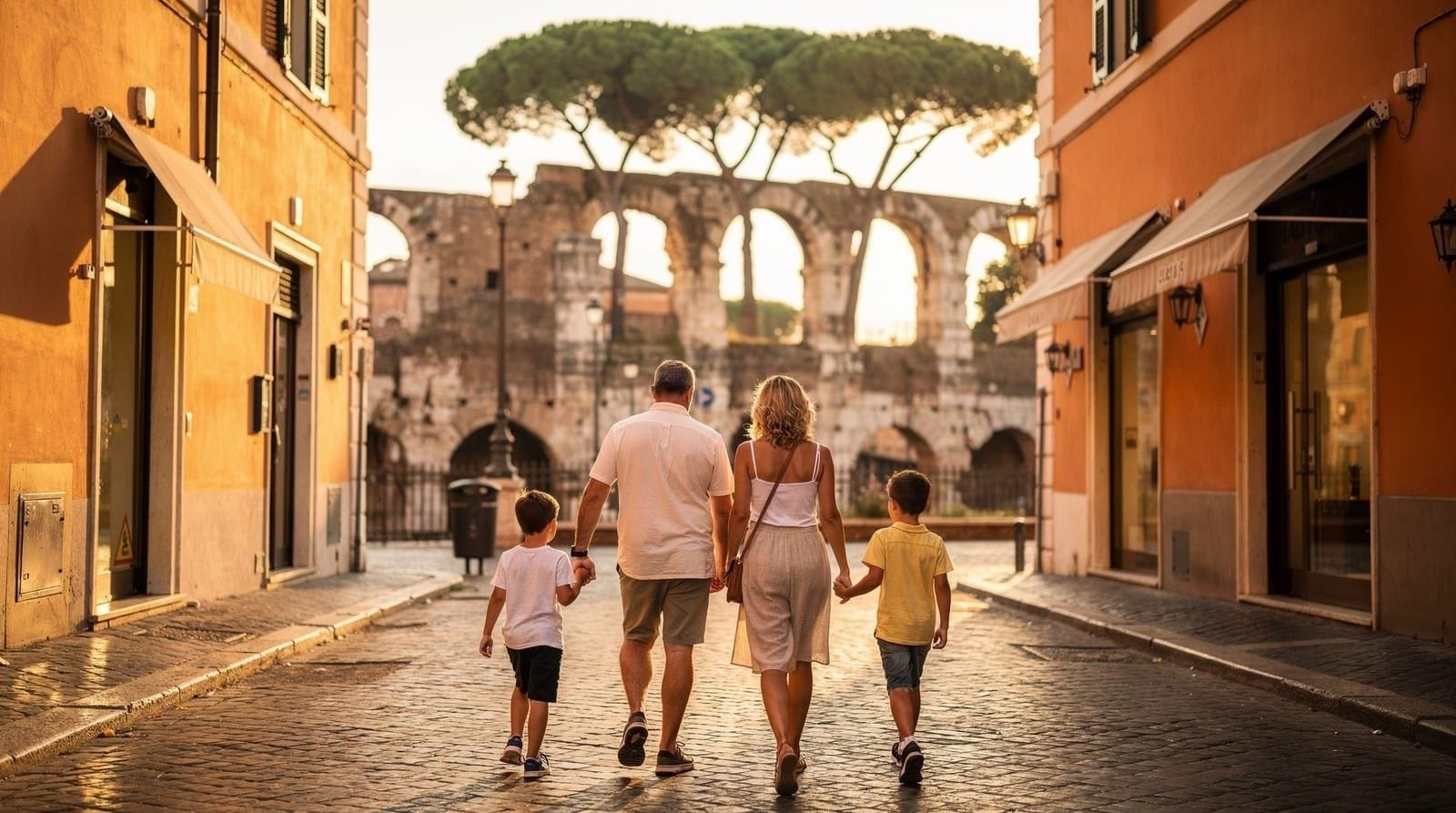
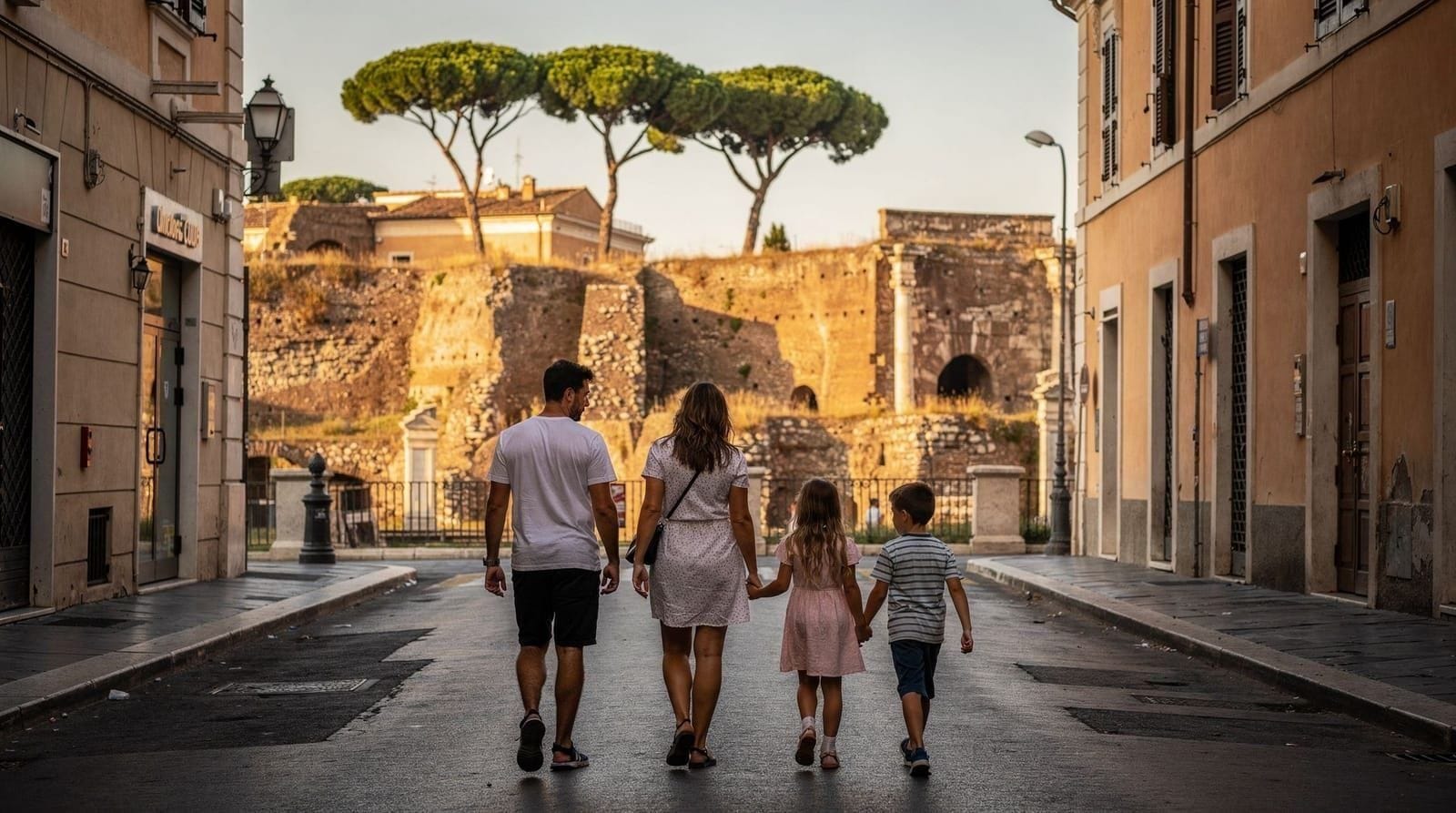
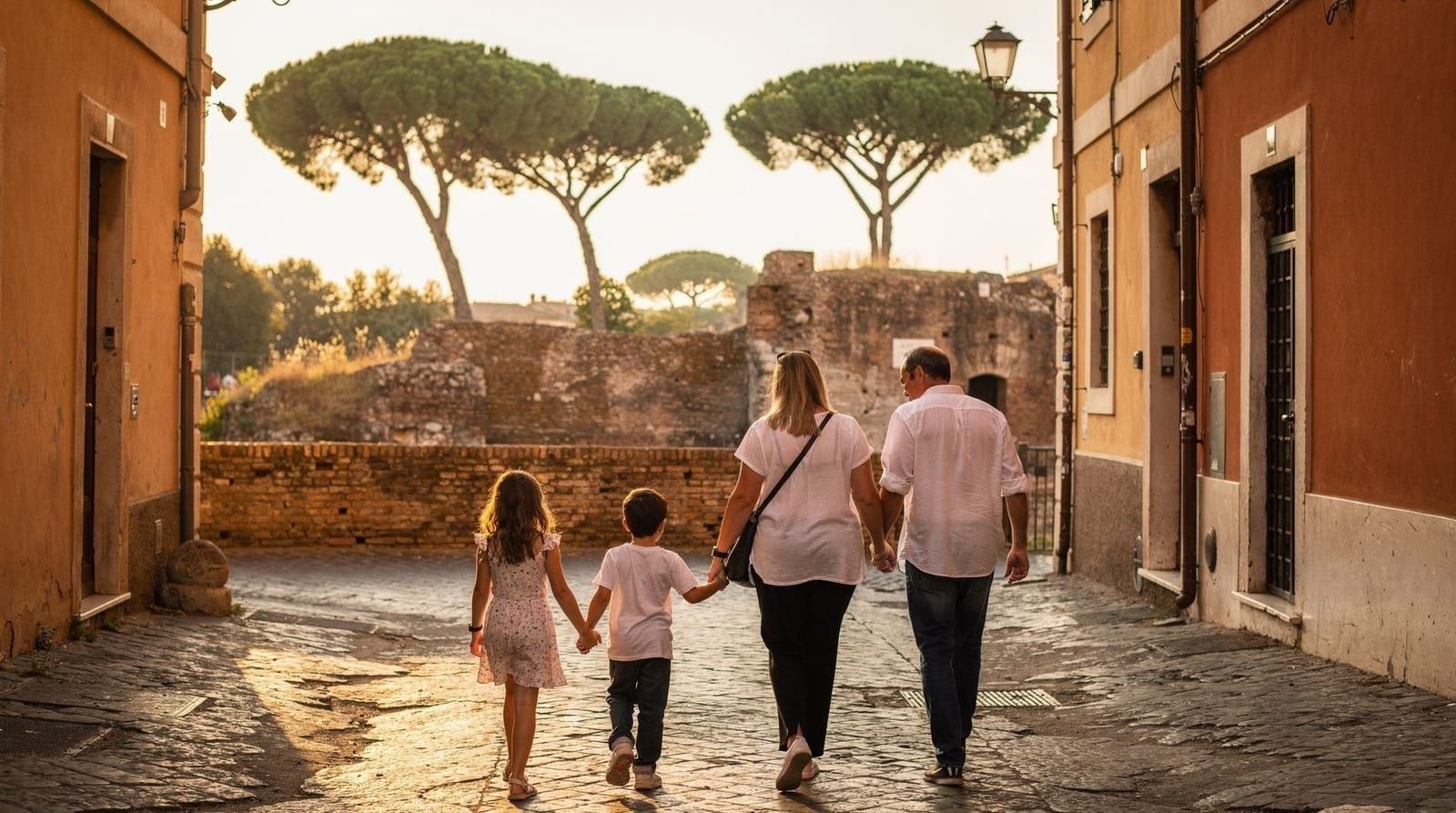
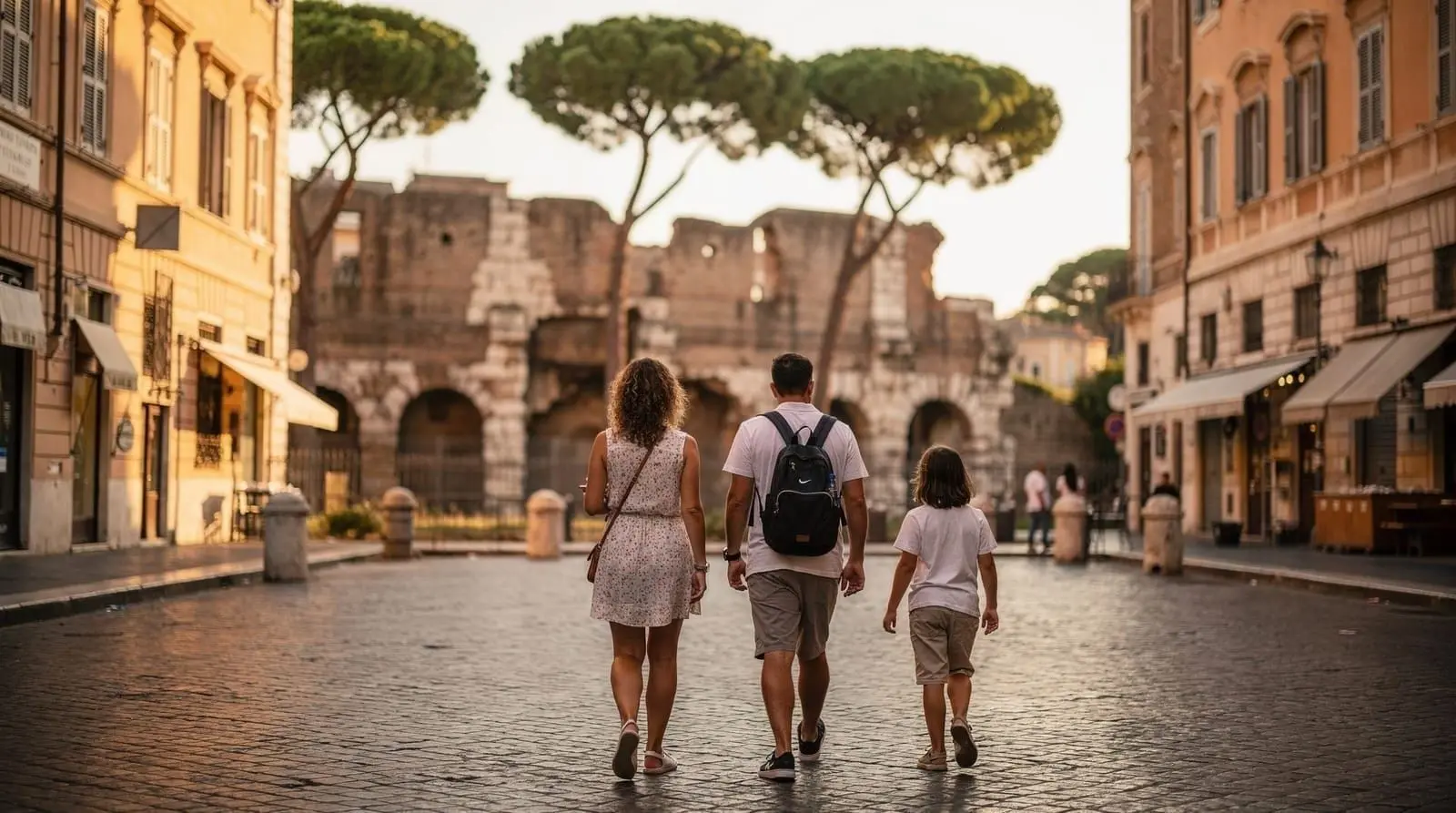
Every parent who has pushed a pram through Rome’s centro storico will mention the cobblestones (sampietrini — the large basalt blocks that pave most of Rome’s historic streets). They are genuinely difficult. The terrain is uneven, often slippery when wet, and impossible to roll smoothly on. A standard wheeled pushchair becomes a vibration machine; a heavier travel system becomes a workout.
The practical solutions: a carrier (sling or structured carrier) for navigating historic areas, with the pushchair folded and left at the accommodation, is the realistic approach for any sightseeing that involves streets. For parks, the larger piazzas, and flatter areas near the river, a pushchair is fine. For cobblestone Rome, a carrier is the answer.
A baby carrier also solves the Vatican and Colosseum problem — pushchairs are technically permitted in most Rome attractions but the combination of queues, crowds, and uneven surfaces makes them more trouble than they are worth in summer.
When to go
April, May, and October are the honest answer. These months offer temperatures that work for a baby (20–25°C), manageable crowd levels, and functioning city infrastructure without the August heat stress. July and August in Rome are genuinely difficult with a baby — temperatures reach 32–38°C, shade is limited around major sites, and the heat puts significant physiological stress on small infants. The best time to visit Rome guide covers this comprehensively, but for babies specifically, the rule is: avoid late July and all of August unless you have no choice.
Rome in spring — mid-March through May — is the strongest recommendation. The city is beautiful, the light is excellent, and a 10am start is comfortable rather than a race against heat.
What you can actually do
The good news is that most of Rome’s best things are compatible with baby logistics if you approach them correctly.
Gardens and open spaces are completely accessible and genuinely good with a baby. The Villa Borghese park is enormous and pushchair-friendly, with shaded paths, a café, and enough space to walk and stop without the intensity of a museum. The Borghese Gallery itself requires advance booking and is not straightforward with an active baby, but the park surrounding it is excellent.
The Orange Garden (Giardino degli Aranci) on the Aventine hill is smaller but one of the most beautiful gardens in Rome, with a famous view over the city, fountains, and shade. Entirely manageable with a pushchair if you access it via the lift rather than the stairs.
The Colosseum and Forum with a baby: the Colosseum interior is accessible (there is a lift for some levels) but the experience is hot, crowded, and requires more dexterity with a carrier or pushchair than it is worth in high season. A view of the Colosseum from the exterior — from the Palatine hill above, or from the Circo Massimo side — is genuinely impressive without the logistics of getting inside. If the Colosseum matters enormously, do it early morning, book online, and use a carrier.
The Pantheon is one of the better monuments for a baby visit: interior is cool, the visit is short (20–30 minutes), and the space is dramatic in a way that infants seem to respond to. The roof opening creates an unusual light quality that is worth experiencing.
Piazza Navona and the centro storico streets are manageable in the morning before crowds build. The key is timing: 8–10am in Rome’s historic centre is a different experience to 11am–2pm. The city empties of tourists for a brief window after the cafés open and before the buses arrive.
Feeding logistics
Breastfeeding in public is entirely normal and accepted in Italy. Cafés, restaurants, and parks are all appropriate locations. Nobody will comment or object.
For formula-fed babies, Italian pharmacies (farmacia, marked with a green cross) stock most major formula brands and are widely available. If you are bringing formula from home, check the volume allowances in your luggage, as powdered formula is treated differently to liquids by airport security.
Baby food in jars is available at most supermarkets (Conad, Carrefour, Despar all have baby sections). The range is reasonable if not as diverse as larger UK or German supermarket chains. If your baby is on solids, pasta with olive oil and a small amount of parmesan is available at almost any Italian restaurant and is entirely appropriate as a first weaning food — Romans start their babies on pasta fairly early.
Highchairs are common in Rome’s restaurants, particularly those with family clientele. In the tourist-area restaurants, the highchair availability varies; in neighbourhood restaurants in Prati, Monti, and Testaccio, you are more likely to find both chairs and a genuinely welcoming attitude.
The nap structure problem
Sightseeing and nap schedules are genuinely incompatible in Rome unless you plan around them. The approach that works: build the day around one main activity (a market, a park, a single monument) scheduled for morning when the baby and you are both fresher. Allow the nap to happen however it happens — in the carrier, in the pushchair if you are in a navigable area, or back at the accommodation if you are near enough.
The afternoon nap window is the time to sit in a café, eat properly, and debrief the morning. Rome’s café culture is excellent and entirely compatible with this rhythm.
Getting around with a baby
Rome’s public transport is workable with a baby but requires planning. The metro has lifts at some but not all stations, and they are frequently out of service — check ahead if you’re relying on one for a pushchair. Buses and trams are more consistently accessible, with low-floor designs on newer vehicles, but crowding at peak times makes them difficult with a pram. The getting around Rome guide covers the full system; for a baby specifically, taxis are the least stressful option for anything beyond a short walk, particularly in summer heat. The Rome taxi guide has the practical detail on fares and where to find them.
Walking remains the most reliable method for short distances in the centro storico — faster than waiting for transport, and it avoids the lift lottery entirely if you’re using a carrier rather than a pushchair.
Health and safety basics
Farmacie are widely distributed and staffed by pharmacists who can advise on minor issues without needing a doctor’s visit — useful for anything from nappy rash to a mild fever. For anything more serious, Rome’s public hospitals have paediatric emergency departments (pronto soccorso pediatrico); the Bambino Gesù hospital is the specialist children’s hospital and generally the best-equipped option if something genuinely needs attention.
Sun exposure is the most common real risk for a baby in Rome, particularly outside the spring window — a hat, shade, and avoiding the 12–4pm window matters more here than in most European capitals. The Rome in summer heat guide explains why the physiological stakes are higher for infants specifically, if travel dates can’t avoid the hot months entirely.
Accommodation
Choose accommodation in a neighbourhood that is walkable to things you want to do, with a lift if you have a pushchair, and either a ground-floor room or confirmation that pram storage exists. The Prati neighborhood guide covers the area west of the Vatican — quieter than Trastevere, excellent for walking, manageable scale.
Apartment rentals through standard platforms give you access to a kitchen, laundry facilities (genuinely important for a week with a baby), and more space than a hotel room. For trips of five or more days, the kitchen access changes the logistics significantly.
Rome city highlights tour by electric golf cartFor parents who want to see the major sites without the walking logistics, a golf cart tour is a genuinely useful format with a baby. The vehicle is smooth (better than cobblestones on foot), the pace is controlled, and you can cover significant ground without managing a pushchair across uneven terrain. The guides are generally flexible about pace.
The honest summary
Rome with a baby is worth doing — the city has enough outdoor space, café culture, and accessible beauty that you will have a genuine trip rather than a logistical ordeal, provided you lower the sightseeing ambition appropriately.
The families who have the worst time in Rome with babies are the ones who try to maintain the pre-baby itinerary pace. The family itinerary guide covers how to sequence days with young children; the broader Rome with toddlers and baby guide is the comprehensive resource.
Two things you will definitely do: eat very well, because Italian food culture is completely compatible with travelling with a baby; and spend more time than planned in cafés, gardens, and piazzas doing not very much specific. Both of these are, in their own way, the correct way to experience Rome. A baby makes that clearer than you might expect.
Frequently asked questions
Is Rome walkable with a stroller, or do I need a carrier? Both have a role: a carrier is more practical for the cobblestoned centro storico and crowded major sights, while a pushchair works fine in parks, along the river, and in flatter, quieter neighbourhoods. Most parents end up using both across a trip.
What is the best neighbourhood to stay in with a baby? Prati, west of the Vatican, is a strong choice — quieter than Trastevere, walkable, with a good mix of neighbourhood restaurants and easier pram logistics than the historic core’s narrow, cobblestoned streets.