Pompeii & Vesuvius Day Trip from Rome — Honest Review 2026
From Rome: Pompeii and Mount Vesuvius Day Trip
Getting from Rome to one of Italy’s greatest ruins
A Pompeii day trip from Rome sits near the top of most visitors’ wish lists, and with good reason. The UNESCO site preserves a Roman city frozen in 79 AD by the eruption of Vesuvius, and it is one of the most viscerally moving places in Europe — streets you can walk, bakeries with the bread still in the ovens, and plaster casts of the volcano’s victims that have become synonymous with ancient tragedy.
The question is not whether to go, but how. The logistics matter enormously and some tour formats make this a rewarding day; others leave you exhausted with too little to show for it.
The Pompeii and Mount Vesuvius day trip from Rome is the benchmark option from the Pompeii location on GYG: it includes the high-speed train to Naples, a guided tour of the ruins, and the Vesuvius crater hike. At 12 to 14 hours total, it is a long day, but it covers the two things that matter.
The journey: why the train makes the difference
The single most important variable in any Pompeii day trip from Rome is how you travel to Naples. The high-speed train (Frecciarossa or Italo) covers Roma Termini to Napoli Centrale in roughly 1 hour 10 minutes, leaving you with actual time in Campania. Coach-based tours take 3 to 3.5 hours each way — meaning five to seven hours of the day are spent in a vehicle before you have walked a single ancient street.
The Pompeii day trip by high-speed train with guided tour is worth the slight price premium over coach alternatives. From Naples, the Circumvesuviana regional train to Pompeii Scavi takes 25 minutes and runs every 30 minutes. Guided tours handle all the connections; independent travellers should book Trenitalia or Italo in advance, particularly in July and August when trains fill.
What you actually see at Pompeii
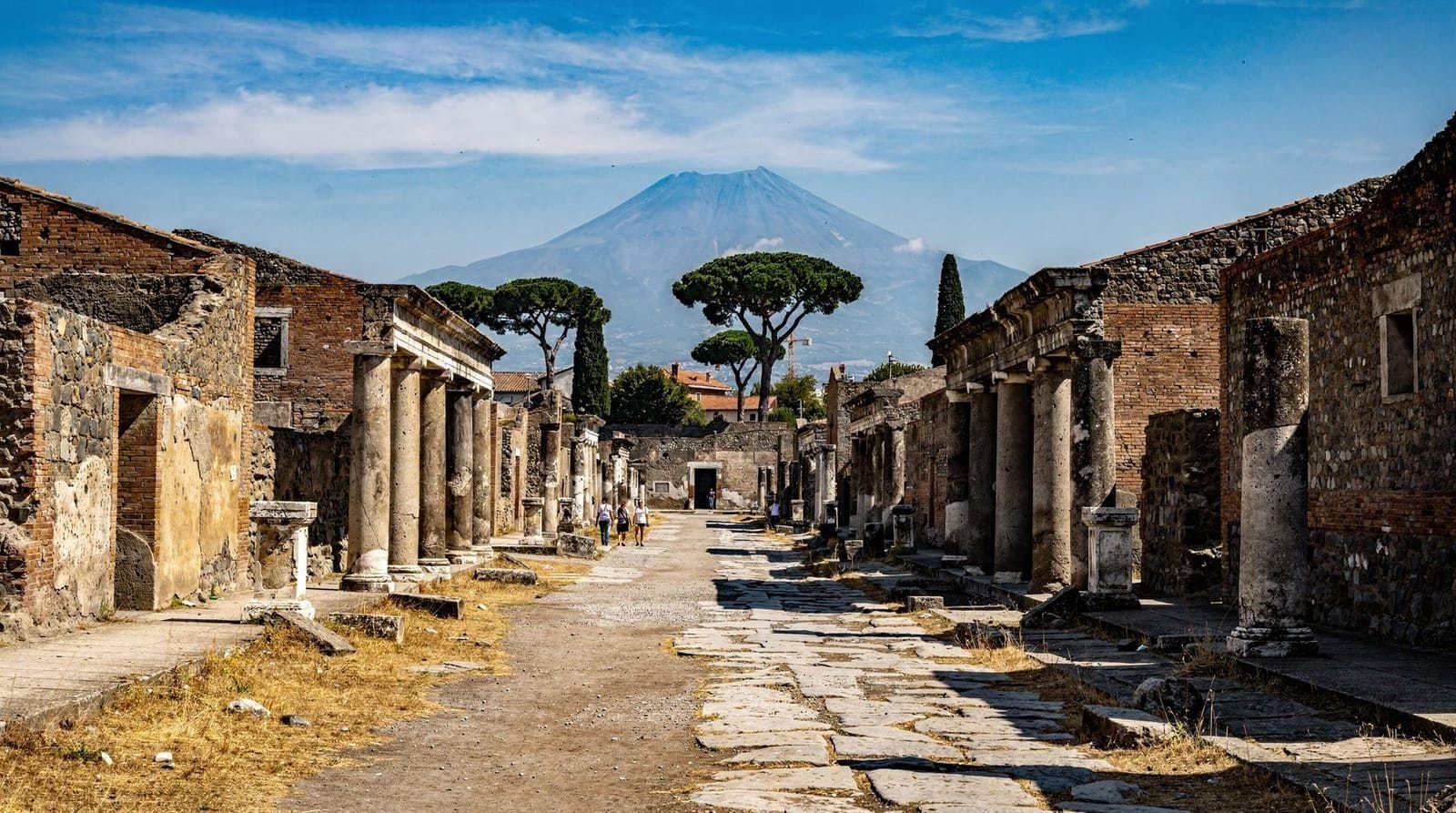
Pompeii is larger than most visitors expect. The archaeological site covers 44 hectares — roughly the size of 60 football pitches — and excavations have uncovered about two-thirds of the original city. Walking everything would take a full day at a leisurely pace. Guided tours typically cover the core circuit in 2.5 to 3 hours, which is enough to understand the city’s layout, see the highlights, and feel the weight of what happened here.
The standard route passes through the Via dell’Abbondanza (the main commercial street), the Forum (the civic and religious heart), the Lupanar (the town’s brothel, notable for its explicit frescoes), the House of the Vettii (restored Roman merchant home with vivid paintings), and the Garden of the Fugitives (where 13 plaster casts of eruption victims are preserved in place). The amphitheatre and the Villa of the Mysteries require a longer circuit or a separate booking; most day tours do not reach them.
Honest limitations: 2.5 hours is rushed. You cannot explore the side streets or linger in individual houses. If Pompeii is the reason you came to this part of Italy, consider basing yourself in Naples for a night and allocating a full day, or booking the full-day Pompeii and Vesuvius trip from Rome that gives slightly longer on site.
The Vesuvius crater hike
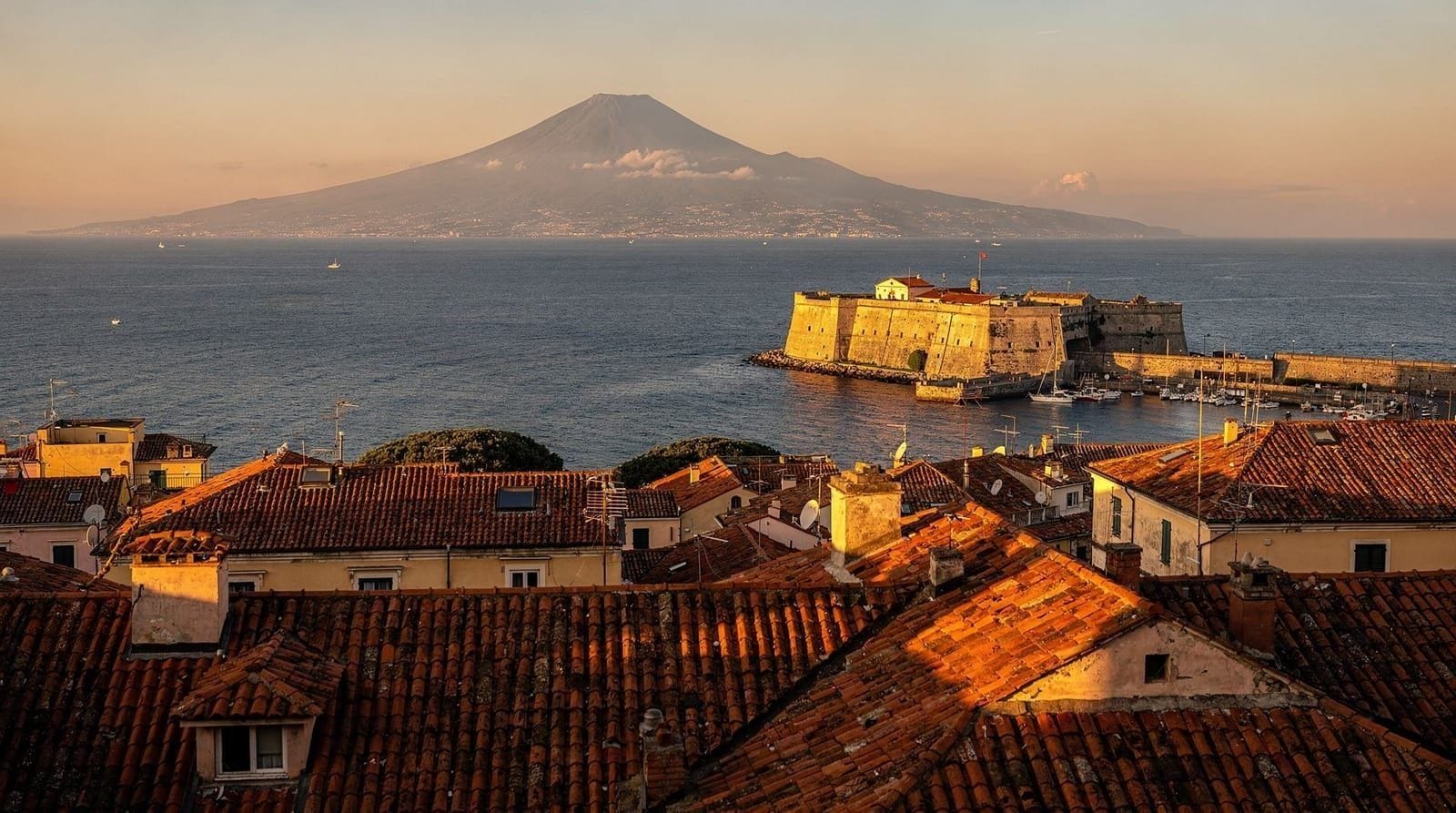
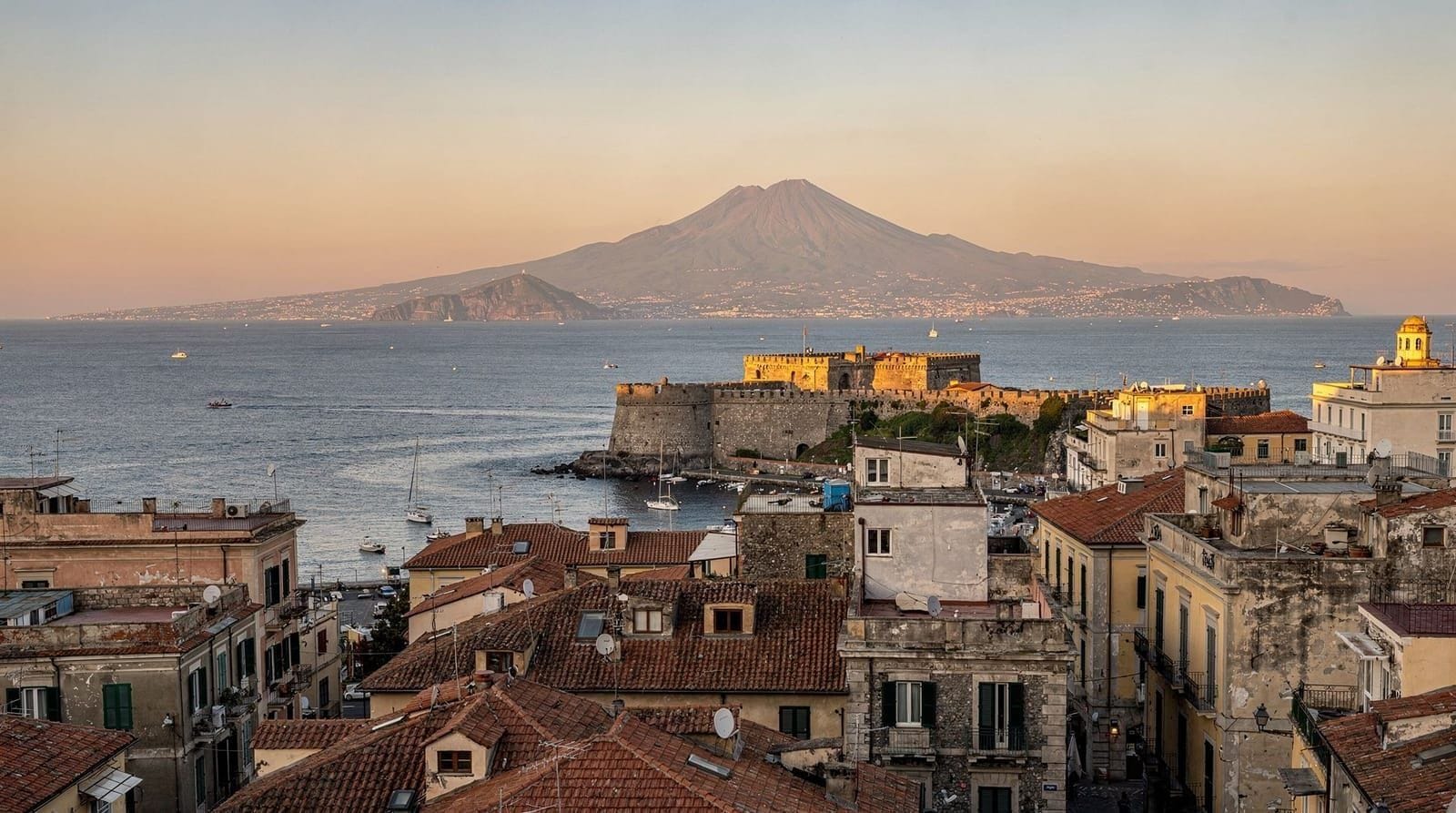
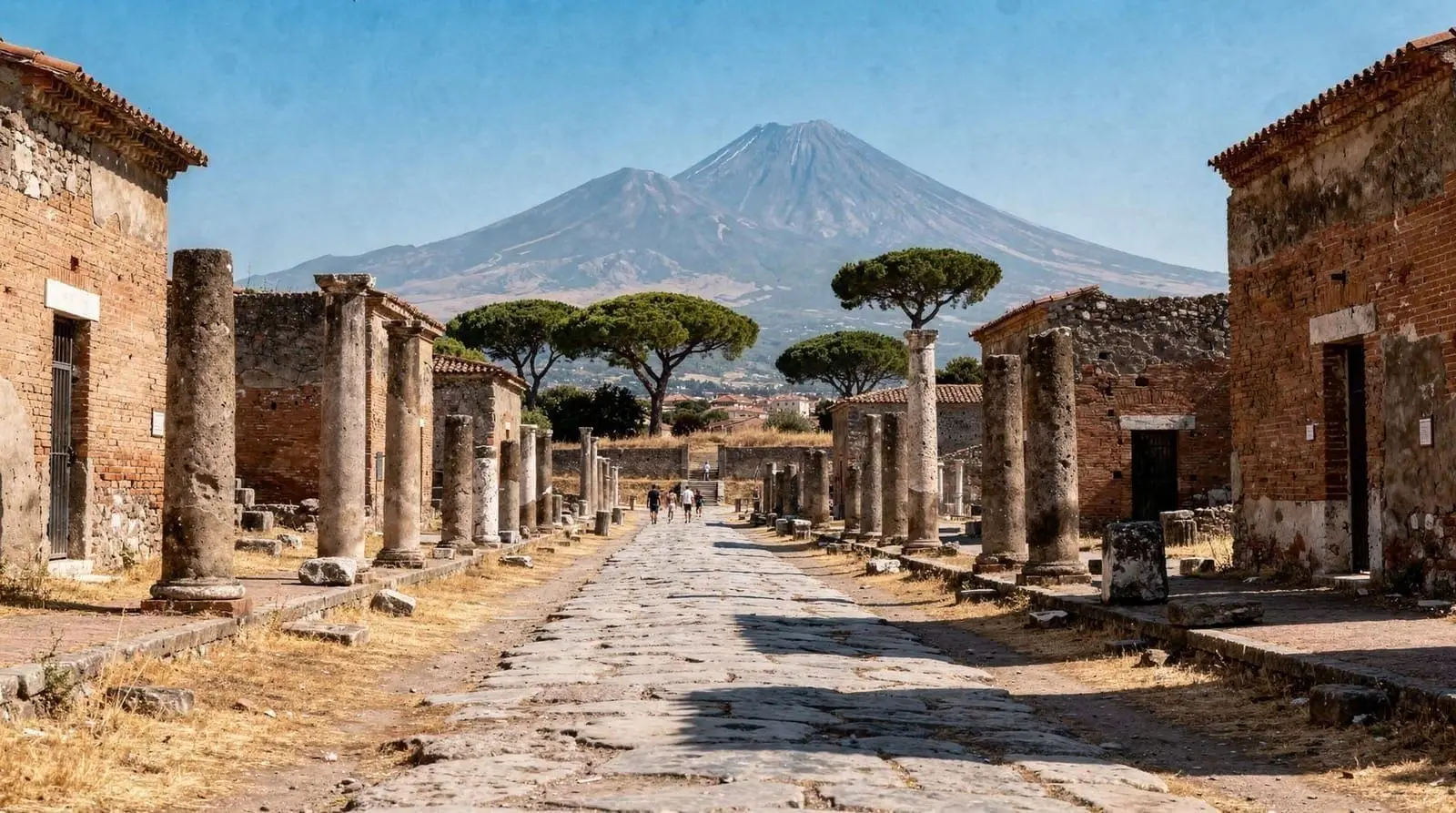
Vesuvius looks deceptively close from Pompeii — it dominates the skyline throughout the ruins and makes the eruption viscerally real. Getting there from the site takes 45 minutes by coach up a winding mountain road to the 1,000 m visitor car park.
From the car park, the crater hike is 30 minutes uphill on loose volcanic gravel. The path is not technically difficult, but the gradient is steep and the surface is uneven. Proper footwear is essential — sandals, flip-flops and heeled shoes are genuinely unsuitable and some operators will enforce this at the gate. At the summit, the crater is 270 metres deep and 550 metres across; on a clear day the view takes in the Bay of Naples, the islands of Capri and Ischia, and the entire Campanian plain. It is spectacular.
The temperature at the summit is typically 8 to 12 degrees cooler than at sea level, and wind is common even in summer. Bring a light layer.
The Pompeii and Vesuvio guided day trip with lunch includes a sit-down meal in the Pompeii area between the ruins and the volcano hike — a meaningful upgrade on a 12-hour day where otherwise you grab whatever is available near the site entrance at tourist prices.
Who should skip the combined Pompeii and Amalfi option
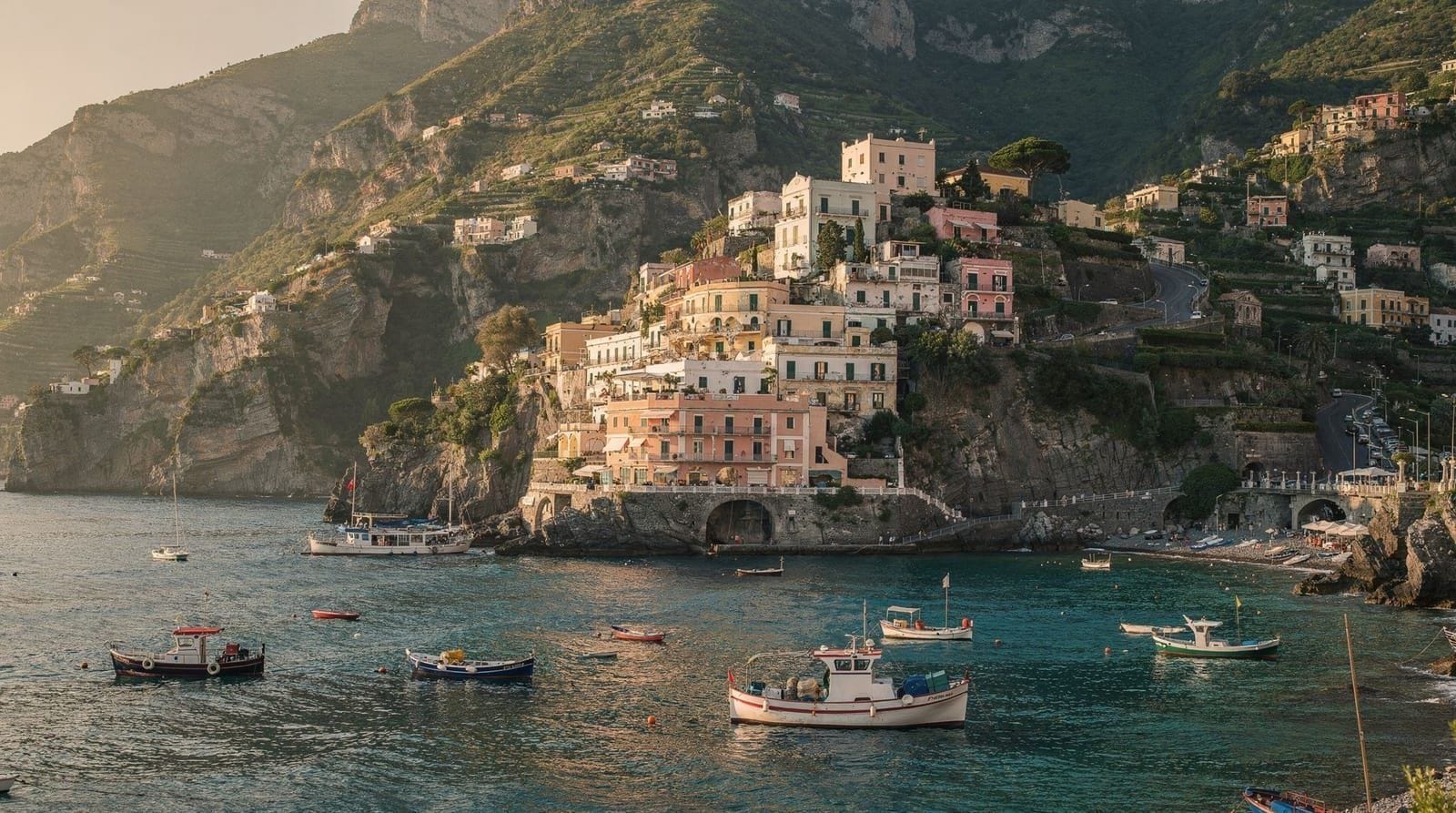
The Pompeii, Amalfi Coast and Positano day trip from Rome exists and sells well, but it is worth being honest about what it delivers. Combining Pompeii and the Amalfi Coast in a single day from Rome typically means 2 hours at the ruins (rushed), 45 minutes in Positano (barely enough to walk to the beach and back), and 45 minutes in Amalfi. The day runs to 15 to 16 hours. The return on your time invested is low for both sites.
This option makes sense only if you have a single free day and want to cover maximum ground regardless of depth. If you have any flexibility, split the two destinations across different days — or choose one.
Doing Pompeii independently vs. guided
The case for a guided tour at Pompeii is stronger than at most Roman sites. The ruins have almost no in-situ interpretation — there are no signs explaining what buildings were or what you are looking at in the houses. Without a guide or a good audio guide, much of what makes the site extraordinary is invisible. The spatial layout, the fresco iconography, the social stratification visible in house sizes and decoration — all of these require context to land.
For independent visitors, an official audio guide (€8 at the entrance) is the minimum. For groups, a licensed guide who specialises in Pompeii adds considerably to the experience, especially in the houses where photography and crowds compete for attention.
Practical details for 2026
Pompeii entry is €18 per adult in 2026. The site opens at 09:00 and last entry is at 17:30 (15:30 in winter). There is a bag check service at the entrance (bags over 30x30x15 cm cannot enter). Water fountains are available inside. The site is partially wheelchair accessible — the main streets and forum are manageable, but many individual houses are not.
Getting from Rome to Naples by train takes approximately 1 hour 10 minutes by high-speed service. Trains from Termini run frequently from 05:50 onwards; booking the earliest train in your tour itinerary is not unusual.
In July and August, the site can feel overwhelmed with visitors by 11:00. Tours departing Rome at 07:00 to 08:00 reach Pompeii before the full crowds; tours departing after 09:00 arrive at peak volume. This is not avoidable on a day trip, but earlier is meaningfully better.
Vesuvius access is occasionally closed due to volcanic activity monitoring or weather conditions. This is rare but does happen; check the Ente Parco Nazionale del Vesuvio website if conditions are uncertain. Tours typically handle this with alternative itineraries if the summit is closed.
Who this day trip suits best
This route is ideal for visitors who want to see Pompeii and understand what they are looking at, with the geological context of an active volcano providing the backdrop. It is a full, long day that rewards those who pace themselves, eat well in Naples, and approach both sites with curiosity rather than a checklist mentality.
It is not ideal for: those with limited mobility (Pompeii’s cobblestones and the Vesuvius hike are both demanding), families with very young children (long day, little shade, rough terrain), or anyone who wants depth over breadth — in that case, overnight in Naples and give each site its proper time.
The day trip from Rome by train guide covers the full logistics picture if you are planning independently, and the best day trips from Rome overview helps you weigh Pompeii against other options when time is short.
Verdict
A Pompeii day trip from Rome by high-speed train is one of the most worthwhile excursions in Italy. The ruins are extraordinary, the volcano is genuinely memorable, and the logistics — while long — are manageable with a well-organised tour. Choose a train-based option over a coach, book early in summer, and set realistic expectations for how much ground you can cover in a single day.
If two days in Campania are possible, consider the Rome–Naples–Pompeii 5-day itinerary for a richer experience that includes Naples itself, which deserves far more than a platform change.
Compare alternative tours
| Tour | Duration | Rating | Price | Highlights | |
|---|---|---|---|---|---|
| Pompeii Day Trip from Rome by High-Speed Train & Guided Tour | — | — | — | — | Check |
| From Rome: Pompeii Day Trip with Optional Vesuvius and Lunch | — | — | — | — | Check |
| From Rome: Pompeii and Vesuvio Guided Day Trip with Lunch | — | — | — | — | Check |
| From Rome: Pompeii & Amalfi Coast w/ Positano or Sorrento | — | — | — | — | Check |