Capri & Amalfi Day Trip from Rome — Honest Review 2026
From Rome: Capri Island Day Trip
The honest case for and against
Capri and the Amalfi Coast are two of the most visually spectacular places in southern Italy and two of the most logistically demanding day trips you can attempt from Rome. This review is not going to pretend otherwise: both destinations are better with more time than a single day allows. What follows is an honest breakdown of what each format delivers and who each tour suits.
The Capri Island day trip from Rome at your leisure is the baseline option: high-speed train to Naples, ferry to Capri, free time on the island. It delivers roughly 4 to 5 hours on Capri — enough to see the key highlights if you move efficiently, not enough to swim, hike, or feel the island’s pace.
Getting there: the journey is the limiting factor
The journey from Rome to Capri involves three legs: the high-speed train from Roma Termini to Napoli Centrale (1 hour 10 minutes), a taxi or bus transfer across Naples to Molo Beverello (20 to 30 minutes), and a fast ferry (aliscafo) to Capri Marina Grande (50 to 70 minutes). Add the reverse journey and you have 5.5 to 7 hours in transit for a day trip. That leaves 4 to 5 hours on the island on a good day.
The Amalfi Coast from Rome involves a similar total journey time, but with more variables: the drive to the coast is longer if coming from Rome rather than Naples, and the coast road between Positano and Amalfi can add significant time in summer.
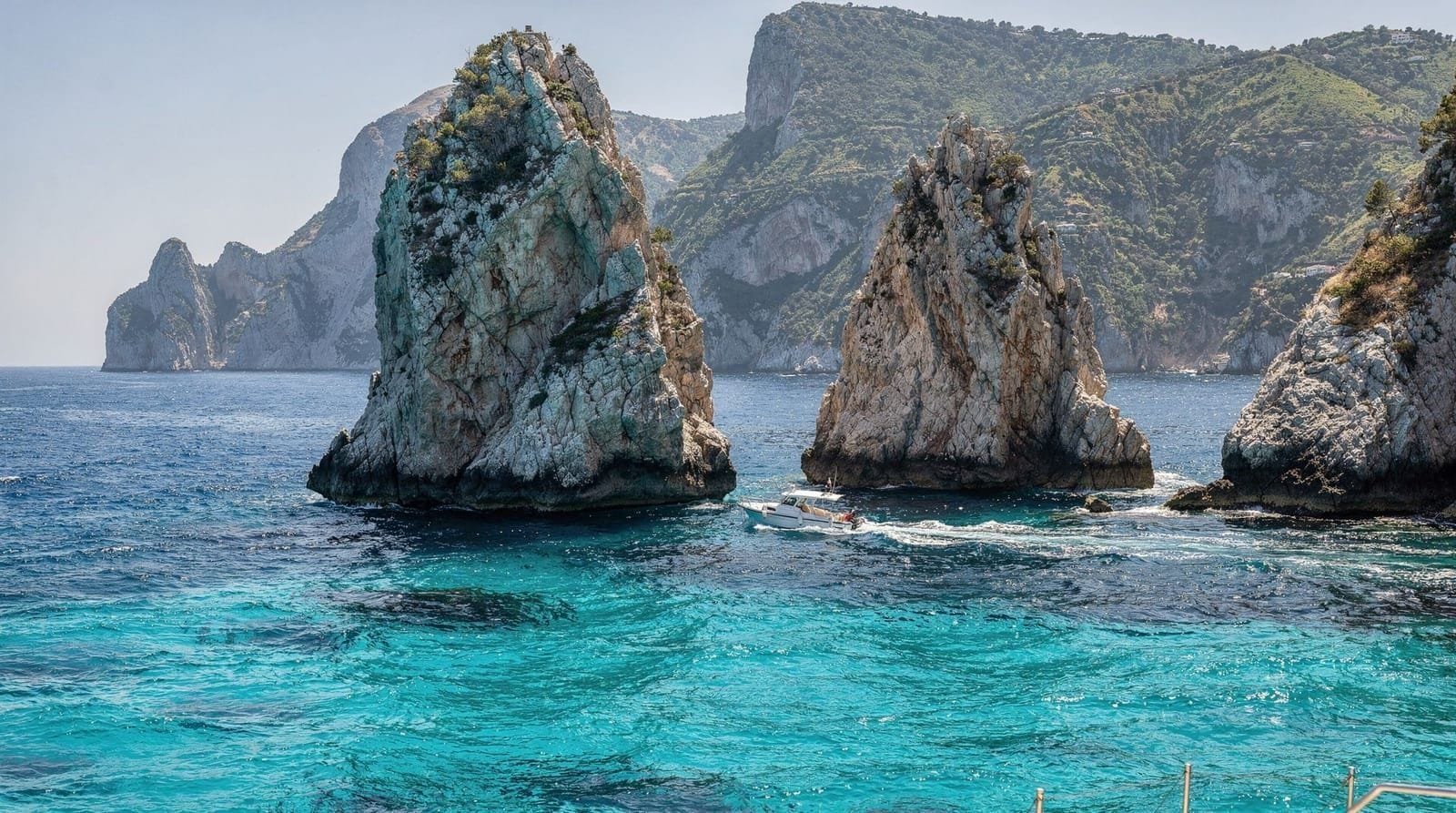
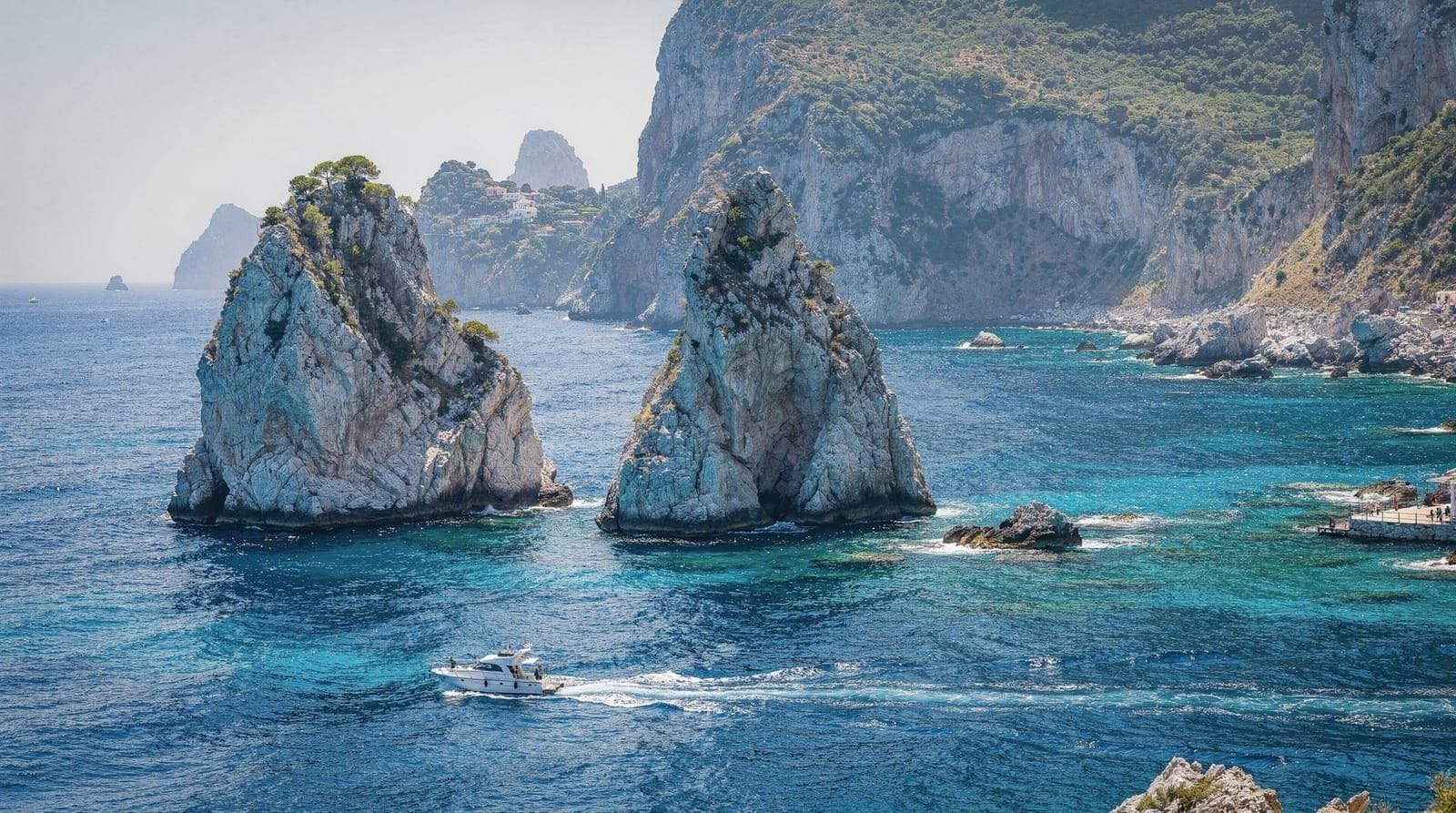
The high-speed train and boat tour of Capri from Rome includes a guided boat circumnavigation of the island as part of the format — the boat trip takes 75 minutes and covers the sea stacks (Faraglioni), the Green Grotto, the White Grotto, and a pass by the Blue Grotto. This option is worth comparing carefully against the at-leisure format: if you are going to be on the island for only 4 to 5 hours, a boat tour that covers the coastline by sea and leaves you time in Capri town may be more satisfying than free time spent largely managing queues.
What you actually see on Capri
Capri is a small island — 10 km long, 5 km wide — but it is also one of the most efficiently expensive places in Europe. The tourist infrastructure is excellent and the views are extraordinary; the crowds in July and August are heavy even by Italian standards.
A realistic 4-hour itinerary: funicular from Marina Grande to Capri town (€2.20 each way, queue 10 to 25 minutes in summer), coffee and a walk through the Piazzetta, the Gardens of Augustus (€1.50, views over the Faraglioni sea stacks), and the walk along the cliffside path back toward the funicular. That is a solid visit. What you cannot add without rushing: the walk to Villa Jovis (the Emperor Tiberius’s hilltop palace, 45 minutes uphill each way), a swim at any of the beaches, or the boat to the Blue Grotto (plan an extra 1.5 to 2 hours including queue).
The Blue Grotto (Grotta Azzurra) deserves particular mention. Entry requires a rowboat (€14 return ferry from Marina Grande, €18 grotto entry), and the actual time inside the grotto is about 3 to 5 minutes. In peak season, the queue at the grotto can be 45 minutes to 2 hours, and the grotto closes if the sea is too rough — which happens regularly in spring and autumn. It is beautiful, but for a day-tripper it frequently consumes more time than it returns.
The Amalfi Coast alternative
The day trip to the Amalfi Coast and Positano from Rome offers a different risk profile. You trade the ferry transit for more direct road access, spending more time at coastal towns and less in transit on water. The standard itinerary hits Positano (45 to 60 minutes) and Amalfi (60 to 75 minutes), occasionally adding Ravello (40 to 50 minutes) on the hill above.
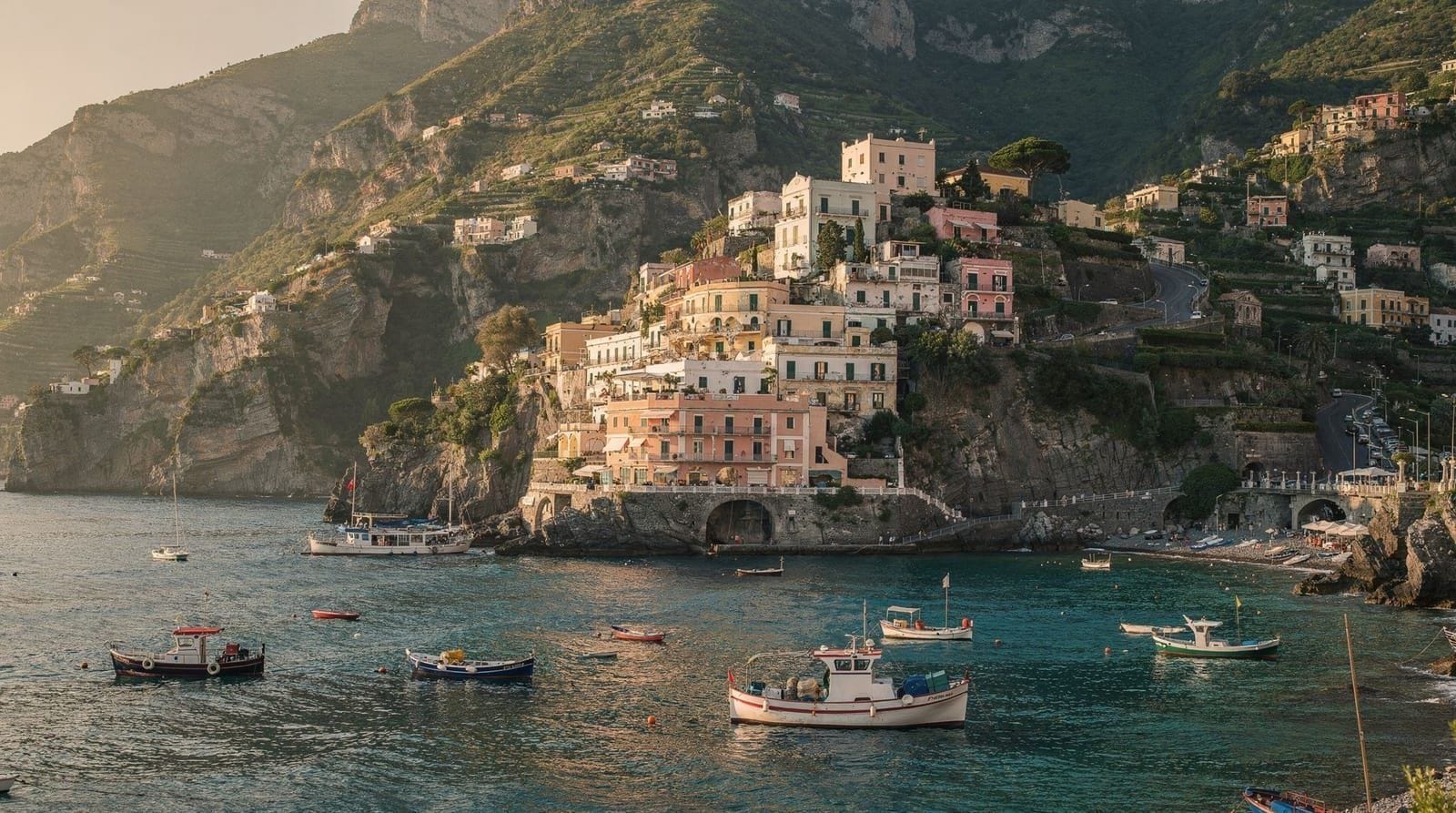
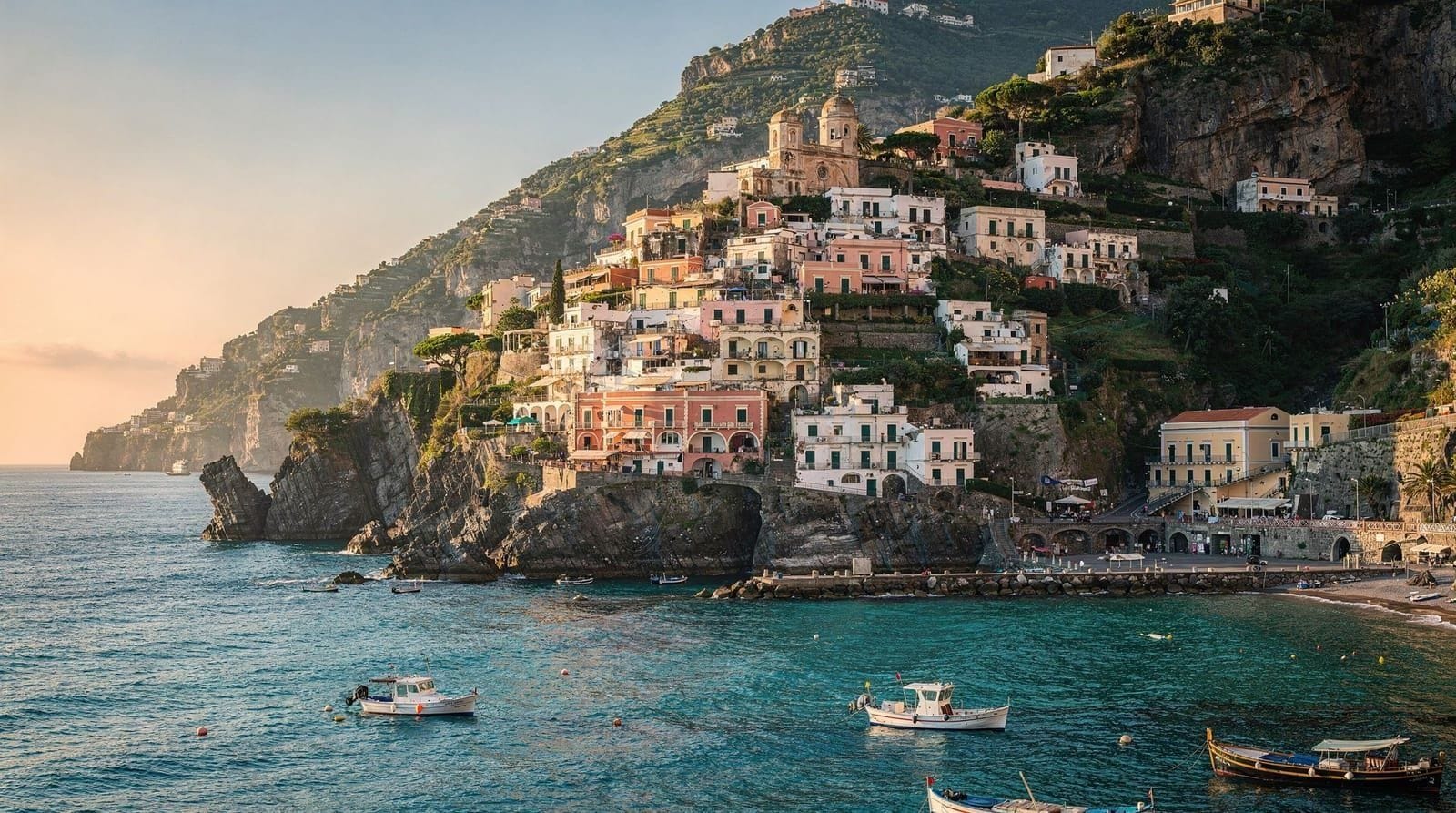
Positano delivers what the photographs promise: steeply stacked houses in shades of ochre and rose above a curved beach. The reality of 45 minutes there is a brisk walk down to the Spiaggia Grande, a pass through the boutiques, and the walk back up — steep enough that visitors with mobility issues should assess this carefully. The beach sunbeds cost €15 to €25 to rent and swimming time simply does not exist on a day trip.
Amalfi town’s Duomo di Sant’Andrea — its striped facade, bronze doors from Constantinople, and the Arab-Norman cloister — is one of the great medieval buildings in southern Italy. Sixty to seventy-five minutes is enough to see the cathedral and cloister properly and walk the maze of lanes behind the main piazza. The harbour and the medieval Arsenale are worth a few minutes more if you have them.
The Amalfi and Positano day trip from Rome with coastal cruise adds a boat section to the itinerary — the cruise from Amalfi along the coast to Positano (or vice versa) replaces part of the SS163 road transit with a sea view of the same coastline. This is a genuinely good upgrade: you see the coast from below, avoid part of the hairpin road, and the boat provides the perspective that makes the Amalfi Drive’s cliff drama legible as geography rather than just traffic stress.
The coast road: motion sickness is real
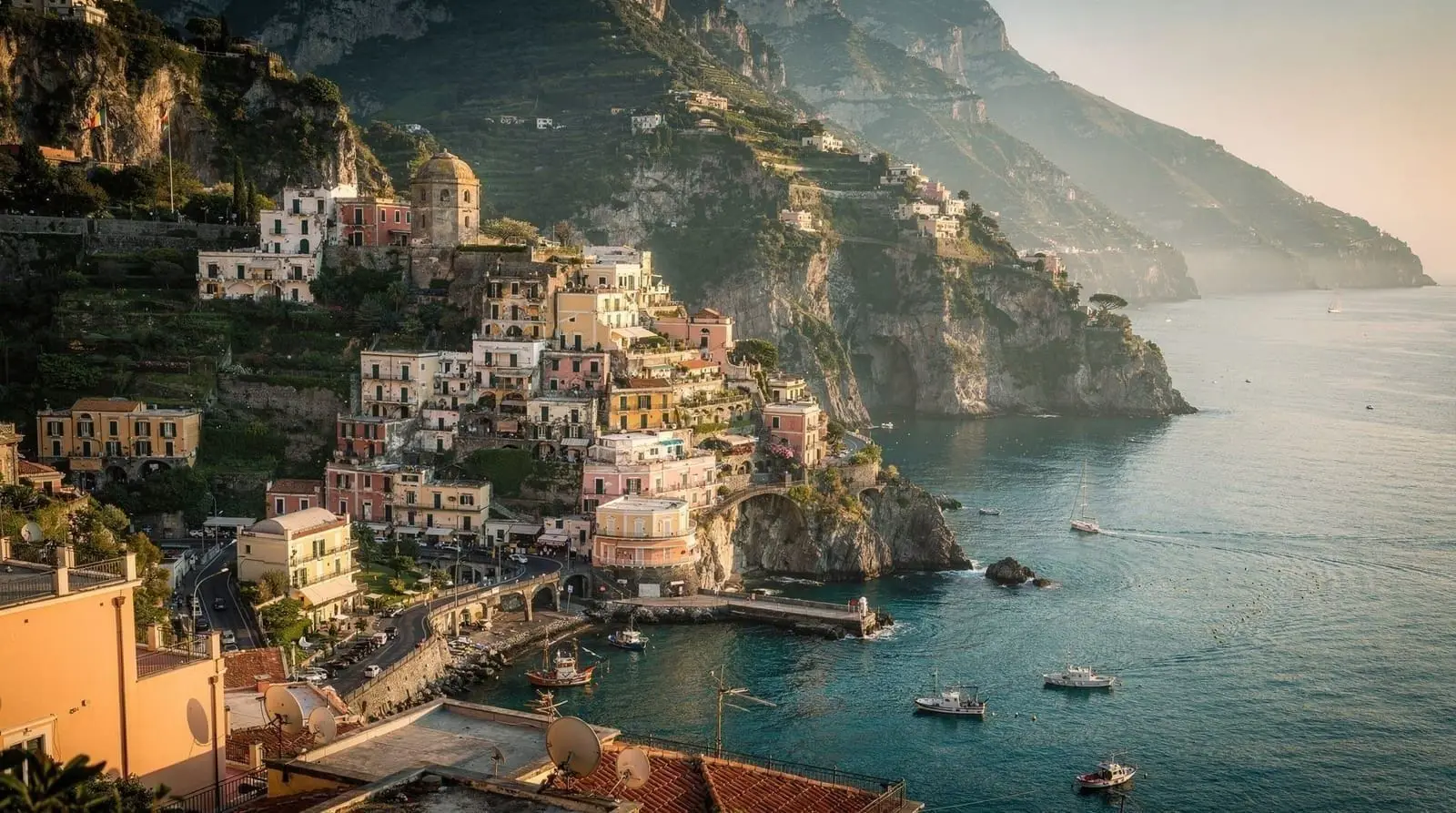
The SS163 Amalfiitana deserves its own section because it affects a meaningful proportion of visitors. The road runs for 40 km along cliffs above the sea, with virtually no straight sections, continuous hairpin bends, and sheer drops on the seaward side. It is spectacular and it is relentless.
Passengers facing backward on a minibus, or seated toward the middle without a window view, are at real risk of motion sickness. The combination of cornering forces, height, and the sight of the road below is potent. Practical advice: sit near the front if possible, take motion sickness tablets an hour before the drive, avoid heavy food before departure, focus on the horizon rather than the road, and accept that brief stops may not be available on a group tour schedule.
The combined Pompeii, Amalfi Coast and Positano day trip from Rome should be approached with particular caution about total day length. Adding Pompeii to an Amalfi Coast day from Rome creates a 15 to 16 hour day and reduces every stop to a rushed sample. Unless you genuinely have only one day in southern Italy, separating these into different days produces a dramatically better experience.
Who should stay overnight
The comparison of a day trip versus overnight stay on the Amalfi Coast makes the case directly: if the Amalfi Coast or Capri is a primary destination rather than a bonus excursion, one night changes everything. You get the evening atmosphere after day-tripper boats leave, morning light before the crowds arrive, and the actual experience of the places rather than a survey from a moving vehicle.
One night in Positano or Praiano (quieter and less expensive than Positano) followed by a slow morning and a ferry back to Naples, then the high-speed train to Rome, is a two-day itinerary that fits inside any Rome-based trip of 5 days or more.
Capri overnight means swimming at Marina Piccola in the morning before the day boats arrive — a categorically different experience from standing in funicular queues on a day trip.
Verdict
Both Capri and the Amalfi Coast are best served by more than a day trip from Rome, and it is worth saying so plainly. The logistics work — barely — but the experience is compressed into the functional rather than the memorable.
If you have one free day and want to see the coast, choose the Amalfi option over Capri: the journey is similar in length but the time on the coast is less constrained by ferry schedules. The boat tour upgrade (cruise format) is worth the slightly higher price. Avoid combining both destinations in the same day.
If Capri specifically is the goal, time the visit to avoid July and August peak crowds, book the at-leisure format with a morning departure, and set expectations for a long productive day rather than an immersive island experience. The Capri from Rome guide has the full logistics including ferry company recommendations and Blue Grotto timings.