Rome coffee rules — what to order, when, and how not to embarrass yourself
Rome is not the most coffee-obsessed city in Italy — Naples would argue that distinction with considerable force, and the espresso in Naples is genuinely different (stronger, more bitter, served with cold water). But Rome has its own coffee culture, and that culture comes with rules that are taken seriously by the people who inhabit it daily.
None of these rules are officially written down. None of them will get you arrested. Most of them, if you break them, will simply result in mild confusion from the barista and a slightly inferior experience for yourself. A few of them are worth knowing because they genuinely affect what you order and when.
| Standard espresso | around €1.10–1.30 standing at the bar |
| Cappuccino | around €1.30–1.60, morning only |
| Sitting at a table | often €0.50–2.00 extra |
| Tourist-area markup | €3–5 for the same espresso |
| Rule #1 | no cappuccino after 11am, ever |
The fundamental rule: no cappuccino after a meal
This is the one that surprises visitors most. In Rome (and Italy broadly), cappuccino is a morning drink. It is consumed at breakfast, or possibly mid-morning before 11:00 at the latest. It is not ordered after lunch, after dinner, or as an afternoon pick-me-up. Ordering a cappuccino after a pasta at lunch is not a crime, but it will mark you immediately as a tourist, and the barista may make a face.
The reason is functional rather than arbitrary: milk is considered heavy and digestively unsuitable after a proper meal. The Romans drink espresso after eating because espresso aids digestion (or at least that is the cultural belief, held with genuine conviction). A marocchino — espresso with a small amount of frothed milk and cocoa — is a partial exception, but it is still a small drink with a small amount of milk.
If you want something hot and milky in the afternoon, order a caffè latte and nobody will be surprised. But cappuccino after 11:00 is a tourist order, and being honest about this is more useful to you than pretending otherwise.
Standing at the bar
Coffee in Rome is generally ordered and consumed at the bar, standing up. Most bars have a counter (the banco) at which the barista prepares drinks and customers stand to consume them. There are often tables as well, but sitting at a table typically costs significantly more — sometimes double — for the same drink. This is the coperto of the coffee world: a surcharge for the space.
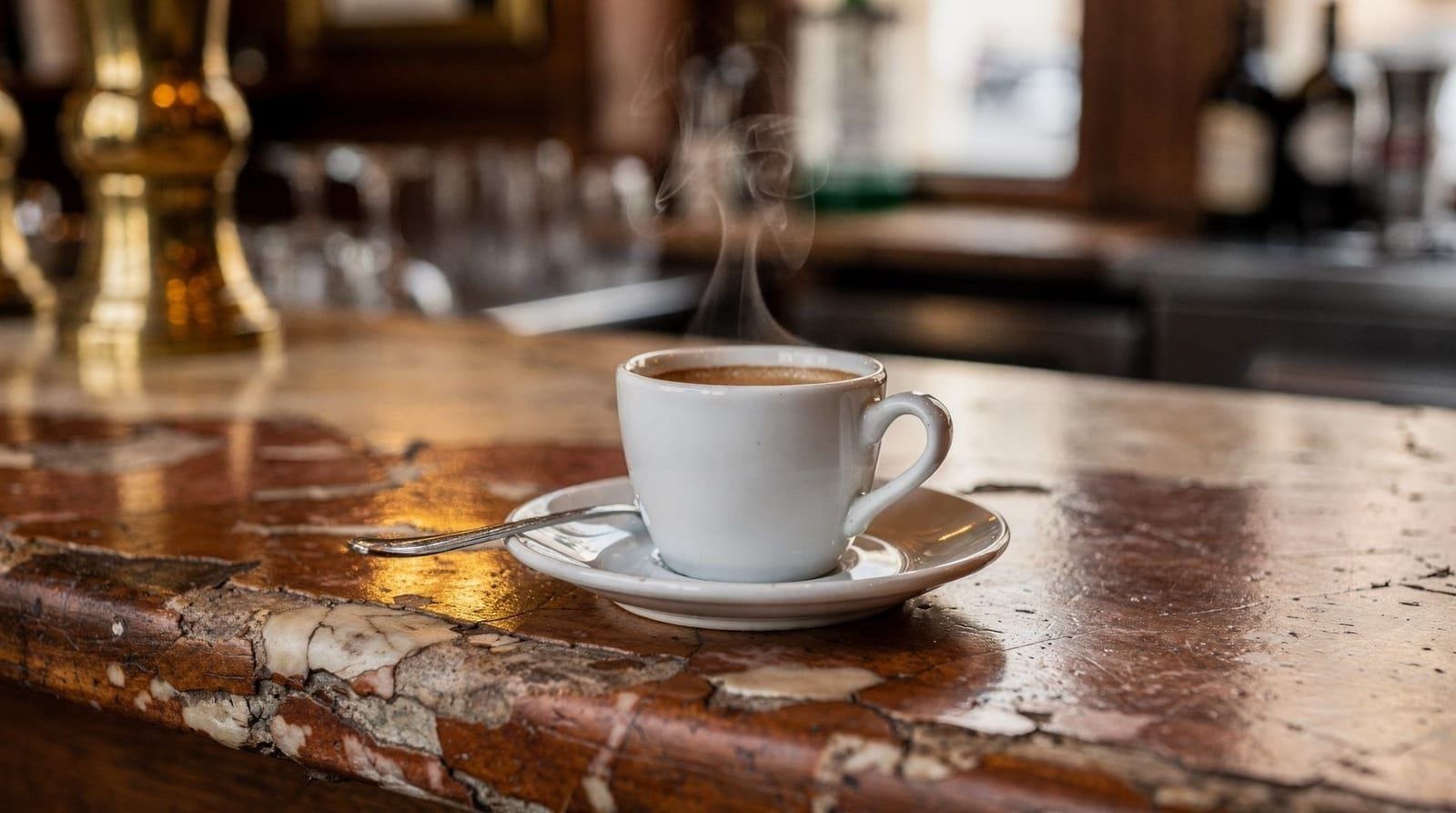
The standing experience is not inferior. It is faster, you can watch the barista work, and you get the drink at its optimal temperature the moment it is made. An espresso taken standing at the bar within 30 seconds of it being poured is a better experience than the same espresso in a paper cup that has been sitting for 90 seconds.
The etiquette: approach the bar, catch the barista’s eye (or wait your turn if it’s busy), and say what you want. Pay either before (at some bars you pay the cashier and hand the receipt to the barista) or after. Either practice exists and the bar will usually make clear which applies. Say “grazie” when you’re done. Leave. The whole transaction takes three minutes.
What to order and when
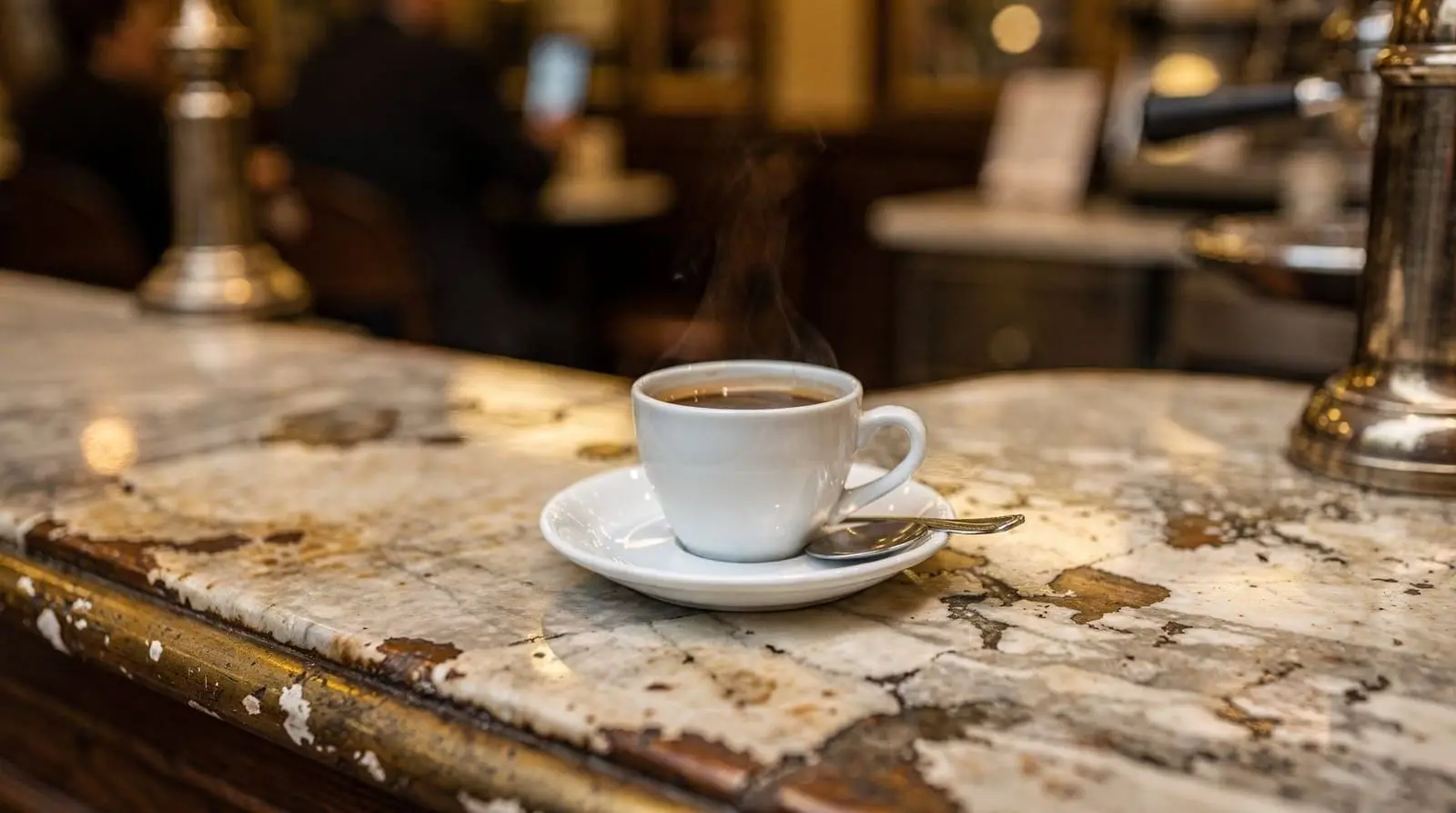
An espresso (or just “un caffè”) is the standard. A shot of dark, concentrated coffee in a small cup, consumed in one or two sips. This is what Romans drink multiple times per day. The quality varies — the difference between a mediocre bar and a good one is noticeable — but even average Roman espresso is better than what most northern European cities consider coffee.
A caffè macchiato is espresso with a small splash of steamed milk. Less intense than a straight espresso, good for morning or mid-morning.
A caffè lungo is espresso made with more water — closer in volume to a small Americano but different in extraction. If you find espresso too intense, this is a reasonable step up.
A caffè corretto is espresso with a shot of grappa or sambuca. It is generally a morning thing, and specifically a very Roman morning thing. Not for everyone, but worth trying once.
Granita di caffè is a semi-frozen coffee slush, typically available in summer and associated more with Sicily than Rome, but increasingly common in Roman bars during July and August. It is consumed with whipped cream on top and is the most defensible hot-weather coffee solution I know.
Where to drink coffee in Rome
Avoid the cafes adjacent to major monuments. The espresso at a bar within 100 metres of the Trevi Fountain or the Spanish Steps costs more and is generally worse than the espresso two streets back. The markup is for the real estate, not the quality.
The best coffee is often at unglamorous neighbourhood bars that open at 06:30, serve construction workers at 07:00, and cycle through a hundred coffees before 10:00. Bars with high turnover make better espresso: the machine stays hot, the grind is calibrated daily, and the barista has made the same drink a thousand times.
In Testaccio, the neighbourhood bars around the market and the old slaughterhouse area are excellent. In Monti, there are several good options on Via dei Serpenti and the streets around the Mercato Monti. Trastevere has good bars mixed with tourist traps; aim for anything that doesn’t have photos of drinks in the window.
Sant’Eustachio il Caffè, near the Pantheon, is the most famous coffee shop in Rome and genuinely excellent — they roast their own beans and the espresso is superb. The queue can be 15 minutes in peak hours and the price is a little higher than a standard bar, but it is worth doing once.
The price question
A standard espresso at the bar in a normal Roman café costs €1.10–1.30 as of 2026. A cappuccino is €1.30–1.60. These prices are fixed within a fairly narrow band across the city for standing orders. Sitting adds €0.50–2.00 depending on the establishment.
The exception is tourist-adjacent locations (Piazza Navona, Trevi, Spanish Steps, Vatican area) where prices can climb to €3–5 for an espresso and much more for a cappuccino. These are not particularly good coffees. The price is for the chair and the location, not the drink.
Coffee and food pairings
Romans typically eat cornetto (croissant) with coffee at breakfast. The cornetto is lighter than a French croissant, often filled with cream, jam, or Nutella. It is consumed standing at the bar alongside the espresso or cappuccino. This is breakfast in Rome: fast, cheap, satisfying, and eaten on your feet at 08:00 with minimal ceremony.
Cornetto and cappuccino is one of the genuinely underrated pleasures of being in Rome. It costs under €3 at a good neighbourhood bar and takes seven minutes from arrival to departure. If you’re doing this in a place where you have to queue and sit down and wait for someone to bring it to you, you are at the wrong bar.
Rome: food tour in Trastevere with 20+ tastings and free-flowing wine — if you want to understand the full context of Roman food culture rather than just the coffee piece, a proper food tour in Trastevere will run you through the local drinking and eating rituals in sequence, including the aperitivo culture that fills the gap between afternoon coffee and dinner.
How coffee fits the rest of the day
Coffee culture in Rome doesn’t exist in isolation — it’s one piece of a daily eating rhythm that has its own logic throughout. The Rome coffee culture guide goes deeper into the history and regional differences if this piece has whetted your interest. For the meals around the coffee, the five Roman pastas explained guide covers what actually appears on the lunch menus of the same neighbourhood trattorias where you’ll be drinking your post-meal espresso, and the Rome street food guide is the natural companion for the mid-morning gap between breakfast cornetto and lunch, when a slice of pizza al taglio or a suppli fills the space better than another coffee would.
The one rule that actually matters
Of all the coffee customs in Rome, the one that produces the most visible disappointment is the temperature issue. Espresso is served hot but should be drunk immediately. It continues extracting as it cools and becomes bitter and flat within a couple of minutes. The experience of drinking a great Roman espresso is specifically the experience of drinking it within 30 seconds of it being made.
Tourists who pick up their espresso, take a photo of it, look around, and then drink it three minutes later are drinking a cold, bitter, somewhat disappointing coffee. The photo of the coffee will look the same either way. Drink first, then reflect.
The Roman food guides and the Testaccio guide cover restaurants and markets in more depth, but for the daily rhythm of the city — the coffee at 08:00, the macchiato at 10:30, the espresso after lunch — these bar habits are the invisible structure around which everything else is organised.
FAQ
Why shouldn’t I order a cappuccino after lunch in Rome? Local custom holds that milk is heavy on digestion after a meal, so cappuccino is treated strictly as a morning drink; ordering one at lunch or dinner marks you as unfamiliar with local habits, though no one will refuse to serve you.
Is it rude to sit down instead of standing at the bar? Not rude, just more expensive — sitting at a table typically costs 50 cents to two euros more for the same drink, since you’re paying for the seat and service rather than the coffee itself.