The best time to visit Trevi Fountain (and it's earlier than you think)
The Trevi Fountain is one of the most photographed things on earth. It is also, for roughly sixteen hours of every day between April and October, surrounded by so many people that having a private thought in front of it is essentially impossible. The selfie sticks are real. The tour groups are real. The vendors offering roses and bracelets you didn’t ask for are real. And Nicola Salvi’s masterpiece — genuinely one of the more extraordinary pieces of Baroque architecture anywhere — sits behind all of it, waiting for someone to actually look at it.
The good news: there is a simple, reliable way to see Trevi Fountain without the crowd problem. It involves waking up early. Not unreasonably early — early in the way that happens naturally when you’re jet-lagged and the city is still dark and cool, and going to the fountain feels like an adventure rather than an obligation.
| Best time of day | 06:30–07:30 |
| Best months | October, late September, late April, Nov–Feb weekdays |
| Cost | Free (bring a €0.20 coin for the tradition) |
| Avoid | Midday June–August |
| Nearby | Coffee bars open by 06:30 near the piazza |
Trevi crowd levels by season
| Season | Crowd level at 06:30 | Crowd level at midday |
|---|---|---|
| June–August | Manageable, 20–30 people | Impenetrable |
| Late April, late Sept–Oct | Near-empty | Busy but bearable |
| Nov–Feb (weekdays) | Genuinely private | Moderate |
The window: 06:30 to 07:30
This is the golden hour for Trevi, and it is not metaphorical. Arrive at 06:30 and you may find fewer than a dozen people in the piazza. By 07:30, the first tour groups are beginning to arrive and the spell starts to break. By 09:00, it’s already busy. By midday in high season, it is impenetrable.
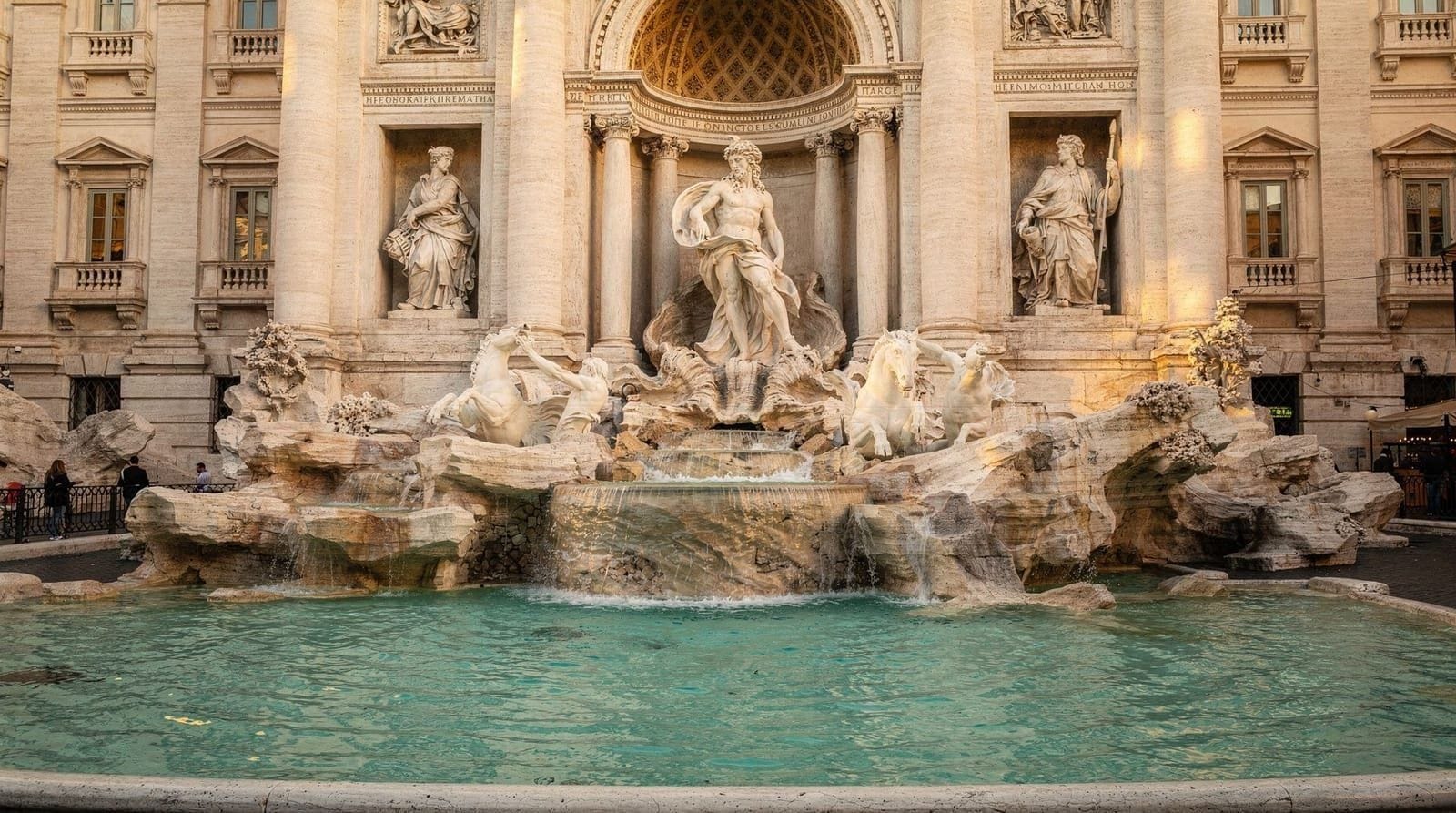
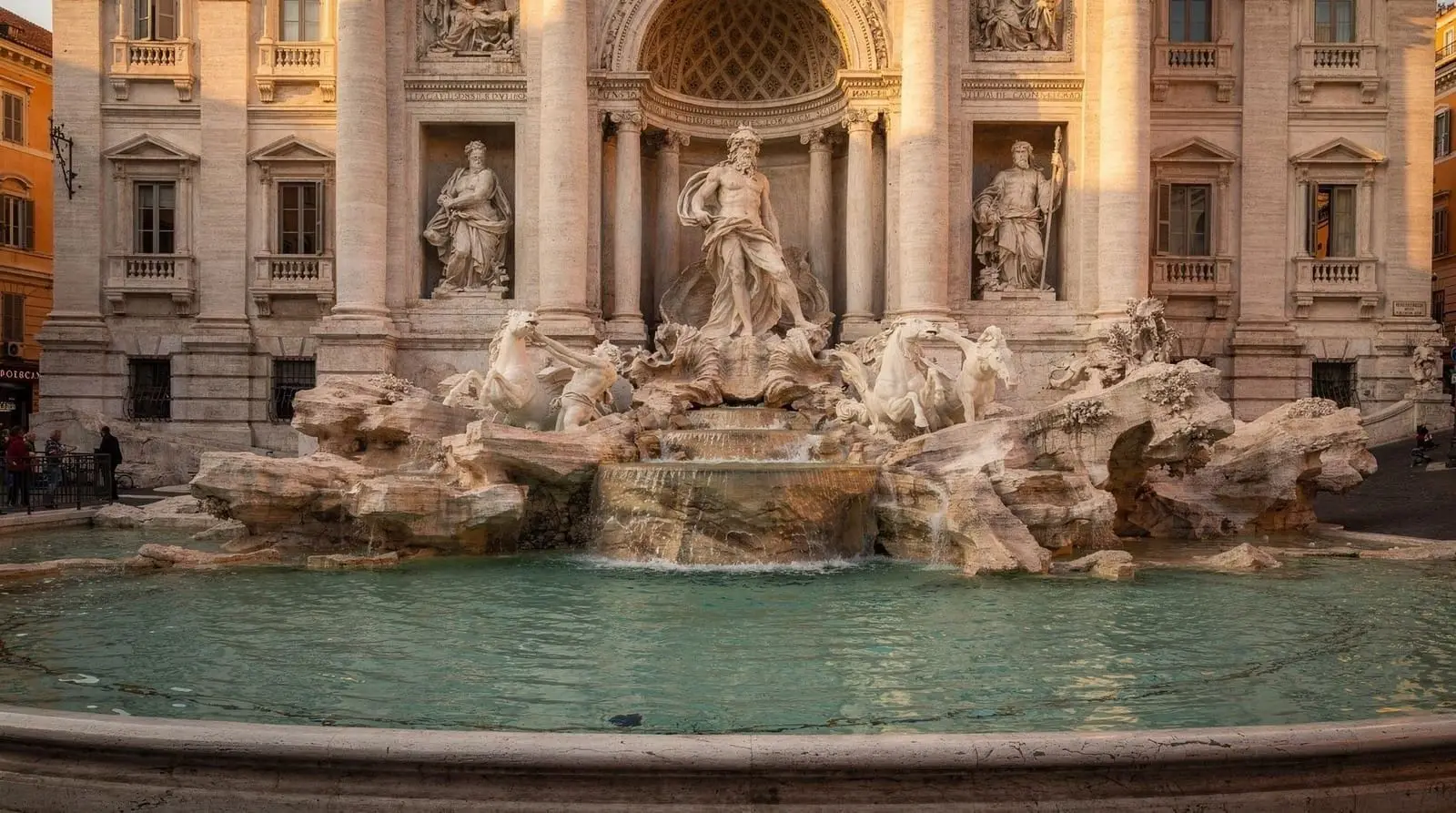
The reasons for the early-morning quiet are structural. Tour groups operate on schedules that fit normal waking hours. Hotels serve breakfast from roughly 07:30. The people who stroll to Trevi at dusk yesterday came home late and are not rushing out again before 08:00. The fountain is lit throughout the night, which means the early-morning light situation is, depending on the season and sky, genuinely extraordinary — the warm sodium light of the lamps against early blue sky, or the first sun catching the travertine marble from the east.
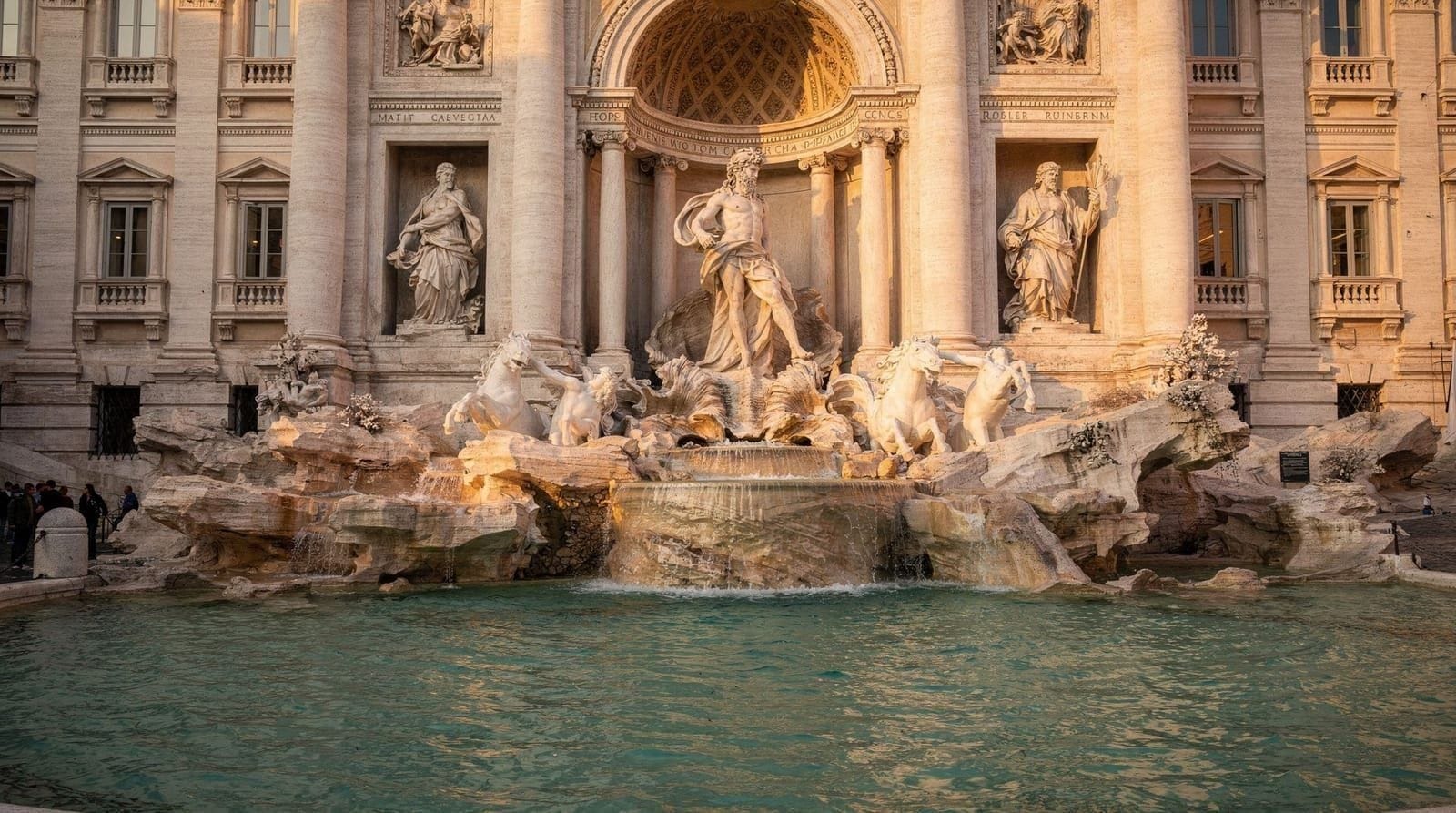
Go in late September or October and the morning light arrives at a low angle that does things to the colour of the stone that midsummer’s flat overhead light simply cannot replicate.
Why season matters as much as time of day
Even at 06:30, Trevi in August is a different experience from Trevi in April. August is Rome’s peak tourist month — hotels at capacity, every flight full, every sight at maximum crowd levels. At 06:30 in August, you’ll still find twenty or thirty people. That’s a manageable experience, but it’s not solitude.
The genuinely empty Trevi — where you can stand at the low wall with a coffee and look at Neptune without someone stepping in front of you — is an October or November morning experience, or an early spring one. April (before Easter) and late September, when temperatures drop to 20–25°C and the light is beautiful, are the peak periods for this kind of visit.
November through February is quieter still. Trevi in December, lit for Christmas with strings of lights reflected in the basin, before 07:00 on a weekday, is a genuinely private experience that most tourists never have because they’re planning their Rome visit for the summer.
What you’re actually looking at
It’s worth knowing what you’re looking at, because the temptation at the Trevi — particularly in a crowd — is to take a photograph and move on without really seeing the sculpture.
The central figure is Neptune (not Poseidon — this is Rome, so the Latin names apply), god of the sea, standing on a shell-chariot pulled by two sea horses. One horse is calm; the other is rearing and wild. This pairing is deliberate: they represent the sea’s dual nature, tranquil and turbulent. Neptune is flanked by two Tritons. On either side of the central arch, in the niches, are allegorical figures: Abundance with a vase overflowing, Salubrity holding a serpent-wound staff.
The water itself comes from the Aqua Virgo, one of the original ancient Roman aqueducts, first built in 19 BCE and still flowing in a modernised form. The aqueduct enters the city from the east and has supplied the historic centre’s fountains for two millennia. The name refers to a legend that a young girl (virgo) led thirsty Roman soldiers to the source. Whether or not the story is true, the engineering behind it — carrying fresh water into the city from hills eight miles away — absolutely is.
The coin throw
Three million euros in coins are thrown into the Trevi Fountain every year. The tradition of throwing one coin (you will return to Rome), two coins (you will fall in love), or three coins (you will marry) is entirely modern — it was popularised by the 1954 film Three Coins in the Fountain, not by ancient Roman custom. The municipality collects the coins weekly and donates the proceeds to Caritas Roma, a Catholic charity serving Rome’s poor. Whatever its origins, this is a genuinely good use of €0.20.
Wading in, touching the sculptures, or — as happens occasionally — actually getting into the basin is illegal and will result in a fine of €500 and a degree of public embarrassment. The basin is shallow, cold, and guarded by CCTV and regular police patrols. Don’t.
The streets around Trevi: coffee and context
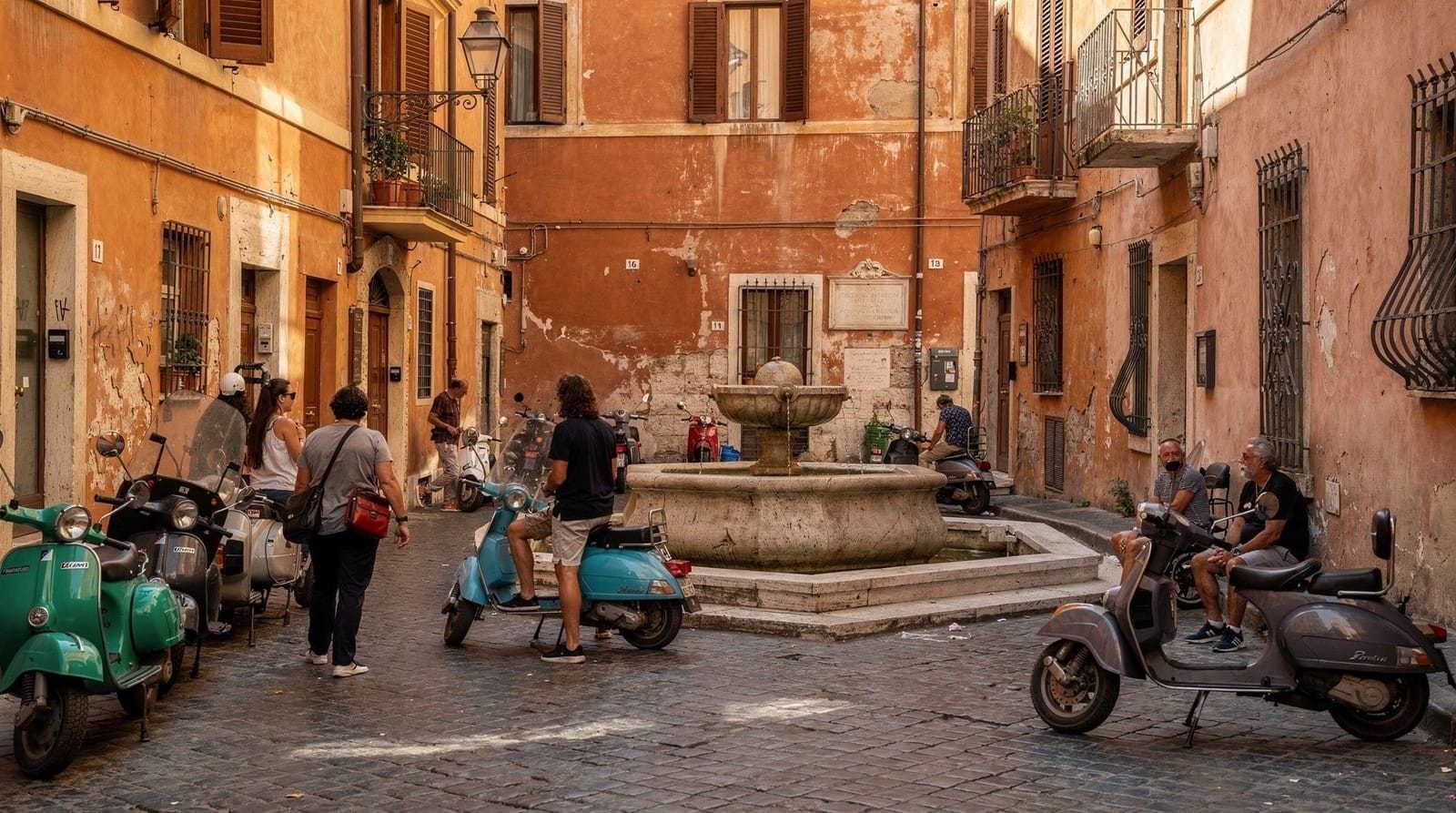
The neighbourhood around Trevi — technically part of the centro storico but with a distinct character — is worth exploring before or after the early morning visit. Several good coffee bars open by 06:30 or earlier, catering to early workers and market suppliers. A cornicione (croissant) and a macchiato standing at the bar before walking to the fountain is the correct way to do this.
The streets leading away from the piazza are also worth following: Via delle Muratte leads southwest toward the Pantheon district, Via della Stamperia leads north toward the Palazzo Barberini. At 06:45 on a weekday, these streets are essentially yours.
Pairing the early visit with the rest of the centro storico
Trevi at dawn is naturally the first stop of a longer early-morning walk. The Pantheon is a 5-minute walk away and is similarly empty before 08:00; Piazza Navona, another 10 minutes further, follows the same crowd pattern. Doing all three before breakfast — Trevi, Pantheon, Navona — is the single best use of an early morning in Rome, and the Trevi Fountain and Piazza Navona guide lays out the walking order. For the fuller picture of Rome’s fountains, the Rome fountains trail covers Trevi alongside the Four Rivers Fountain and lesser-known basins.
If early mornings generally are your strategy for the whole trip, not just Trevi, the avoiding Rome’s crowds guide generalises this same principle across the Colosseum, Vatican, and other major sights.
An evening option for different reasons
If rising before 07:00 is genuinely not possible, the late evening is a secondary option. After 23:00 in summer, the numbers drop meaningfully — not to early-morning levels, but to a manageable crowd of perhaps fifty to a hundred people rather than several hundred. The fountain is lit beautifully after dark, and the surrounding streets have an energy that is completely absent in the early morning silence.
The evening visit is better for atmosphere than for photography — the LED lighting is even and somewhat cold compared to the warm morning quality. But standing at Trevi at midnight in a Rome summer, with the water sound drowning out the distant sound of the city, is a legitimate version of the experience.
Rome by night — Spanish Steps, Trevi, Navona and Pantheon tourA guided evening walk that hits Trevi alongside the other major illuminated sights — Spanish Steps, Piazza Navona, the Pantheon — makes the most of the evening timing and the tour format gets you historical context that transforms what would otherwise be a procession of landmark photographs into something you’ll actually remember.
The practical summary
Best time: 06:30–07:30. Best season: October, late September, late April, or any weekday in November through February. Bring coffee from the bar. Know what you’re looking at. Throw one coin if you want to come back — at current inflation, Rome probably warrants at least two visits anyway.
Frequently asked questions
Is Trevi Fountain actually empty at 06:30, or is that an exaggeration? It genuinely can be near-empty, especially October through February on a weekday — sometimes fewer than a dozen people. In peak summer (June–August) expect 20–30 people even at that hour, which is still dramatically quieter than midday but not solitude.
Is there a best photo spot at Trevi that avoids the crowds? The low wall directly opposite the fountain gets crowded fastest; the side steps and the streets just off the piazza (Via delle Muratte, Via della Stamperia) give a clearer angle with fewer people in frame, especially before 07:00. See the best photo spots guide for more angles across the city.