The best gelato in Rome — and how to spot the tourist traps
The worst gelato in Rome is almost certainly the most visible. The gelaterie near the Trevi Fountain, the Spanish Steps, and the area around the Pantheon that display their product in towering, unnaturally bright mounds — sometimes with LED lighting for extra effect — are selling something that is technically gelato but represents a category of food production that has more in common with soft-serve than with any craft tradition.
The good news is that excellent gelato is genuinely close. Not in the same street, often, but within a few minutes’ walk of almost anywhere you are standing in central Rome. The city has a large and healthy artisan gelato scene. You just need to know how to find it.
| Fair price | Around €2.50–4 for a small-to-medium cup or cone |
| Warning sign | €5–6 per scoop near a major sight |
| Quality tell | Stored flat in covered pans (pozzetti), muted colours |
| Quality test flavour | Pistachio — pale greenish-grey, not neon |
| Where it’s better | One street away from any major landmark |
The visual tells
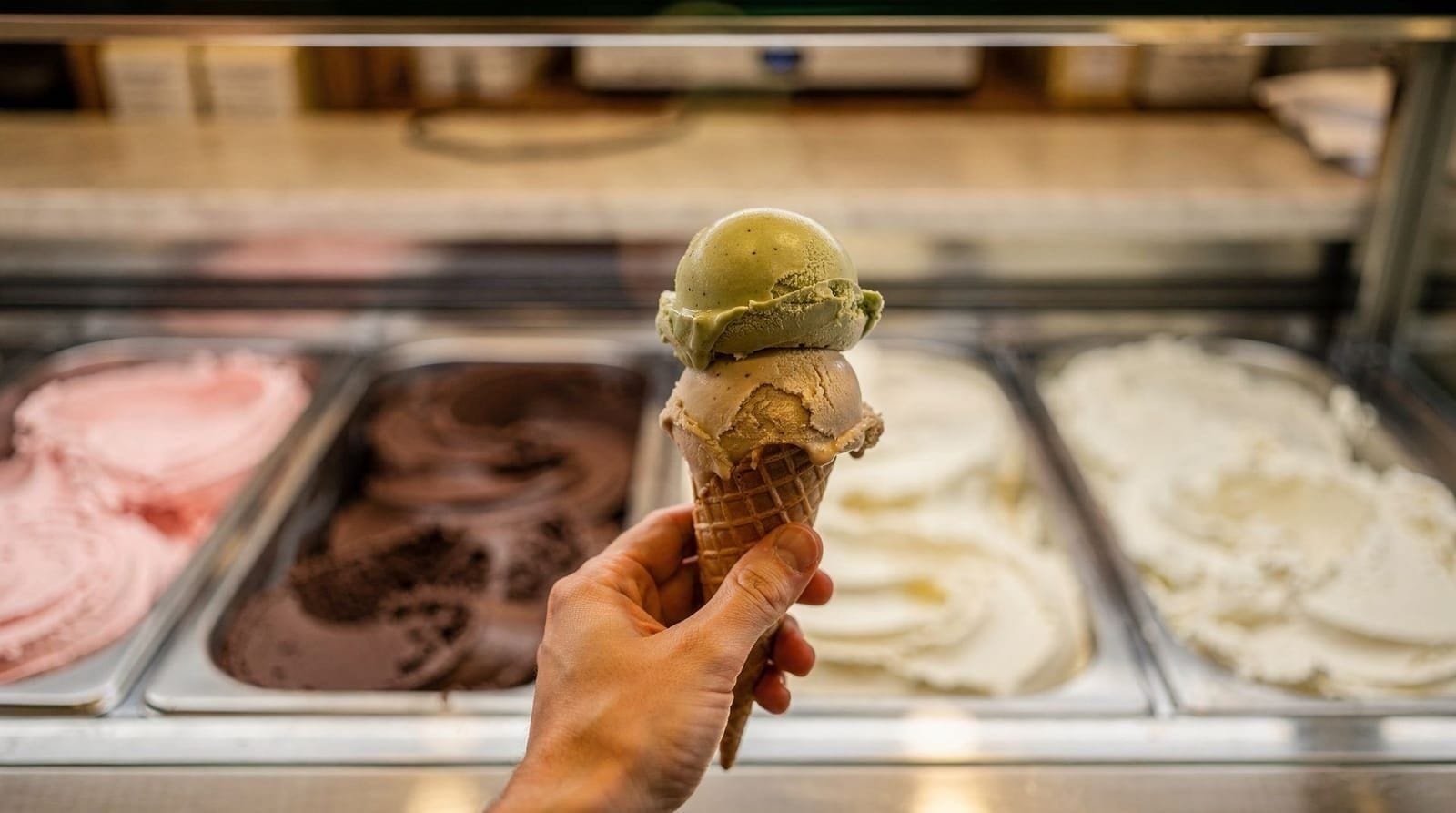
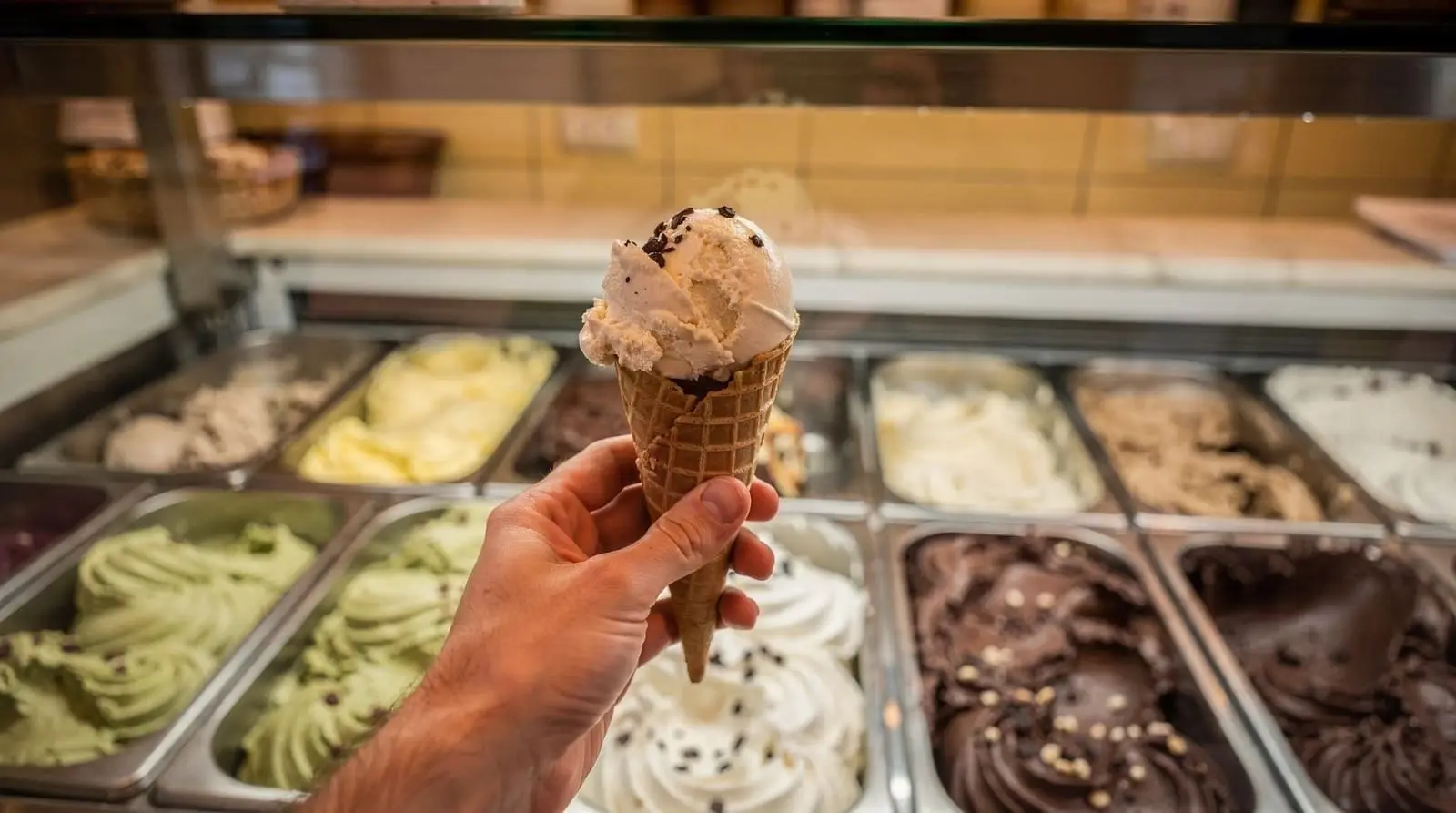
Before you eat a single scoop, look at how the gelato is displayed. Artisan gelato — made with real fruit, fresh milk, and quality ingredients — is stored in metal pans with lids (often called “pozzetti” or simply stored flat in covered containers). This keeps the product at the right temperature and prevents oxidation. The colours are muted and realistic: pistachio is a pale greenish-grey, not a vivid cartoon green; lemon is off-white with a slight yellow cast; strawberry is a deep red-pink that matches actual strawberries.
The mounded display style, built high out of the containers, is a flag for industrially produced product. It holds its shape because of additives and stabilisers that no craftsman gelato needs. The colours are bright because of artificial colouring. The flavours are intense in the way that candies are intense — a single-note hit that fades quickly.
You do not need a PhD in food science to make this assessment. Just look. The flat-stored pozzetti style is the tell of a serious gelateria. The mountain of luminous mint-green pistachio is the tell of a tourist-area business maximising margins on people who are not going to return.
Price is also a signal
Serious gelato costs €2.50–4 for a small-to-medium cup or cone. If you see gelato priced above that in a prominent tourist location, it does not mean the quality is higher — it means the operator is charging for location. If you see a sign outside a gelateria listing prices at €5–6 for a single scoop, walk away.
Some of the best gelato I have eaten in Rome was from a gelateria in Monti that charged €2.80 for two scoops. The shop had no prominent signage, stored everything in covered pans, and served to a steady rotation of local customers between tourists. That is the model.
Specific places worth seeking out
Fatamorgana deserves to be mentioned first because it is genuinely original and excellent. The gelateria has multiple locations across Rome (including Prati, Monti, and Trastevere), and its approach is built around unusual flavour combinations using high-quality ingredients and largely vegan recipes. Flavours include things like gorgonzola and walnut, basil and walnuts, or lemon and thyme alongside more conventional options. The base is impeccably clean and the textures are properly gelato rather than ice cream.
The locations near Piazza Navona and in Trastevere attract a younger Roman clientele who take their gelato seriously. The Monti branch, on Via dei Mille, is particularly good for the experimental flavours. Prices are at the upper end of artisan range — about €3.50–4 — but entirely justified.
Giolitti on Via degli Uffici del Vicario is historically famous — one of the oldest gelaterie in Rome, and a legitimate institution. The honest assessment is that Giolitti is good-to-very-good rather than exceptional, and the location near the Pantheon means it sees significant tourist traffic that pushes prices slightly higher than comparable quality elsewhere. The classic flavours — hazelnut, chocolate, pistachio — are well-executed. It is not a tourist trap in the way that the Trevi Fountain gelaterie are, but neither is it the city’s best. Worth visiting once, particularly if you are already in the area, but not worth going out of your way.
The Monti neighbourhood as a whole has become one of the more reliable areas for good gelato outside the major tourist circuits. The Monti neighborhood guide covers several options, and the concentration of Romans living and eating in Monti means the gelato economy there is more honest than in the centro storico.
In Testaccio, the gelaterie near Piazza Testaccio and the covered market tend toward the traditional Roman flavours and the correct artisan approach. Worth combining with the food market visit.
Flavours to order as a quality test
Pistachio is the gelato quality acid test. A serious gelateria will use real Bronte pistachios from Sicily — expensive, flavourful, and a specific kind of earthy-sweet. The colour will be pale and slightly green-grey. Fake pistachio flavour (artificial or low-quality nut paste) is bright green and tastes generically sweet-nutty without the specific Bronte character. If their pistachio is good, the whole shop is probably good.
Nocciola (hazelnut) is the other reliable test — rich, slightly bitter, with a clear nut foundation. Bad nocciola is sweet and vague.
Fior di latte, the plain sweet cream gelato made from fresh milk, is the Roman baseline. Order it alongside something else and it tells you about the technical quality of the base.
Fruit sorbets — particularly lemon, strawberry, and melon in summer — should taste of the fruit. Unnaturally bright or uniformly sweet fruit flavours indicate low-quality or artificial fruit product.
The cone vs. cup debate
This is not actually a debate. Both are fine. Wafer cones are standard and serviceable; brioche cones are available at some gelaterie and are worth trying once for the textural contrast. A cup lets you eat multiple scoops without structural instability. Italians will not judge your choice. Neither is more authentic than the other.
What Romans do not typically do is eat gelato while walking around major sights with their phone in the other hand. You will see tourists doing this constantly. The Roman approach is to stand outside the gelateria, eat without distraction, and move on. This is partly practicality (gelato melts, and juggling a cone while photographing the Pantheon produces poor results on both fronts) and partly just how you eat something you are taking seriously.
Rome: Trastevere secret food tour with local guideA food tour in Trastevere typically includes a gelato stop, and the guides on these tours are good at contextualising the quality questions — what to look for, which local places they personally use. It is a useful way to understand the food landscape of an area you are unfamiliar with.
A word on the tourist-area gelaterie
The intense-display, high-pile gelaterie near major sights are not operating illegally or making dangerous food. They are selling an inferior product at inflated prices to customers who have no frame of reference or reason to seek out better options. Some of them have been the subject of coverage about overcharging, and the Italian consumer protection agency has flagged practices in Rome’s tourist food zones.
None of this is novel information. It is the same dynamic as overpriced bottled water near the Colosseum, or restaurants around St. Peter’s Square charging €18 for pasta. Rome’s tourist traps are mostly economic rather than sinister, and the protection against them is the same in every case: take five minutes to walk one street away from whatever major sight you are visiting.
The excellent gelato is almost always one street away. This applies at the Trevi Fountain, at Piazza Navona, near Campo de’ Fiori, and everywhere else. The geography of Rome is compact enough that a two-minute walk separates the tourist economy from the neighbourhood economy, and in the neighbourhood economy, the gelato is better and cheaper.
Where “one street away” actually means, sight by sight
Near the Trevi Fountain, walk two minutes toward Monti rather than eating at the counters directly on the piazza — the Monti gelaterie serve the same tourist-adjacent crowd at half the theatrics and a fairer price. Near Piazza Navona, head toward the smaller streets between the piazza and the Pantheon rather than the shops with outward-facing counters and photo-ready mounds. Around the Jewish Ghetto, the food-focused streets tend to have more honest gelaterie than the immediate riverside. In every case, the rule holds: if you can see the gelato from a major landmark, it is priced for that landmark, not for the product.
Go there. Eat the pistachio. Check that it is the right colour.
Frequently asked questions
Is gelato actually different from ice cream? Yes — gelato has less fat and less air churned in, giving it a denser, more intensely flavoured texture served at a slightly warmer temperature than typical ice cream. That’s part of why poor-quality gelato, propped up with stabilisers to hold its mounded shape, tastes and feels wrong compared to the real thing.
Do I need to avoid every gelateria near a major sight? Not strictly, but treat proximity to a landmark as a warning sign rather than a recommendation. Some historic shops like Giolitti near the Pantheon are legitimately decent despite the tourist location — check the display style (flat pans, not neon mounds) rather than the address alone.