Cycling the Appian Way: what no one tells you before you go
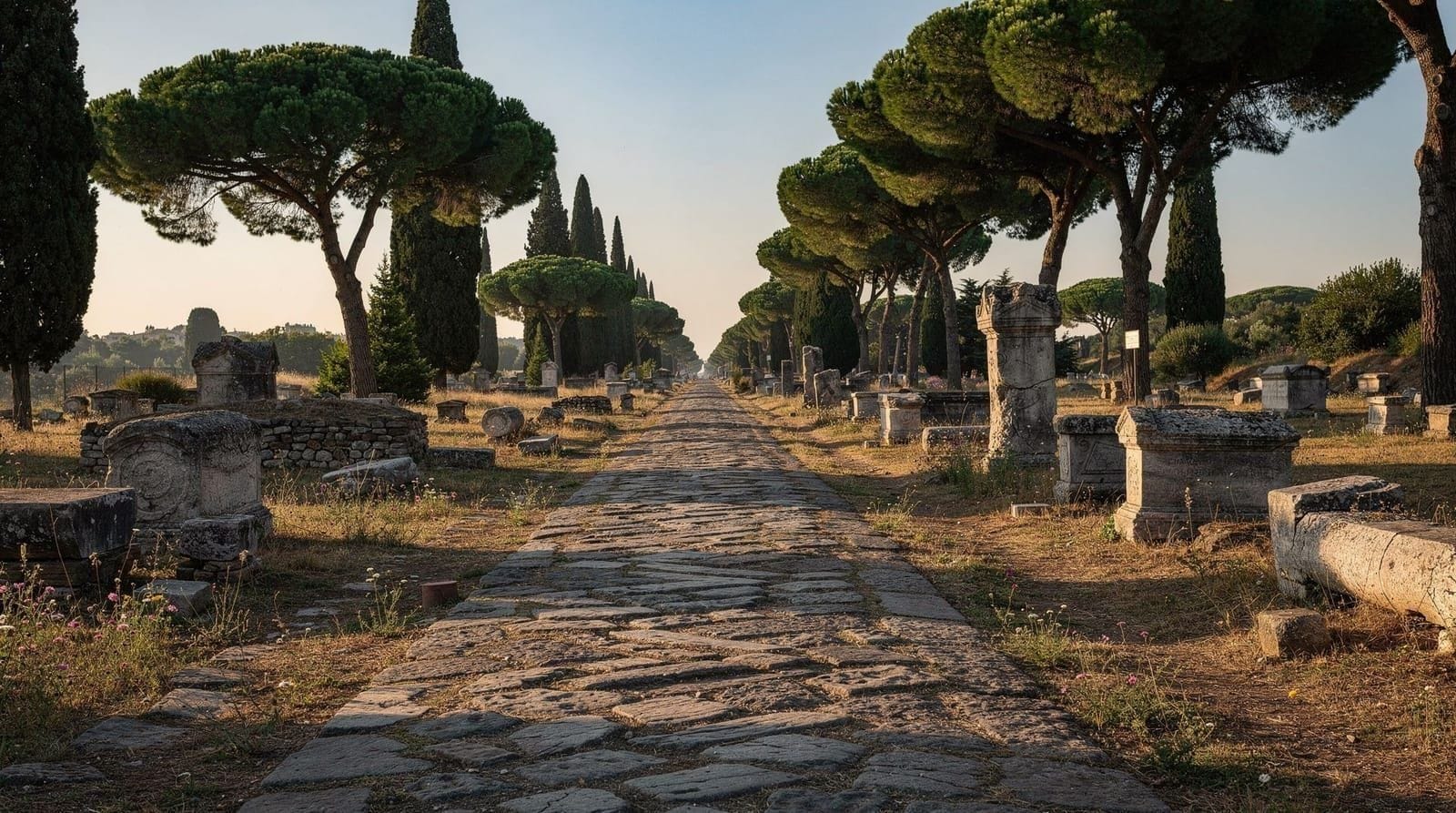
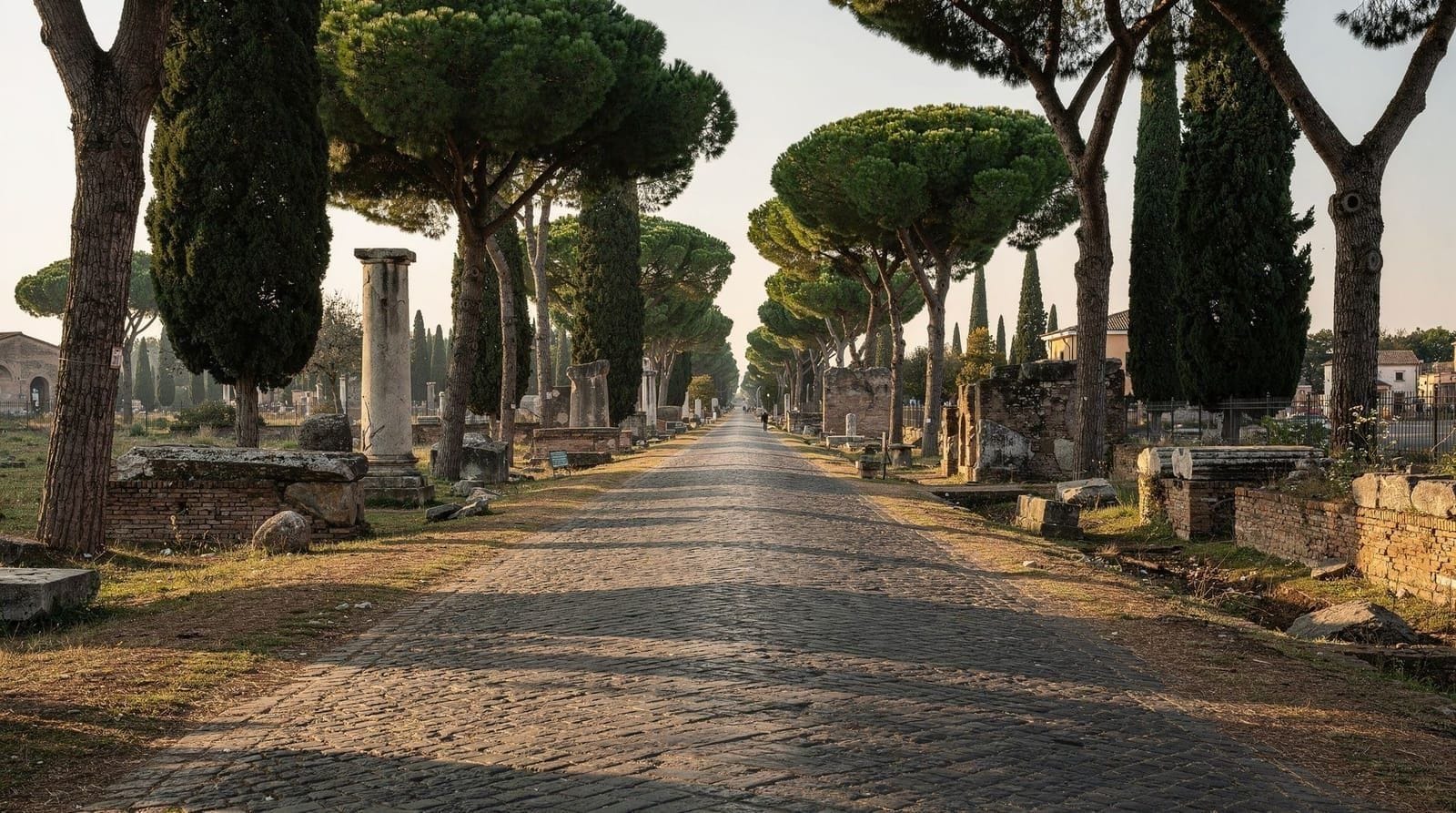
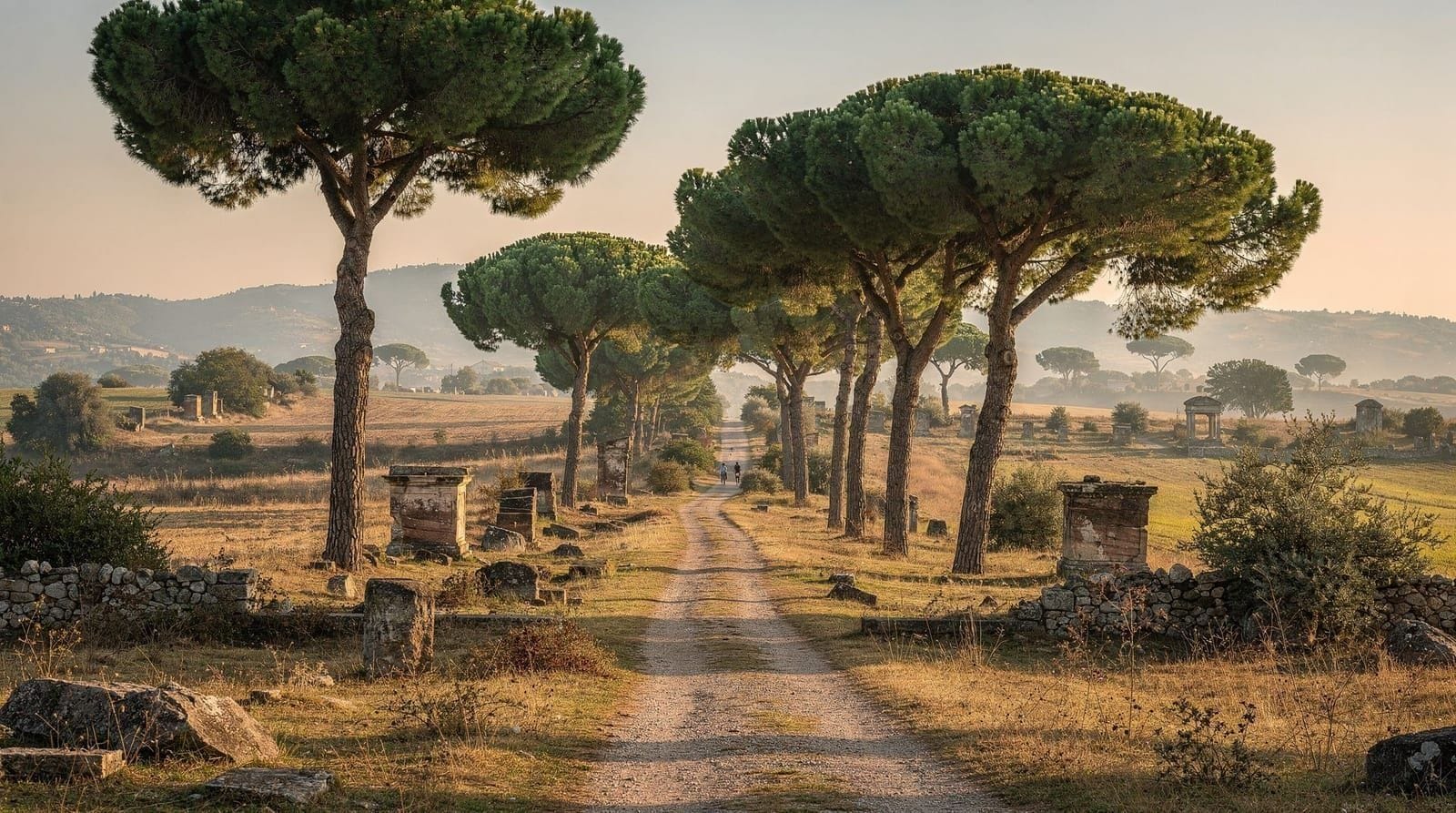
Every travel article about the Appian Way features the same photograph: a lone cyclist gliding between pines on a perfectly flat stone road, the aqueduct arches dissolving into a hazy background. That photograph is real — the road does look like that, in the right light, on the right stretch. What the photograph doesn’t show is the kilometre of cobblestones before you get there, the Sunday traffic on the Via Appia Nuova, or the moment you realise your rental bike’s saddle was set for someone considerably shorter than you.
This is not a complaint. Cycling the Appian Way on a clear spring morning is one of the better things you can do in Rome, and the combination of ancient pavement, rolling countryside, and total absence of the city’s ZTL chaos makes it feel like a different world from the centro storico. But going in with accurate expectations will make the day much more enjoyable than going in with the Instagram version.
| Where | Via Appia Antica, starting around the 2nd milestone |
| Distance from centre | Around 6–8km from the Colosseum area |
| Cost | Around €5–8/hr standard bike, €15–20 half-day e-bike |
| Time needed | Half a day minimum, more with catacombs |
| Best day | Sunday (car-free inside the park) |
The road itself: which part, and how far
The Via Appia Antica — the ancient military road that once stretched all the way to Brindisi — is protected inside the Parco Regionale dell’Appia Antica. The traffic-free section that most cyclists aim for starts around the second milestone, roughly where the Catacombs of St. Callixtus and San Sebastiano sit, and extends south for several kilometres through farmland, ruined tombs, and the aqueduct park.
The first section, from the Porta San Sebastiano gate to that second milestone, is still technically accessible but runs alongside or across active roads. It is manageable but not relaxing. If you are cycling from the city centre — which is perfectly doable, about 6–8 kilometres from the Colosseum area — plan for roughly 30 minutes of urban cycling before things get pastoral.
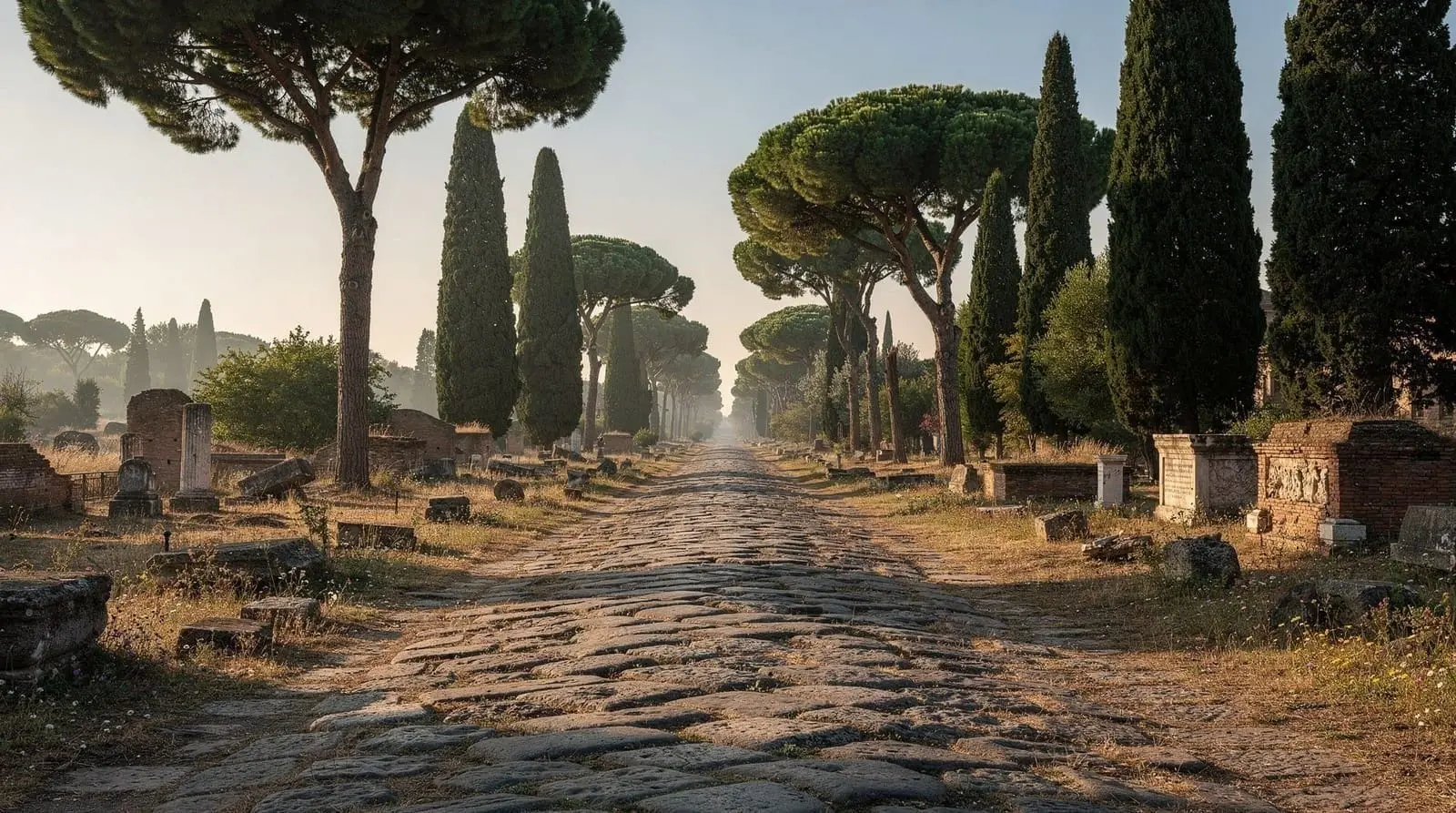
The cobblestones deserve special mention. The original basalt stones (sampietrini) are atmospheric but genuinely uncomfortable, and they are uneven in ways that become punishing over distance. An e-bike absorbs much of this. A cheap hybrid with thin tyres does not. If you have any concerns about your lower back, knees, or a general preference for not rattling your fillings loose, the e-bike option is not a luxury — it is the sensible choice.
Getting there: the practical options
There are a few ways to approach the day. You can rent a bike near the Appia Antica Caffè (near the park visitor centre on Via Appia Antica), which puts you right at the entrance to the better section. Standard bikes run around €5–8 per hour; e-bikes are typically €15–20 for a half-day. Quality varies; check that the saddle adjusts properly and test the brakes before you commit.
Alternatively, joining a guided tour handles the logistics entirely — pickup, bike quality, a guide who knows which fork in the path leads to the best aqueduct views, and often a stop at one of the catacombs included or available as an add-on.
Appian Way aqueducts e-bike tour with optional catacombs and lunchThis option is worth considering seriously, not because you can’t manage independently — you absolutely can — but because the guide will take you off the marked paths to sections of ruined tomb and open countryside that first-timers simply don’t find on their own. The optional catacombs visit, if you take it, rounds out a morning that covers about 2000 years of Roman history in one long loop.
The Catacombs: worth combining
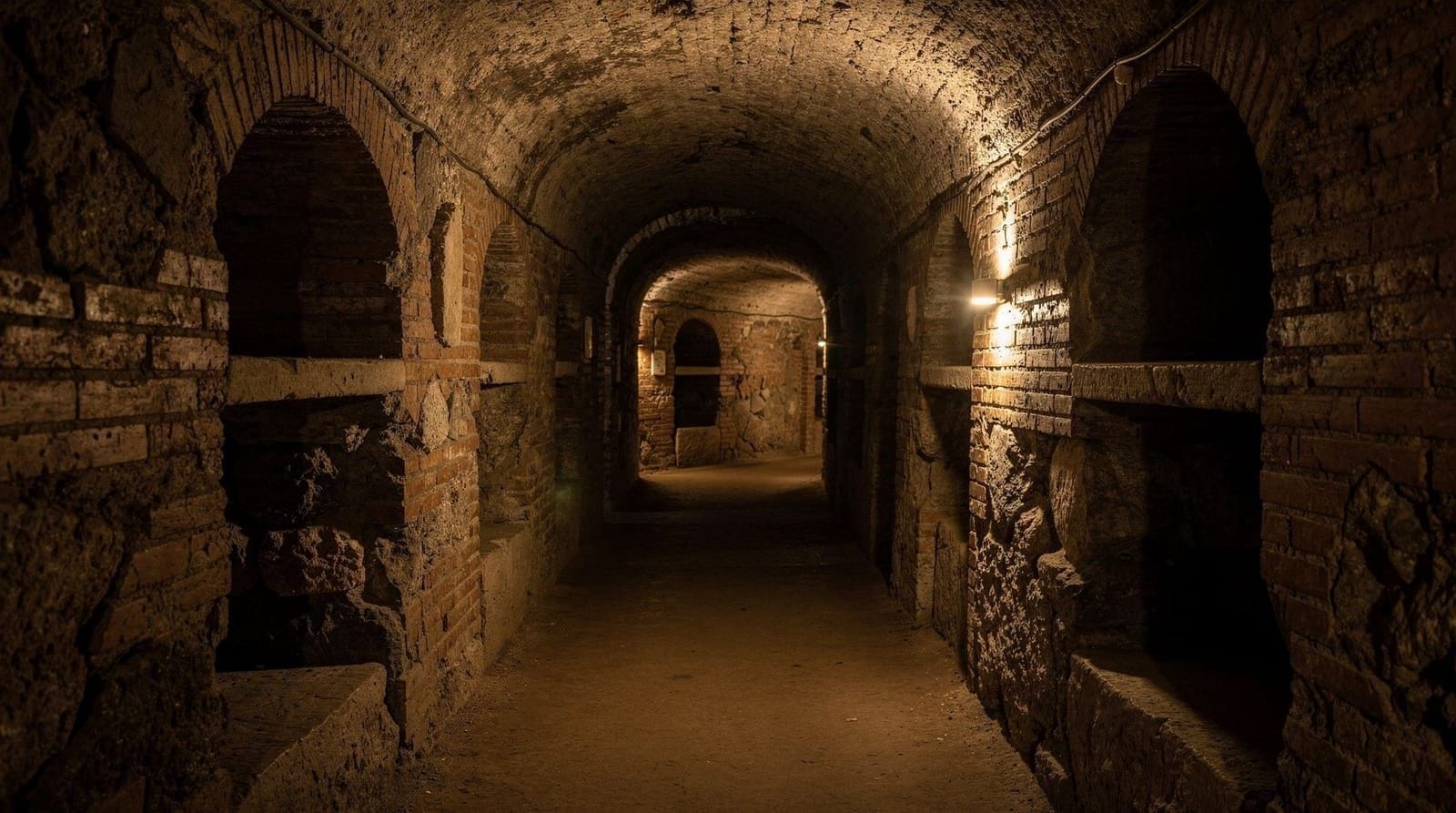
The catacombs along the Appian Way — St. Callixtus, San Sebastiano, Domitilla — are a natural pairing with a bike ride and genuinely impressive in their own right. St. Callixtus is the largest and best documented, with around 500,000 early Christians buried in its tunnels over two centuries. The guided tours last about 30–40 minutes and cost around €8–10 per person.
They are underground and cool — which, on a hot day in May or June, makes them unexpectedly pleasant after an hour of cycling. Bear in mind that they are closed on certain days of the week (Callixtus closes Wednesdays), so check before building your itinerary around a specific catacomb.
The aqueducts: the part most people miss
The aqueduct park — the Parco degli Acquedotti — is technically adjacent to the Appian Way rather than on it, but it’s a short detour and it may be the single most photogenic sight in Rome that doesn’t have a ticket queue. The arches of the Acqua Claudia stretch across an open meadow, eleven storeys high, in a state of romantic ruin that is genuinely breathtaking in morning or late-afternoon light.
Getting there by bike takes about 20 minutes from the Via Appia Antica park entrance via cycle path. On foot from the nearest metro station (Giulio Agricola on line C), it’s about a 15-minute walk.
When to go
Sunday is the Appian Way’s best day — the road inside the park is closed to private car traffic, which makes the cycling dramatically more pleasant and the atmosphere more festive. Romans bring their families, there are food stalls near the visitor centre, and the whole thing has an easy, local quality that weekdays lack.
That said, Sunday also means more people. If you want relative solitude, a weekday morning in April, May, or October, arriving by 09:00, gives you long stretches of road almost entirely to yourself.
Avoid July and August. The midday heat on black basalt cobblestones with no shade is unpleasant in a way that is hard to overstate.
What to pack
Water (more than you think), sunscreen, and something to eat if you’re going past midday. There is a decent café at the park entrance, but once you’re inside the park, provisions are limited. The terrain is mostly flat with gentle slopes, so fitness is not a concern unless you’re spending the full day out.
Lock if you stop — bring one or ask your rental shop. Ruined Roman tombs are not reliable bike storage.
Guided e-bike tour of the Appian Way and Roman AqueductsGetting to the start without a car
If you’re not cycling all the way from the centre, the Archeobus and the regular ATAC bus 118 both stop near the Appia Antica park entrance and are the easiest way to arrive fresh rather than after 30 minutes fighting traffic on the Via Appia Nuova. Combine this with the general getting around Rome guide if you’re unfamiliar with the city’s transport tickets. Renting near the entrance rather than in the centre also means you skip the urban stretch entirely — worth it if your priority is the countryside, not the ride there.
For travellers building a longer stay around a half-day like this, the Appian Way pairs naturally with a slower, budget-conscious pace — see the Rome on a budget guide for how a free-ish morning like this fits a tighter daily spend, and the best day trips from Rome roundup for what else is realistic on the same kind of half-day format.
The honest summary
The Appian Way by bike earns its reputation. It’s one of the rare experiences in Rome that feels genuinely removed from the tourist circuit — not because tourists don’t go, but because the scale of the countryside absorbs everyone. By the time you’re riding between tomb ruins with the aqueduct arches in the background and the city nowhere in sight, Rome’s crowds feel like something that happened in a different life.
Plan for a half-day minimum. Bring an e-bike if the cobblestones worry you. Go on a Sunday if you can. And ignore the Instagram photographs — the real thing is better, but only if you understand what you’re actually cycling into.
Frequently asked questions
Do I need to be an experienced cyclist to do the Appian Way? No. The terrain is mostly flat with only gentle slopes, so the physical demand is low — the main challenge is the cobblestones, not the effort. An e-bike removes most of the discomfort if you’re worried about fitness or your back.
Can I combine the Appian Way with the catacombs in a single half-day? Yes, and it’s the most common combination. Budget about 2–2.5 hours cycling plus 30–40 minutes for one catacomb visit; check opening days first, since some catacombs close on specific weekdays.