Packing mistakes people make before a trip to Rome
Rome is a walking city built on uneven stone streets, a city where the weather can swing from blazing sun to afternoon thunderstorm in the same June day, and a city where you will be asked to cover your shoulders in at least five different churches. It rewards people who pack sensibly and punishes people who don’t.
These are the mistakes I see most often — some obvious, some less so.
| Biggest shoe mistake | new or unbroken-in footwear on sanpietrini cobblestones |
| Church dress code | shoulders and knees covered, enforced strictly at the Vatican |
| Adapter needed | Type F (or C); voltage converter usually not |
| Cash to carry | around €50–80 in 10s and 20s |
| Easy to forget | reusable bottle, power bank, packable rain jacket |
The wrong shoes, and too many of them
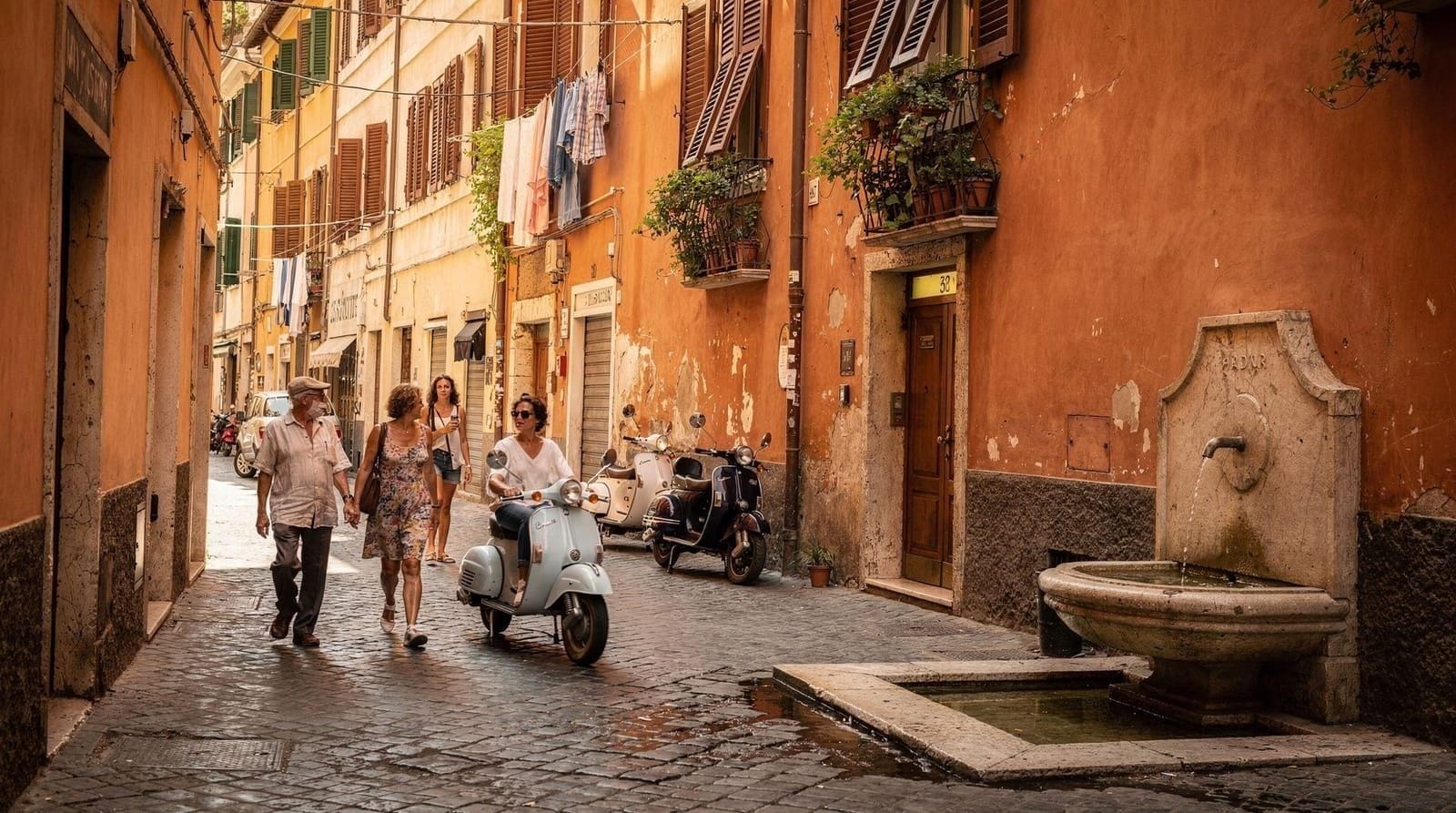
This is the single most common and most costly packing error. Rome’s streets are cobblestoned. The sanpietrini — the small, slightly convex basalt cobblestones that cover huge swathes of the centro storico and Trastevere — are beautiful and absolutely brutal on most footwear. Flip-flops will destroy your feet by day two. New trainers will cause blisters by day three. Heels, even modest ones, are a form of self-harm on the Roman street.
What you actually want: one or two pairs of shoes you have already broken in, with reasonable cushioning and a flat or minimal heel. Leather sandals (properly broken in) work well in summer. Good walking shoes or trainers that you’ve worn for at least a month work year-round. The test: could you walk 18,000 steps in these shoes without thinking about them? If yes, pack them. If no, leave them.
The other shoe mistake: packing four pairs. You will wear two at most. Space and weight are better used elsewhere.
Inadequate coverage for churches
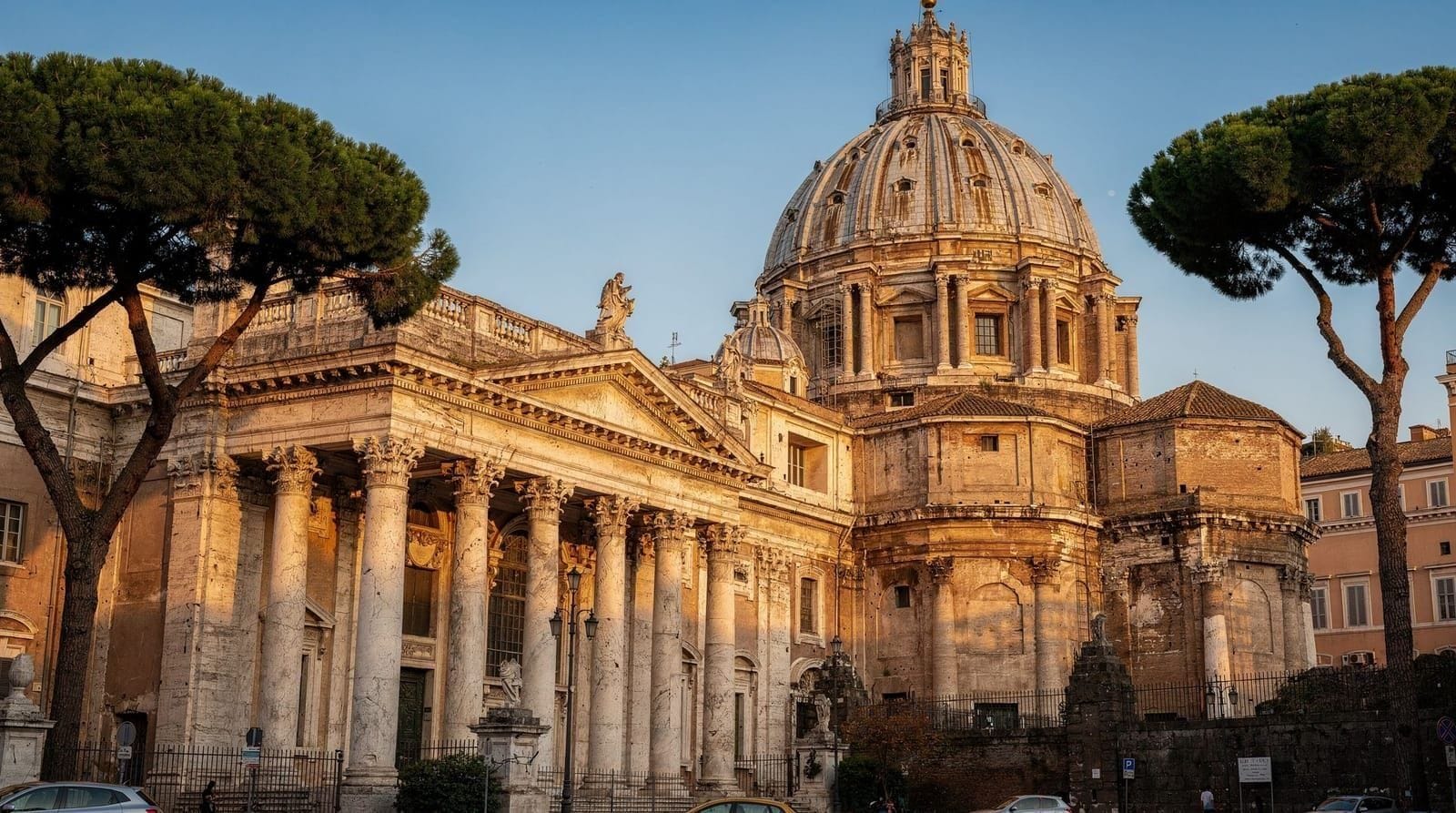
Rome has something like 900 churches. You will want to enter at least a dozen of them, because the city’s greatest art — Caravaggio in Santa Maria del Popolo and San Luigi dei Francesi, the mosaics in Santa Maria in Trastevere, the underground layers of San Clemente — is inside those churches.
Every church in Rome has a dress code: shoulders covered, knees covered. This applies to all genders and is enforced with varying strictness. The Vatican is the strictest — security at the main entrance will turn you away if you’re wearing shorts or a sleeveless top, full stop.
The fix is easy: pack one lightweight layer (a linen shirt, a scarf large enough to wrap around your shoulders, a light cardigan) that you carry during the day and put on before entering churches. A sarong does triple duty: sun cover, scarf, and church wrap. The mistake people make is not bringing any of this and then buying an overpriced disposable cover-up from a vendor outside St. Peter’s.
Overpacking for summer, underpacking for spring and autumn
Rome in July and August is genuinely hot — temperatures regularly hit 32–36°C and occasionally go higher. The instinct is to pack almost nothing, which leads to carrying the same three outfits through week-long trips and either doing daily laundry or wearing things more times than is comfortable.
The contrasting mistake in spring and autumn: packing for the photographs you’ve seen (warm, sunlit streets, people in light clothing) and arriving to find that April evenings are 12°C and the Trastevere terrace you wanted to sit on requires an actual coat.
Rome’s climate by month is roughly: December–February (cool to cold, 5–15°C, can rain consistently), March–April (warming up but variable, bring layers), May–June (warm, increasingly hot, some thunderstorms), July–August (hot to very hot, pack the lightest clothes you own), September–October (still warm, evening chill from mid-October), November (often grey and rainy, genuinely cold at night).
Pack accordingly. The best-time-to-visit-rome guide has more on what weather to expect month by month.
The adapter situation
European Type F plugs. Italian sockets technically also accept Type C (the two round pins without grounding). Most modern sockets in hotels accept both. The UK uses Type G (three rectangular pins). The US uses Type A/B.
What this means practically: if you’re coming from the UK or North America, you need an adapter. What you don’t need is a voltage converter — modern phones, laptops, and camera chargers are all dual-voltage (100–240V, it’s written on the charger). Check yours; it will almost certainly say this somewhere on the plug or brick.
One good travel adapter is enough. Packing six USB cables and three chargers when you have two USB ports in your adapter is unnecessary weight.
Too much cash, wrong denominations
Italy is increasingly card-friendly. Most restaurants, shops, and ticket offices in Rome accept Visa and Mastercard. Some smaller trattorias, market stalls, and the occasional church donation box still want cash.
The mistake is carrying large amounts of cash “just in case.” More realistically useful: 50–80 EUR in smaller denominations (10s and 20s). Larger notes can be hard to break at small shops and market stalls. ATMs (Bancomat) are available throughout the city; use your bank’s network ATM if possible to avoid fees. The fake ATMs that add their own exchange fee surcharge are marked differently — look for the bank logo rather than generic “exchange” branding.
The wrong bag for pickpocket territory
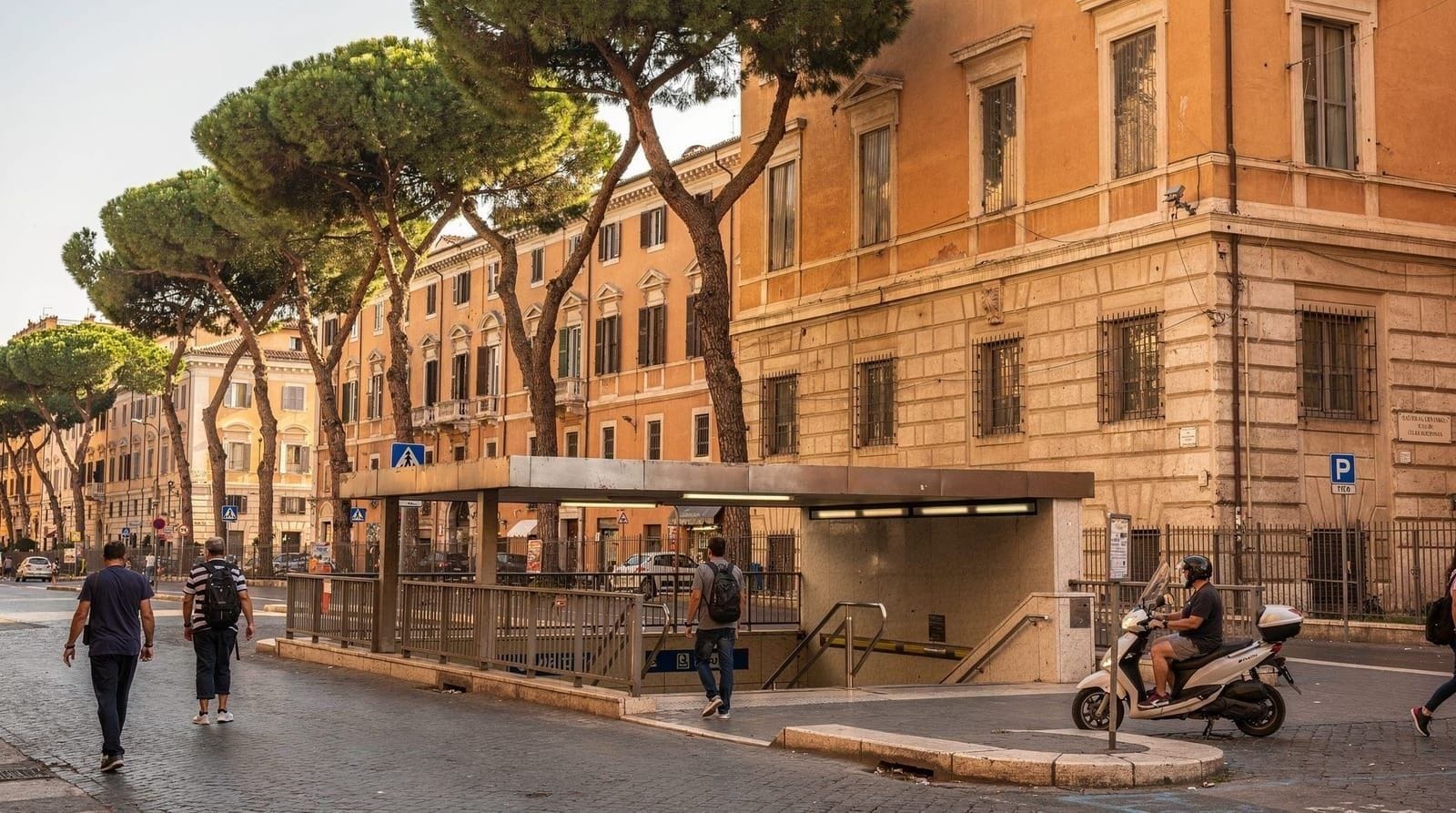
Rome’s pickpocket problem is well-documented and getting worse — reported theft was up 68% in recent years. The primary risk areas are Metro Line A (particularly between Termini and Ottaviano), bus routes 40 and 64, and Termini station itself.
The mistake is bringing a bag that makes you an easy target: a backpack you wear on your back, a bag with external pockets you can’t see, a crossbody with a magnet closure. Pickpockets in pairs work very effectively on Metro escalators and crowded buses.
What works: a zipped crossbody worn in front, a daypack you keep in front of you on transport, or a money belt under your clothes for passports and large amounts of cash. You don’t need to be paranoid — the vast majority of Rome visits involve no theft at all — but making yourself a harder target is basic sense.
Expensive perfumes and toiletries
Italian pharmacies (farmacie) and supermarkets stock perfectly good sunscreen, shampoo, toothpaste, and basic toiletries, usually at reasonable prices. Bringing full-sized bottles of everything wastes luggage space and risks spills. The one exception: if you use something specific that’s genuinely hard to find (a prescription item, a specific skincare brand, your particular kind of contact lens solution), bring it. Otherwise, pick things up locally if you need them.
What people forget to pack
A reusable water bottle. Rome has roughly 2,500 nasoni — public drinking fountains running cold, clean water — throughout the city. You can refill a bottle at any of them for free. This is genuinely one of the best things about walking Rome in summer, and it makes commercial bottled water essentially unnecessary for walking around.
A portable phone charger. A day walking Rome easily runs your phone battery down to single digits. Maps, translations, ticket confirmations — your phone does a lot of work. A small power bank costs almost nothing and saves a lot of anxiety.
A lightweight rain jacket or packable umbrella, particularly if you’re visiting between October and April. Rome’s summer rain tends to be heavy but brief — the sky empties itself in forty minutes and then the sun comes back. Being caught in it without cover is unpleasant; being prepared for it is easy.
Rome e-bike tour through the city’s best spots with a gelato break — on a day when you’ve had enough walking, an e-bike lets you cover more ground with less foot punishment. Useful context if the cobblestones are winning.
Packing for how you’ll actually move around
What you pack should match how you’ll get around, and Rome’s public transport is genuinely good enough that most visitors underuse it. The getting-around-rome guide and the more specific rome-metro-guide are worth reading before you pack, since knowing you’ll rely on the metro for longer crossings (rather than walking everything or taking taxis) changes what bag and shoe choices make sense. If your trip is on the shorter side, the how-many-days-in-rome guide helps calibrate how much you’ll actually be moving each day, which in turn affects how many outfit changes are realistic versus wishful.
Dress-code awareness extends beyond churches, too — the rome-etiquette-customs guide covers the broader unwritten rules around clothing, tipping, and behaviour that go beyond what fits in a suitcase.
The document question
Print your Colosseum tickets. Print your Vatican tickets. Print your Borghese Gallery booking. Italy’s cultural sites are getting better with QR codes, but the Colosseum entrance in particular can have poor mobile signal, and the scan-from-screen process sometimes fails. Having a paper backup costs you nothing and saves considerable stress at the gate.
A photocopy of your passport’s photo page, kept separately from your passport, is useful if the original is ever lost or stolen. The original should be locked in your accommodation safe whenever you don’t need it — a photo of the passport page on your phone is accepted for most day-to-day purposes within Italy.
The itinerary overpacking that isn’t physical
Not technically a packing mistake but worth including here: overscheduling. Rome rewards slowness. The people who see the most of the city are rarely the ones who have booked the 8am Colosseum tour, the Vatican in the afternoon, and the catacombs the following morning. They’re the ones who leave a few hours unscheduled and stumble into the monti neighbourhood on a random afternoon to find an excellent glass of wine in a courtyard they weren’t expecting.
Pack light, plan moderately, leave room for the city to surprise you. That’s the practical advice no luggage scale can measure.
FAQ
Do I need a voltage converter for Rome? Almost certainly not. Modern phone, laptop, and camera chargers are dual-voltage (100–240V), so you only need a plug adapter (Type F or C), not a converter — check the small print on your charger to confirm.
How much cash should I carry in Rome? Around €50–80 in smaller denominations (10s and 20s) is enough for most trips, since most restaurants, shops, and ticket offices accept cards; keep some cash for smaller trattorias, market stalls, and church donation boxes.