24 hours in Rome from a cruise ship — the honest logistics
The optimism in most “Rome from a cruise ship” articles is impressive. They promise the Colosseum, the Vatican, the Trevi Fountain, the Pantheon, and a proper Roman lunch, all completed before you need to reboard by 6pm. This is not logistically impossible, but it is logistically painful, and the version of those experiences you get when rushing between them is a significantly reduced one.
The honest calculation is this: Civitavecchia is 80km from Rome. Getting to the city takes 50–70 minutes by shuttle or train. Getting back takes the same. If your ship docks at 7am and you need to be back by 6pm, you have about 8 hours in Rome, minus time for transfers in both directions — call it 6.5 usable hours in the city.
Six and a half hours in Rome is genuinely enough to have a good day. It is not enough to do everything. The question is what you prioritise.
| Where | Civitavecchia port to central Rome, around 80km |
| Transfer time | Around 50–70 min each way by train or shuttle |
| Realistic time in Rome | Around 6–6.5 usable hours |
| Transfer cost | Roughly €5–7 train / €25–35 shuttle per person |
| Booking | Skip-the-line tickets and any transfer in advance |
Getting from Civitavecchia to Rome
The train from Civitavecchia station (a 10–15 minute walk or short taxi ride from the cruise port) runs to Roma Termini in 50–70 minutes, depending on the service. Regional trains depart roughly every 30–60 minutes and cost around €5–7 per person. This is the independent traveller’s correct choice: reliable, inexpensive, and it drops you at Roma Termini with direct metro access to everywhere you want to go.
The shuttle buses marketed to cruise passengers are convenient (they often run directly from the port) but slower in traffic and more expensive — typically €25–35 per person round trip. If you are travelling as a couple or family, a private transfer is worth comparing on price: a shared taxi from the port to Rome can run €50–70 one way for up to four people, which at €12–18 per person compares favourably with inflated shuttle prices while being faster.
The cruise ship organised excursions are the most expensive option and typically the least flexible — you go where they take you, on their schedule, with a large group. The Rome scenery is the same but the experience of it through a bus window with 40 other people in matching lanyards is not the same.
Book transfers in advance for busy port days (June–September the Mediterranean cruise season is intense and Civitavecchia handles enormous volumes). Taxis at the port on a busy day can be limited.
Comparing the four ways to reach Rome
| Option | Cost per person | Time each way | Flexibility |
|---|---|---|---|
| Regional train | €5–7 | 50–70 min | High — you choose your own return time |
| Shuttle bus | €25–35 | 60–80 min (traffic) | Medium — fixed departure windows |
| Shared/private taxi | €12–18 (split 4 ways) | 45–60 min | High — door to door, no walk to station |
| Ship excursion | Bundled in fare | Varies | Low — fixed group schedule |
For most independent travellers the train wins on value, and a private taxi wins on convenience if you are travelling as a family or a small group and want to save the walk to Civitavecchia station.
What to actually do with 6 hours
The choice comes down to a fundamental decision: ancient Rome or Renaissance/Baroque Rome. You cannot do both properly in one day, and trying to rush between them produces a superficial version of each.
Option A: The Colosseum and ancient Rome
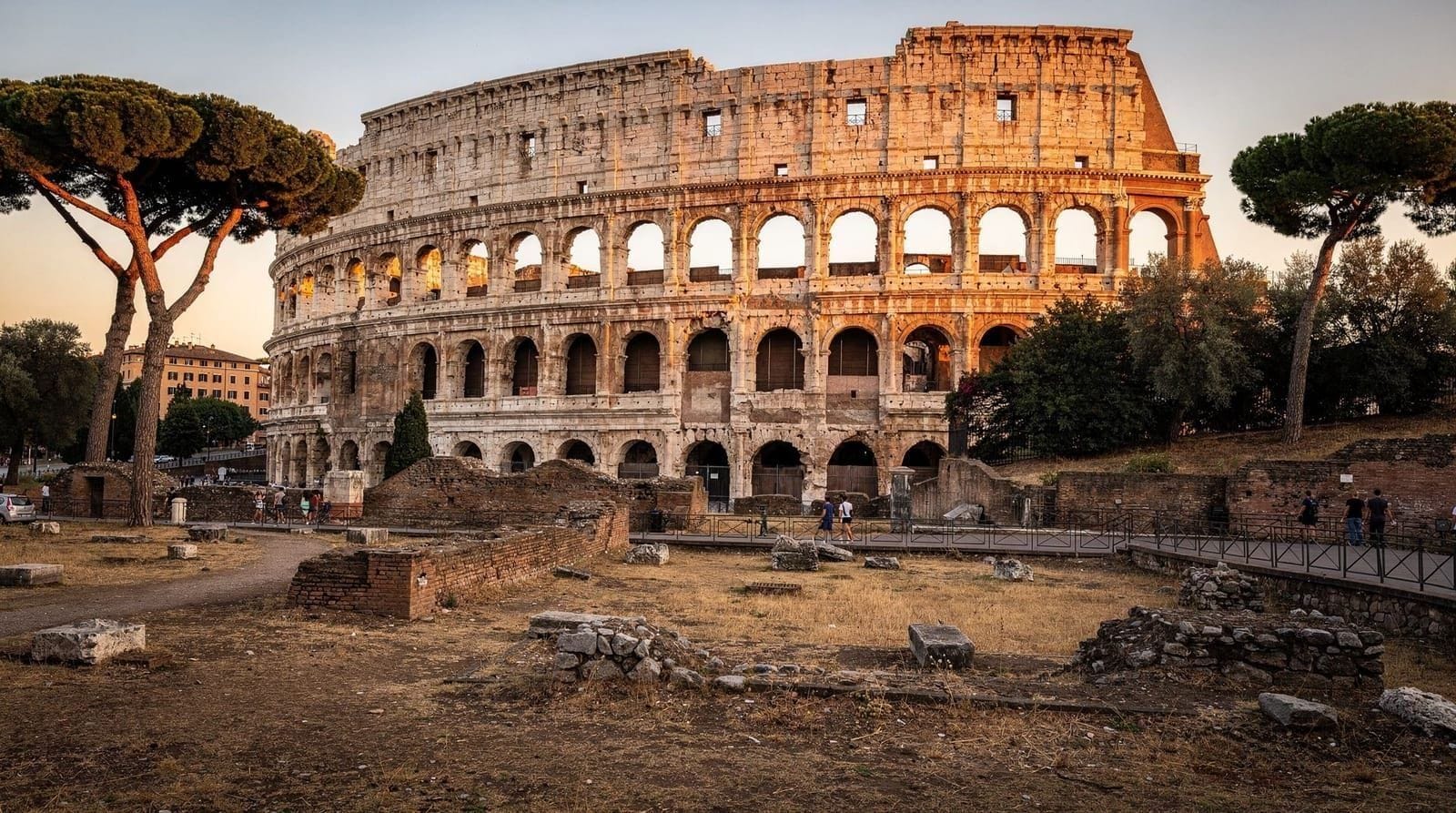
The Colosseum, Roman Forum, and Palatine Hill is a three-site complex on a single ticket, and it is a genuinely half-day experience if you do it properly. The Colosseum alone takes 45–60 minutes for a basic self-guided visit; with a guided tour that includes context about the gladiatorial system, the engineering, and the social history, you are looking at 1.5–2 hours and significantly better understanding of what you are seeing. Skip-the-line access is not optional — the general admission queue in summer can be 60–90 minutes, which is much of your day gone. Book in advance.
After the Colosseum complex, the Circus Maximus and the Capitoline Hill are walkable. The Capitoline Museums are among Rome’s best and are adjacent to the Forum. If you are combining ancient Rome with a proper lunch, the Testaccio neighbourhood is a 15-minute walk south and is the right place to eat.
Option B: The centro storico loop
The Pantheon, Piazza Navona, Campo de’ Fiori, and the Trevi Fountain form a compact circuit in the centro storico that is walkable in 3–4 hours. The Pantheon requires a €5 ticket now (the days of free entry are over) and the interior — a genuine architectural wonder — deserves at least 30 minutes of attention rather than a quick photograph and exit.
This route takes you through the most photographed parts of Rome and skips the ancient monuments and Vatican entirely. It is valid. The centro storico has genuine depth — the churches alone contain some of the most important Baroque art in the world — and doing it without rushing is more satisfying than sprinting between all categories.
Option C: A guided day with efficient logistics
Rome hop-on hop-off sightseeing bus with audioguideFor cruise passengers specifically, the hop-on hop-off bus solves a logistical problem: it covers the major sites with audio context, lets you get off and on according to your priorities, and removes the challenge of navigating an unfamiliar city under time pressure. The coverage includes the Colosseum area, Vatican, Trevi Fountain, Piazza Navona, and more. For a first-time visitor with limited time, this format is genuinely useful even if it is not the deepest experience of the city.
The Vatican question
The Vatican is on every cruise visitor’s list and creates genuine problems for day visitors. The Vatican Museums and Sistine Chapel require a minimum of 2.5–3 hours to do properly — you cannot experience Raphael’s Rooms and the Sistine Chapel meaningfully in less time. Combined with St. Peter’s Basilica (which is free but has its own visit time and potential queues), you are at 3.5–4 hours before you have eaten anything or seen anything else.
If the Vatican is your priority, make it the entire morning and accept that you are doing a Vatican day with a brief afternoon in the city, not a comprehensive Rome day. The Jubilee year through 2026 means Vatican visitor volumes are elevated — queue times are longer than in recent non-Jubilee years.
The itinerary for a cruise day in Rome is the dedicated resource for this planning; it gives hour-by-hour logistics for the main options.
What to do if your ship also stops elsewhere
Some Mediterranean itineraries pair a Civitavecchia call with a separate day in Naples or the Amalfi Coast later in the cruise. If that is your case, resist the urge to squeeze a Pompeii or Amalfi side-trip into your Rome day as well — the transfer times do not stack, and you will end up rushing both. Treat the Rome call as a Rome day and nothing else; save comparisons for later using the Rome vs Florence or general day-trips-from-Rome guides if you are planning a longer land trip around the cruise.
If your ship arrives at Fiumicino instead of Civitavecchia on a pre- or post-cruise night, the logistics differ substantially — see the Fiumicino airport to Rome guide for that separate transfer.
Lunch is non-negotiable
Whatever you see, eat a proper Roman meal. This is not optional. A tourist who visits Rome and eats a panino from a grab-and-go counter near the Trevi Fountain has missed something central to what the city is.
Even with limited time, you can sit down, order a pasta, eat it without rushing, and be out in 45 minutes. The areas around Monti, Campo de’ Fiori, and Testaccio have restaurants that are good without being expensive. Budget around €15–25 per person for a primo and a glass of wine.
What to skip entirely on a short visit
The Borghese Gallery requires advance booking (it is capped at 180 visitors per 2-hour session) and is a 20-minute drive from the centro storico. The experience is extraordinary, but it is incompatible with a logistically constrained day unless you plan specifically around it.
The Palatine Hill, standalone, is excellent but requires significant time for the return on investment. The Roman Forum is best understood with context you do not have on a first visit.
If you see the Colosseum from the outside, walk through the Roman Forum briefly, eat lunch in Testaccio, and walk to the Circus Maximus for the view south, that is a day in Rome that is genuinely satisfying rather than superficially comprehensive.
Come back properly later. Rome does not reward being rushed, and the cruise port day visit is by definition a rushed format. Acknowledge that, do the best version of what is achievable, and plan the return trip when you have five days and no ship to catch.
The first visit planning guide covers what to prioritise when you return. The how many days in Rome guide is honest about what requires what amount of time. Both are worth reading before your next trip.
Frequently asked questions
Is 6 hours really enough to see Rome from a cruise ship? Enough to have a genuinely good day, not enough to see everything. Pick one focus — ancient Rome, the centro storico, or a guided overview — rather than trying to combine all three, and the time feels sufficient rather than rushed.
Should I book a shore excursion through the cruise line or arrange my own transfer? An independent train or shared taxi is usually cheaper and more flexible than a ship-organised excursion, provided you are comfortable navigating on your own and back to the port with a safety margin. Cruise excursions cost more but remove the planning and the risk of missing the ship.